

Ford Mustang Motor Mount Symptoms and Replacement Cost
Ford Mustang motor mount replacement costs $420–$539 at a shop. Learn the Mustang-specific symptoms, which years fail most, and how to save with a kit.
The Short Answer
Ford Mustang motor mount replacement costs $420–$539 at a shop for engine mounts, or $193–$239 for the transmission mount, but a complete kit combined with DIY labor cuts that parts cost considerably.
| Service | Avg. Shop Cost (Parts + Labor) | Typical DIY Parts Cost |
|---|---|---|
| Engine mount (single) | $420–$539 | $80–$180 |
| Complete engine mount kit | $420–$600+ | $290–$400 (kit) |
| Transmission mount | $193–$239 | $40–$100 |
| All mounts replaced together | $550–$750+ | $330–$450 (kit) |
*Shop costs sourced from RepairPal. DIY parts costs reflect typical market ranges for aftermarket kits.*
What Does a Motor Mount Actually Do on a Mustang?
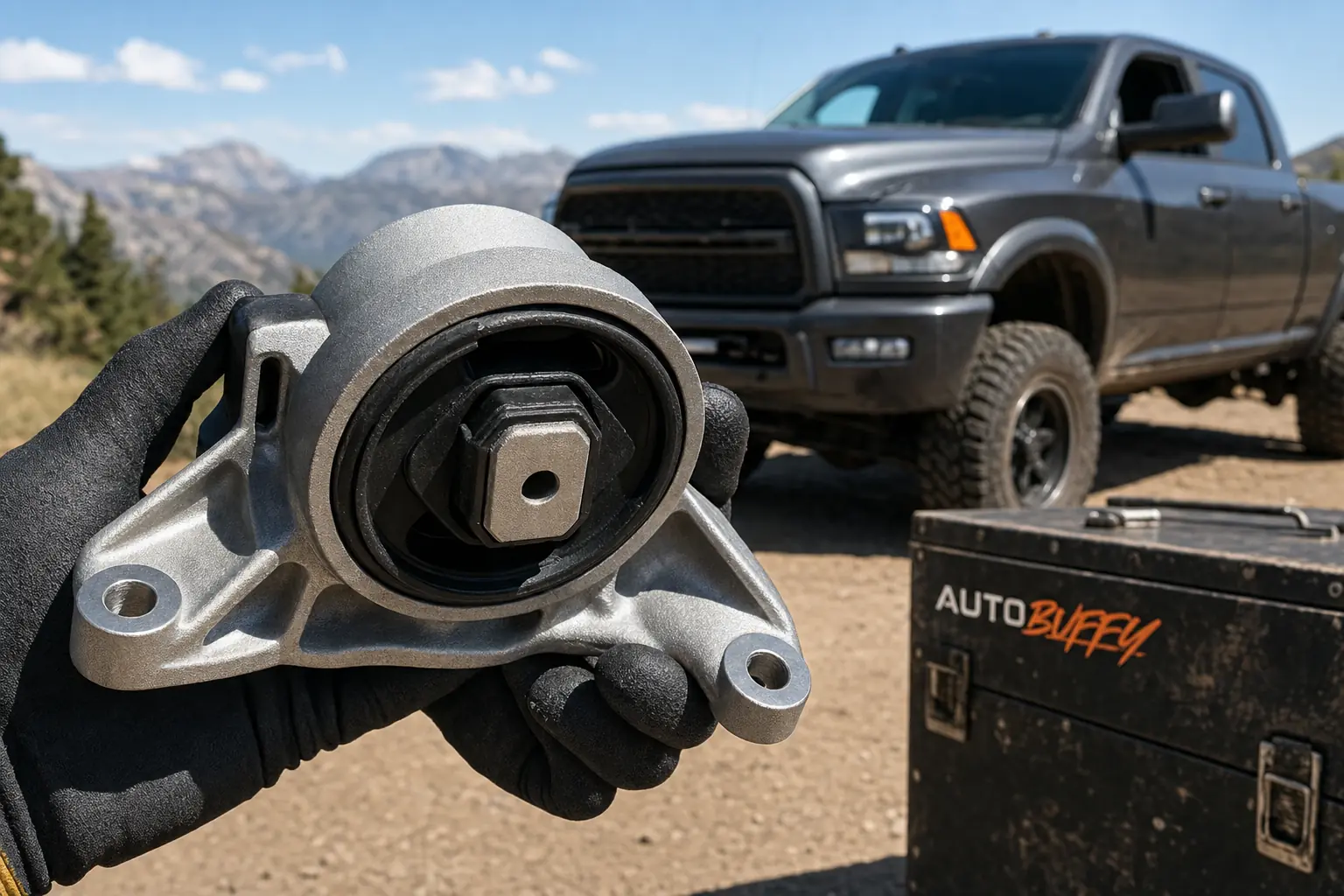
Your Mustang's engine isn't just sitting in the bay on its own — it's bolted to the chassis through a set of rubber-and-steel mounts that absorb vibration and prevent the drivetrain from lurching under load. Most Mustang configurations use two main engine mounts, one on each side of the block, sometimes paired with an additional torque strut or upper mount depending on the generation and engine. A separate transmission mount sits at the rear of the gearbox.
The rubber in these mounts is the key. It's soft enough to absorb the constant vibration of a running engine but firm enough to keep the drivetrain planted during hard acceleration — which, let's be honest, happens a lot in a Mustang. Over time that rubber degrades from heat cycles, oil contamination, and age.
Solid or polyurethane mounts also exist. They reduce engine movement for better throttle response but send more vibration into the cabin. Fine for a dedicated track car; genuinely unpleasant for a daily driver.
Ford Mustang Mount Layout: What's Actually Under the Hood
Westar makes five distinct mount types for the Mustang. Here's what each one does and how it typically gives out:
| Mount Type | Where It Sits on the Mustang | What It Does | How It Usually Fails |
|---|---|---|---|
| Engine Mount | Left and right sides of the engine block, connecting to the chassis rails or K-member | Supports engine weight, absorbs torque reaction under acceleration | Rubber core cracks or collapses; may show oil soaking if nearby seals leak |
| Engine Mount Kit | Same locations as individual engine mounts; kit covers multiple positions | Replaces all engine mounts in one service | Same rubber deterioration, just addressed all at once |
| Automatic Transmission Mount | Under the tailshaft of the automatic transmission, bolted to the crossmember | Supports the rear of the trans, isolates driveline vibration | Gradual rubber breakdown; shows up as highway-speed vibration or gear-change shudder |
| Manual Transmission Mount | Same crossmember location as the auto mount, different geometry for manual gearboxes | Supports the T-5, T-45, TR-3650, or MT-82 depending on era | Clunking on aggressive clutch release; harder to spot than auto trans mount wear |
| Suspension Strut Mount | Top of the front strut tower | Isolates front suspension movement from the chassis | Worn bearing or collapsed rubber causes steering wander and clunking over bumps |
Which Ford Mustang Years and Engines Fail Most
Westar's Mustang coverage runs from 1964 through 2023, with 75 distinct mount SKUs across that span. Their deepest fitment coverage — meaning the most engine and transmission variants supported — falls in the 1984–1989 Fox Body years, which reflects just how many powertrain combinations Ford offered in that era.
That lines up with real-world failure patterns:
| Generation | Years | What to Know |
|---|---|---|
| Fox Body | 1979–1993 | High-mileage survivors frequently need mounts; 5.0 H.O. V8 cars see the most wear from performance use |
| SN95 / New Edge | 1994–2004 | Common failure point on the 4.6L V8; mount rubber degrades faster with track or strip use |
| S197 | 2005–2014 | GT500 owners see accelerated wear from supercharged torque; GT and V6 cars generally last longer |
| S550 | 2015–2023 | Performance Pack and track-day cars should be inspected around 80,000 miles; EcoBoost and V8 use different mounts |
| S650 | 2024+ | Too new for widespread failures; inspect after any front-end impact regardless of mileage |
If you're unsure which generation your car belongs to, check the model year and engine code on the door jamb sticker — that's all you need to pull the right mount.
Symptoms of a Bad Motor Mount — Specific to This Car
Generic mount symptoms exist everywhere. Here's what they actually feel like in a Mustang:
Hard clunk through the shifter or center console when dropping into gear
This is the Mustang's calling card for a failed engine mount. On both automatic and manual cars, the engine torque reaction on engagement loads the mounts immediately. A worn mount lets the block rock enough to send a distinct thud through the shifter surround and center console — not just vague cabin vibration.
Shudder through the steering wheel on a hard 1–2 shift
On rear-wheel-drive Mustangs, aggressive acceleration concentrates torque reaction at the mounts. When one is worn, that shudder travels forward through the K-member and up the steering column. If you feel it specifically on wide-open-throttle shifts and not at idle, start with the engine mounts before chasing other causes.
Vibration in the floorboard and seats at idle that fades above ~1,200 RPM
A collapsing engine mount lets the engine's idle vibration frequency transmit directly to the chassis. Mustang owners often describe this as the car feeling like it's sitting on a washing machine at a red light, but riding smoothly once rolling. That pattern points clearly at mount isolation failure, not a misfire.
Scraping, knocking, or exhaust "ticking" on full-throttle pulls
This is the serious end. A fully collapsed mount can drop the engine block far enough to contact the subframe or K-member during hard acceleration. It can also stress the exhaust flex section — a known wear point on many Mustang platforms — causing what sounds like an exhaust tick or rattle that wasn't there before. If you hear this, stop driving it hard until you've had it inspected.
Clunking over bumps with no obvious suspension cause
Don't overlook the suspension strut mount. A worn strut mount bearing causes steering wander and a hollow clunk over expansion joints or potholes that can easily be misdiagnosed as a ball joint or sway bar end link.
Replacement Cost Breakdown: Shop vs. DIY on a Mustang
The RepairPal averages of $420–$539 for engine mounts and $193–$239 for the transmission mount are for an independent or dealer shop. Most of that is labor — accessing Mustang engine mounts requires supporting the engine from below while unbolting the mount, and on some generations, removing the K-member or crossmember components adds time.
A complete kit is almost always the smarter buy if you're doing the work yourself. Westar makes multi-piece Mustang kits — 3-piece to 6-piece sets depending on the application — that cover all mounting positions for a given generation and engine combination. Buying individual mounts one at a time costs more per piece and means potentially repeating the job.
Honest opinion: In my experience, replacing just one mount on a Mustang above 80,000 miles is a short-sighted call. The labor to support the engine and pull things apart is the same whether you replace one mount or three. Do the kit.
For your exact mount count, configuration, and today's price, use the part finder below — kits and specs vary enough across 60 years of Mustang production that guessing is genuinely risky.
DIY Considerations: Is This a Home Mechanic Job?
For someone comfortable with basic engine work, yes — with a few caveats specific to this platform.
The Mustang's rear-wheel-drive, front-engine layout actually makes engine mount access more straightforward than many front-wheel-drive cars. You won't be fighting a transversely mounted engine and a cramped subframe. That said, you still need a floor jack, proper jack stands, and a way to support the engine from below — a hydraulic jack with a piece of wood under the oil pan, or a dedicated engine support bar across the engine bay.
The transmission mount is the easier job: support the tailshaft, remove the crossmember bolts, swap the mount. Budget an hour or two. Full engine mount replacement, depending on generation, takes a half day for a competent home mechanic without a lift.
Neither job requires specialty tools beyond standard sockets and wrenches, but if you're on jackstands in a driveway, add time and take your time with the engine support step. Rushing that part causes damage.
How to Choose the Right Replacement Mount
- Confirm your exact year, engine displacement, and transmission type — a 1987 5.0L with a T-5 uses different mounts than a 2018 5.0L with a 6R80 automatic.
- Decide between OE-style rubber mounts and polyurethane/solid mounts — rubber for a comfortable daily driver, poly or solid for a dedicated track or drag car. Poly mounts will transmit more NVH.
- Consider a complete kit if your mileage is above 80,000 or you're seeing symptoms in more than one location.
- Check local labor rates — shop quotes vary widely. An independent shop will typically be less expensive than a dealer, sometimes by 30–40%.
Sources
- RepairPal: Ford Mustang Motor Mount Replacement Cost
- Westar Industries: Ford Mustang Motor Mount Catalog (1964–2023)
Find the right part for your vehicle
Guaranteed fit, ships free
FAQ / People Also Ask
Per RepairPal estimates, Ford Mustang engine mount replacement averages $420–$539 at a shop, including parts and labor. A transmission mount replacement is a separate job averaging $193–$239. Buying a complete multi-piece kit and doing the work yourself can bring total parts costs down significantly.


Comments
Loading comments...
Comments are moderated by the AutoBuffy team.