

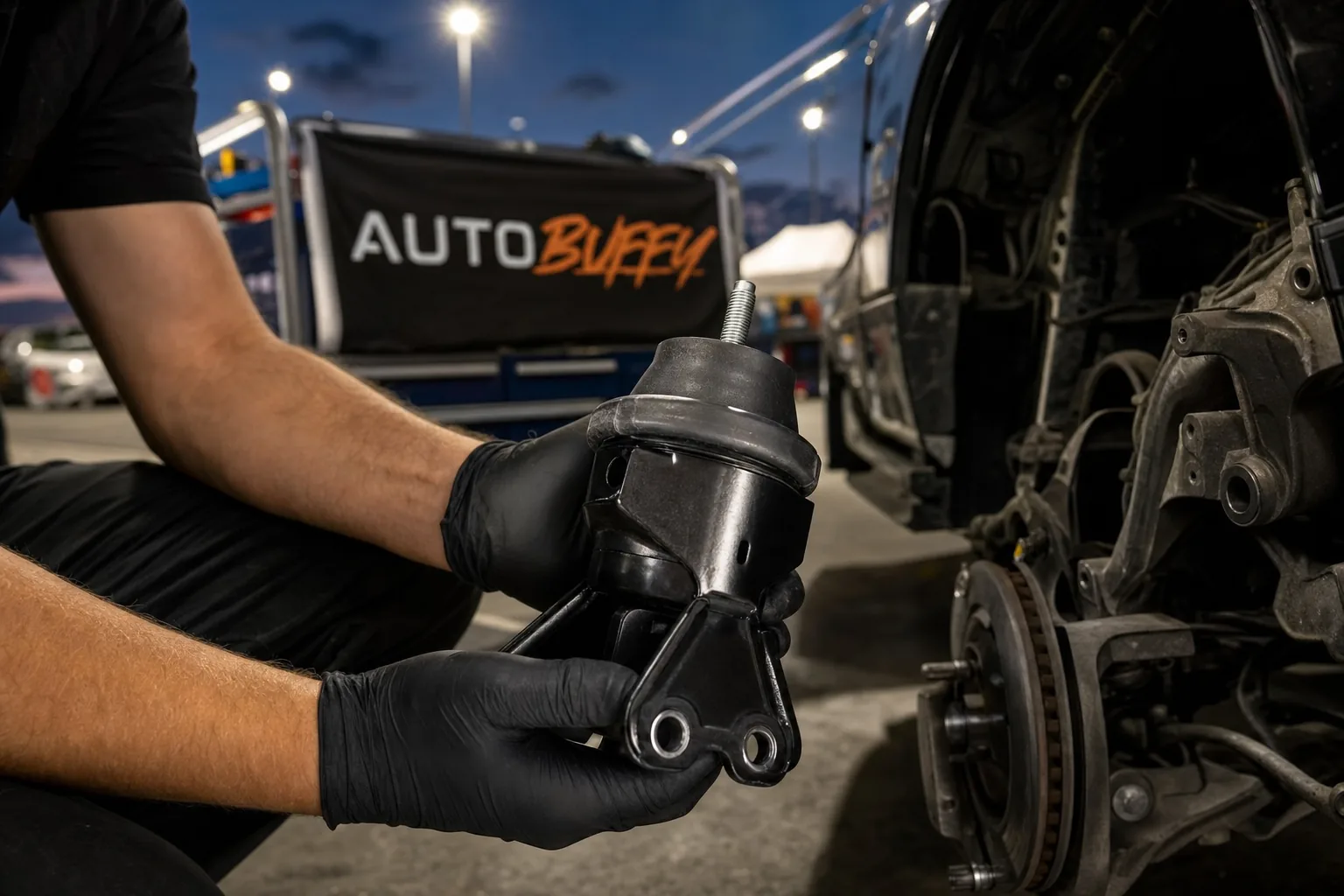
Nissan Rogue Motor Mount Symptoms and Replacement Cost
Nissan Rogue motor mount symptoms, replacement costs ($654–$1,141 at a shop), which years fail most, and whether a Westar kit is worth it.
The Short Answer
A failing Nissan Rogue motor mount most often announces itself with a clunking or thudding noise on acceleration, excessive cabin vibration, and visible engine movement—and shop replacement costs range from $654–$737 for engine mounts to $970–$1,141 for transmission mounts according to RepairPal.
| Mount Type | Avg. Shop Cost (Parts + Labor) | DIY Parts Cost (Kit) | Urgency |
|---|---|---|---|
| Engine Mount (single) | $654 – $737 | Lower with a multi-piece kit | Moderate–High |
| Transmission Mount | $970 – $1,141 | Lower with a multi-piece kit | Moderate–High |
| Full Mount Set (DIY) | Varies by year/config | Use part finder for exact pricing | Best value long-term |
Numbers sourced from RepairPal's current averages for the Nissan Rogue. Your actual cost will vary by location, model year, and labor rate.
Nissan Rogue mount layout: what's actually under the hood
The Rogue is a transversely mounted, front-wheel-drive-based crossover, and its mount layout reflects that architecture. Depending on your model year and drivetrain, you'll have three to four mounts total—each doing a specific job. Here's what Westar makes for this vehicle and what each one actually handles:
| Mount Type | Where It Sits on the Rogue | What It Does | How It Usually Fails |
|---|---|---|---|
| Engine Mount | Front and/or rear of the engine block, bolted to the subframe | Supports engine weight; limits vertical movement | Rubber core hardens or cracks; engine sags or rocks excessively |
| Automatic Transmission Mount | Under the transmission case, toward the rear of the drivetrain | Holds the gearbox steady; absorbs CVT torque pulses | Rubber collapses under CVT load cycling; transmission shifts during acceleration |
| Engine Torque Strut Mount | Side-mounted, fore-aft orientation (often called the dog bone) | Limits engine roll under hard acceleration and braking | Bushing tears or separates; engine lurches on throttle input and snaps back on lift-off |
| Engine Mount Kit | Multi-piece set covering primary mounts for a given year/config | Full drivetrain isolation as a system | Wear across the set; one fails and the others are close behind |
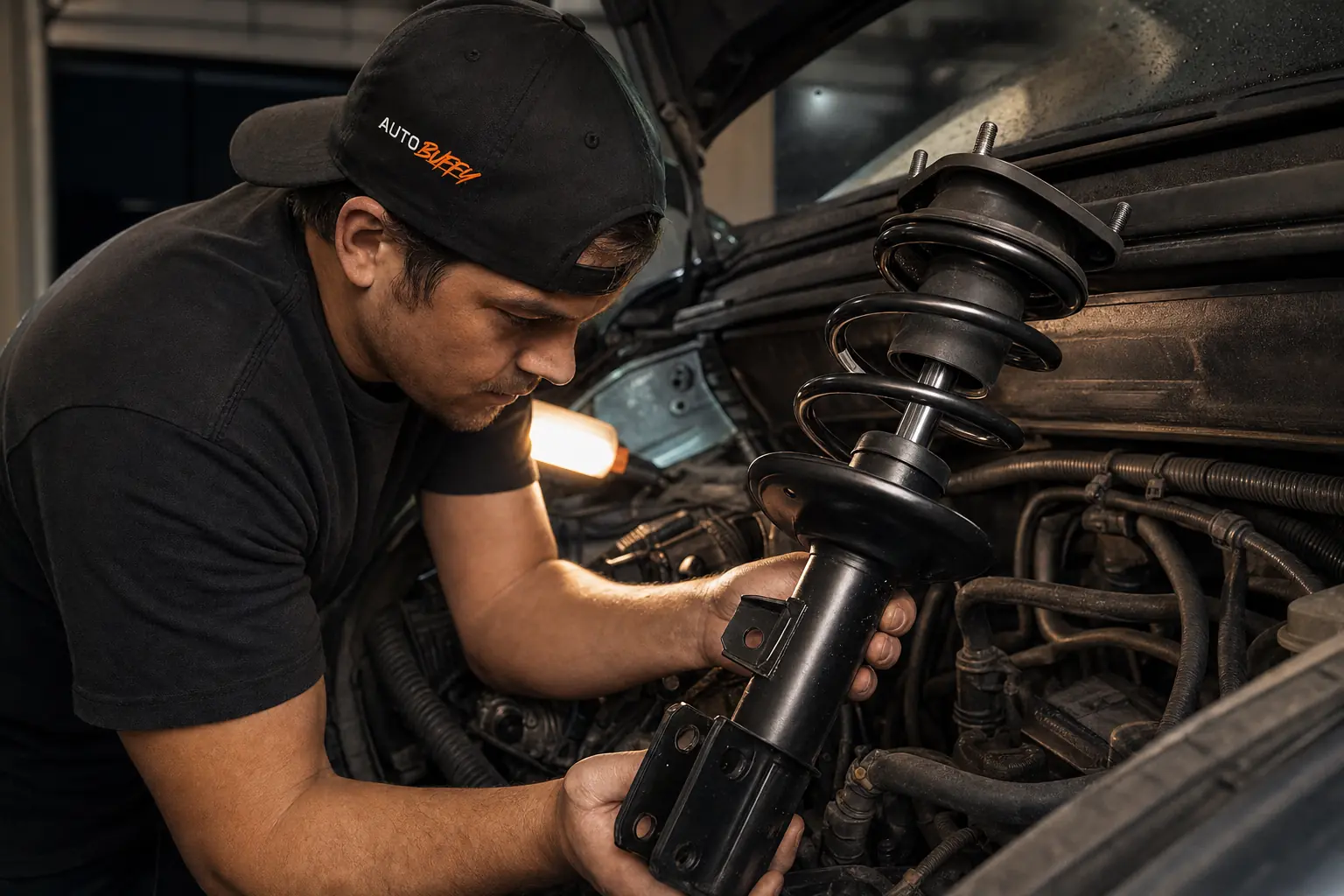
| Suspension Strut Mount | Top of each front strut tower | Isolates strut from chassis; allows steering rotation | Bearing wears or rubber cracks; causes steering wander and bump clunks (distinct from engine mount noise) |
Note: Suspension strut mounts fail independently of engine mounts and produce different symptoms—mostly bump noise and steering behavior rather than acceleration clunk.
Which Nissan Rogue years and engines fail most
Westar's catalog coverage tells a useful story. The years with the deepest mount coverage—meaning the most distinct mount configurations across engine and drivetrain variants—are 2008 through 2013, which lines up with real-world complaint patterns for the first-generation Rogue.
First-gen Rogues (2008–2013) show the highest concentration of mount-related owner complaints. The 2.5L QR25DE four-cylinder in this generation pairs with a CVT that cycles torque loads continuously rather than in discrete steps, and those persistent oscillations accelerate rubber fatigue in the torque strut mount especially. The 2013 model year appears in Westar's catalog with the broadest individual mount variety, suggesting mid-cycle running changes in mount design.
Second-gen Rogues (2014–2020) do fail mounts, but the pattern is less dramatic in community forums. That said, any second-gen Rogue now approaching or past 100,000 miles is reaching the typical wear window. The 2014–2015 transition from the first generation brought updated mount geometry, so earlier mounts don't cross over.
Third-gen Rogues (2021–2024) are still relatively young, but Westar covers them—which means replacement parts are available if you're an early high-mileage driver. The 1.5L turbocharged engine in newer Rogues produces its torque differently than the naturally aspirated 2.5L, and long-term mount wear patterns for this generation aren't fully established yet. If you're past 60,000 miles on a third-gen, it's worth a visual check, but we'd stop short of calling this generation "prone."
Bottom line by mileage: Regardless of generation, the 80,000–100,000-mile range is when most Rogue mounts start showing measurable degradation. First-gen owners should inspect sooner.
Nissan Rogue motor mount failure symptoms—what's specific to this vehicle
1. Clunk through the floorboard when tipping into the throttle
The Rogue's relatively stiff unibody structure doesn't absorb noise the way a body-on-frame SUV would. When the torque strut or a primary mount fails, the engine lurches forward under acceleration and the impact transmits directly through the floor. Rogue owners frequently describe it as something "banging loose under the car" when leaving a stoplight—it's actually the engine rocking against its remaining mounts.
2. Low-frequency shudder at idle in Drive, disappears in Park or Neutral
This is a well-documented Rogue-specific pattern. With the CVT engaged and the brake held (think: sitting in traffic or at a light), a failed mount lets enough engine vibration through that the seat and steering wheel buzz noticeably. Shift to Park or Neutral and it softens or stops—because the drivetrain is no longer under load. This gets misdiagnosed as a CVT issue regularly. Check the mounts first.
3. Lurch-and-snap during CVT ratio changes
The Rogue's CVT creates continuous, variable torque delivery. A worn torque strut mount can't dampen those transitions, so you feel a distinct push-forward during acceleration followed by a snap-back on lift-off. It mimics what drivers describe as the CVT's "rubber-band" effect, but worsened. If the CVT is otherwise shifting smoothly and the behavior is worst at low speeds, mount wear is the more likely culprit.
4. Metallic knock when the suspension hits bumps
If a mount has separated completely, the engine can shift far enough sideways or fore-aft to contact the engine bay structure when the suspension cycles over a pothole or rough railroad crossing. The result is a harder, more metallic knock—different from the softer thud of acceleration clunk. On the Rogue, this often happens at the front subframe contact points and can be felt as much as heard.
5. Visible engine rocking with the hood open
With a helper holding light throttle in Drive, watch the engine from the open hood. On a healthy Rogue, movement is minimal. A failed mount will let the engine rock significantly—sometimes visibly pulling toward one side. More than about an inch of travel, or any contact with surrounding brackets, means it's time to replace.
Nissan Rogue motor mount replacement cost breakdown
RepairPal puts engine mount replacement at $654–$737 and transmission mount replacement at $970–$1,141 at an independent shop. Dealer rates run higher.
| Cost Component | Engine Mount | Transmission Mount |
|---|---|---|
| Parts (single OEM-style mount) | $100 – $250 | $150 – $350 |
| Labor (shop rate, 1–2 hrs) | $100 – $200 per hour | $200 – $400+ |
| Total (shop, single mount) | $654 – $737 avg. | $970 – $1,141 avg. |
Why a kit almost always makes more sense
The Rogue's engine needs to be supported from below while mounts are replaced—that setup time is charged regardless of how many mounts get swapped. If one is gone, the others have been absorbing the extra load and are likely close behind. Replacing a 3- to 6-piece kit in a single shop visit costs far less per mount than two or three separate appointments.
Westar covers the Rogue from 2008–2024 with 25 distinct mount SKUs and offers multi-piece kits in several configurations. Because mounts are their entire product focus—not a sideline—the fitment engineering tends to be precise. For exact pricing and guaranteed fitment for your specific year and drivetrain, use the part finder below.
DIY or shop? Honest assessment for the Rogue
Replacing engine mounts on the Rogue is a moderate DIY job. You'll need a floor jack, jack stands, a block of wood to support the oil pan, and basic hand tools. The torque strut is often the most accessible and a good starting point.
The transmission mount is tighter, especially on AWD models, and may require loosening subframe fasteners—that edges it toward shop territory for most home mechanics.
Do it yourself if: You've done suspension or drivetrain work before and have the tools.
Go to a shop if: You're not comfortable supporting the engine independently or you're working on pavement with no lift access.
Either way, pricing through the part finder will save you versus buying individual mounts at dealer prices.
How to confirm it's the mount and not something else
- With the engine cold, inspect each mount visually for cracked rubber, separation at the metal-bonded edges, or a collapsed/squished body.
- Check for oil contamination around the mounts—oil from a valve cover or front seal leak accelerates rubber breakdown and will destroy a new mount if the leak isn't fixed first.
- Do the "hold-and-watch" test: helper in Drive with brake held, you watch from the open hood. Watch for rocking, not just vibration.
You don't need a scan tool or dealer visit to diagnose this. Bad mounts fail visually. If the rubber is cracked through or the mount body is sitting crooked, that's your answer.
Sources
- RepairPal – Nissan Rogue Motor Mount Replacement Cost
- AutoBuffy Westar catalog data for Nissan Rogue (2008–2024)
Find the right motor mount kit for your Nissan Rogue
Guaranteed fit, ships free
FAQ / People Also Ask
Most Rogue configurations have three to four mounts—typically a front, rear, right-side torque strut, and sometimes an upper or lower mount. AWD models can differ slightly from FWD in mount placement and count because the all-wheel-drive drivetrain changes how torque loads are distributed. Always verify the exact count for your specific year and trim using the part finder.

Comments
Loading comments...
Comments are moderated by the AutoBuffy team.