

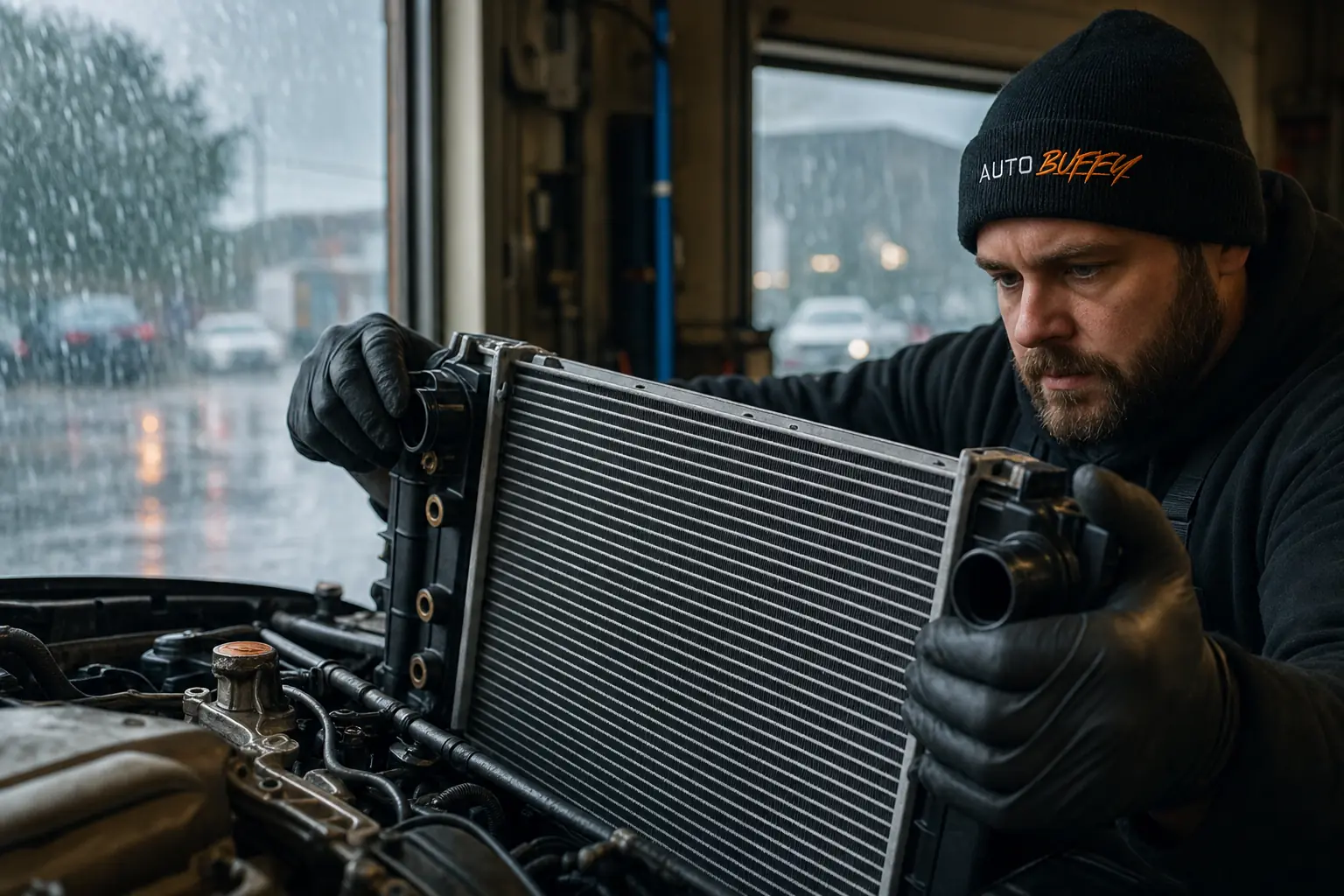
Radiator Replacement Cost: What You'll Actually Pay in 2024
Find out what radiator replacement really costs—parts, labor, and what drives the price up or down for your specific vehicle.
The Short Answer
Radiator replacement costs $250–$900 for most vehicles, with the part itself running $80–$450 and labor adding $150–$400 depending on your car and your shop.
| Cost Component | Typical Range |
|---|---|
| Radiator (part only) | $80 – $450 |
| Labor | $150 – $400 |
| Coolant flush & refill | $20 – $60 |
| Total (most vehicles) | $250 – $900 |
| Luxury / heavy-duty trucks | $700 – $1,200+ |
| DIY total (part + fluid) | $100 – $520 |
Those ranges cover the realistic middle of the market. Your exact number depends on the vehicle, the shop's hourly rate, and whether anything unexpected turns up once the old radiator comes out.
What Drives Radiator Replacement Cost Up or Down?
A few variables move the needle more than anything else.
Vehicle type is the biggest one. A 2012 Honda Civic has a simple, accessible radiator that takes a shop about 90 minutes. A full-size pickup with a towing package or a European luxury sedan can take two to three times longer and need a pricier part.
Automatic transmission adds complexity on most vehicles because the radiator contains an integrated transmission oil cooler. You'll need to disconnect and reconnect those cooler lines carefully—and sometimes they leak or need replacement while you're in there.
Shop labor rate varies more than most people expect. Independent shops in smaller markets might charge $85–$110 per hour. Dealers and specialty shops in major cities often run $130–$165. That spread on a 2.5-hour job is $112 or more just in labor.
Coolant is a small but real cost. You can't reuse the old stuff once it's been drained. Budget $20–$60 for fresh coolant and distilled water.
Parts Cost Breakdown: What Affects the Radiator Price?
Radiators are not all the same. The material, construction, and row count all matter.
Aluminum vs. Plastic-Tank Radiators
Most modern vehicles came from the factory with a plastic tank/aluminum core combination. These are lighter and cheaper to make, but the plastic tanks can crack over time—especially near hose inlets where heat cycles stress the material.
Full aluminum radiators cost more upfront, typically $180–$450 for a quality unit, but they handle heat better and tend to outlast the plastic-tank versions. For towing or performance applications, a full aluminum unit is worth the extra money.
OEM vs. Aftermarket
OEM (dealer) parts are priced at a premium—often 40–80% more than a comparable aftermarket radiator that meets the same fit and flow specs. For most passenger cars and light trucks, a quality aftermarket radiator from a reputable brand is the sensible call.
The key is buying from a manufacturer that specializes in cooling components and offers a real warranty. Generic, no-name radiators show up cheap online but fail at the plastic-tank seams within a few years.
Labor Cost: How Long Does Radiator Replacement Take?
Most radiator swaps run 1.5 to 3 hours at a shop. Here's roughly where time goes:
- Drain coolant – 15–20 minutes
- Disconnect hoses, transmission cooler lines, and any electric fan assemblies – 20–45 minutes depending on the vehicle
- Remove the old radiator – 10–20 minutes
- Install new radiator, reconnect everything – 30–60 minutes
- Refill, bleed air from the system, pressure test – 20–30 minutes
The bleed and pressure test step is where corners get cut at rushed shops. Skipping it means air pockets can cause a hot spot, and you're back in the shop within weeks. Make sure any estimate you get includes a proper coolant system bleed.
"The pressure test and bleed at the end aren't optional—that's where you confirm you actually fixed the car, not just replaced a part." — standard practice in any quality cooling system repair
DIY Radiator Replacement: Is It Worth It?
Honestly, yes—on most vehicles. If you can handle basic tools, this job is more accessible than people think. You'll need:
- A drain pan (coolant is toxic to pets and wildlife—dispose of it properly)
- Basic socket set and pliers
- New coolant and distilled water
- A repair manual or a reliable walkthrough for your specific model
Expect to save $150–$300 in labor. The risk is mostly in the details: stripped hose clamps, a cooler line fitting that won't cooperate, or accidentally bending a fan shroud. On older vehicles, some of those hoses and clamps are brittle enough that you should budget to replace them while you're in there anyway.
If your car has aluminum radiator brackets or plastic fan shrouds that look cracked, pick those up before you start. Nothing worse than having a new radiator sitting on your bench because you're waiting on a two-dollar clip.
When Does a Radiator Need Replacement?
Not every leak or overheating event means you need a new radiator. But some situations make replacement the clear call:
- Cracked plastic end tank – Patching it buys time at best
- Corrosion through the core – No practical repair
- Bent or crushed fins reducing airflow significantly
- Internal contamination from a blown head gasket (oil in the coolant clogs the small tubes)
- Multiple previous repairs that keep failing
A small pinhole leak in an otherwise sound radiator *can* be repaired. But if the radiator has 150,000 miles on it and the plastic is showing stress cracks in multiple places, put that repair money toward a new unit.
FAQ / People Also Ask
Most drivers pay between $250 and $900 total for a radiator replacement, including parts and labor. Luxury vehicles, trucks with towing packages, or cars with aluminum radiators can push that closer to $1,200.
Comments
Loading comments...
Comments are moderated by the AutoBuffy team.