

Shocks + Sway Bar Links in One Box: When the Combo Kit Makes Sense
Combo shock absorber kits that include sway bar links can save time and money—but only in the right situation. Here's when they make sense.
The Short Answer
A shock absorber kit that includes sway bar links makes sense when both components are worn at the same time—typically around the 60,000–100,000-mile mark—because bundling the job saves significant labor and often lowers total parts cost compared to buying separately.
| Factor | Combo Kit | Separate Parts |
|---|---|---|
| Best for | High-mileage refresh (60k–100k+ mi) | Single-component failure |
| Typical parts cost | $400–$1,600+ depending on scope | Varies; often higher total |
| Labor savings | High (one alignment, one lift time) | Minimal |
| Risk of over-buying | Yes, if one component is still good | Low |
| Brands to consider | MOOG (kits), Monroe / KYB (shocks) | Brand-specific |
Why These Two Parts Get Bundled Together
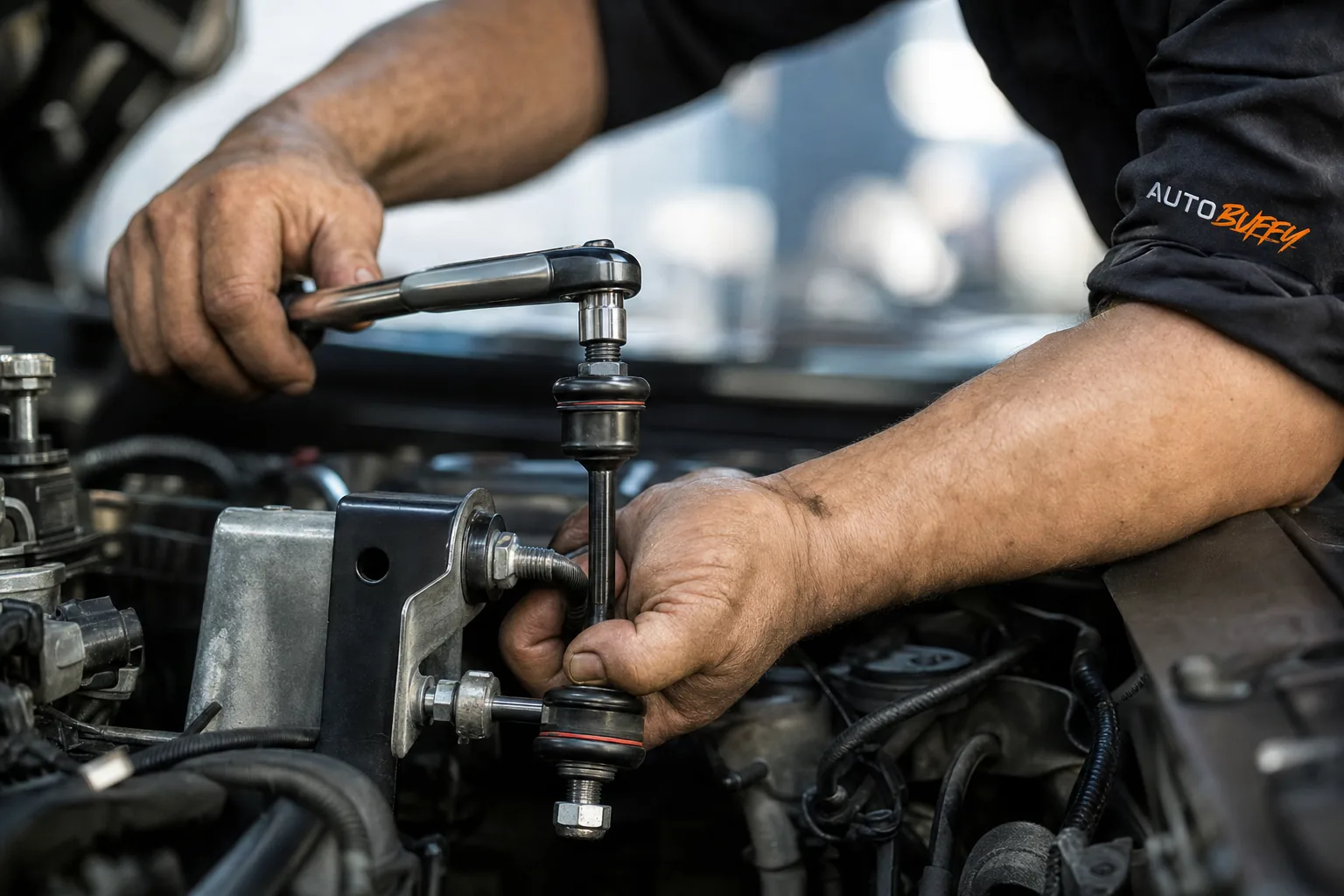
Shock absorbers and sway bar links don't share the same job. Shocks (and struts) control vertical motion—they dampen the up-and-down movement of your suspension over bumps and dips. Sway bar links do something different: they connect the stabilizer bar to the control arm or strut, keeping the car's body from rolling too aggressively in corners. Conflating the two is a mistake; they're distinct parts with distinct failure modes. That said, they wear out in overlapping time windows on most vehicles. Sway bar links typically need replacement somewhere between 50,000 and 100,000 miles. Shock absorbers on a daily driver are usually due in the same range. That overlap is precisely why the combo kit category exists—and why it's a legitimate value proposition, not just a parts-store upsell. When a tech has the suspension apart to swap shocks, the sway bar links are right there. Replacing them at the same visit costs maybe 20–30 extra minutes of labor. Coming back six months later to do the links separately means paying for another alignment, another lift charge, and another hour of labor time. The math usually favors doing it together. ---
When a Combo Kit Actually Makes Sense
There are a few clear situations where buying the bundled shock absorber kit is the smarter call:
You're doing a high-mileage refresh. If your vehicle has 80,000+ miles and you've never touched the suspension, there's a high probability that both shocks and sway bar links are showing wear simultaneously. A kit covering both makes the whole job cleaner. You hear clunking AND the ride feels soft or wallowy. That combination is a strong signal that both components are compromised. Clunking over bumps or during slow turns often points to worn link bushings or loose link ball joints. A soft, bouncy ride is a classic shock symptom. When both symptoms show up together, a combo kit is almost always the right answer. Your inspection confirms wear on both. Don't skip the visual check. Grab each sway bar link by hand and try to move it—there shouldn't be any play. Check the rubber boots on the link joints for cracking or tearing. If the links are visibly degraded and your shocks are leaking or failing the bounce test, you've got your answer. You want one alignment, one job. Every time you loosen front suspension components, you're looking at a wheel alignment afterward. Doing shocks and links in the same visit means one alignment charge. Splitting the jobs means paying twice. ---
When to Skip the Combo and Buy Individual Parts
The combo kit isn't always the right call. If your sway bar links were replaced recently and are genuinely in good shape, buying a kit that includes them wastes money. Same goes the other direction—if your shocks are still performing well but a link has snapped or a boot has torn, just buy the links. There's also a fit consideration. Combo kits, especially larger suspension sets that include control arms and multiple links, are vehicle-specific. If the kit doesn't cover your exact year, make, model, and trim, don't force it. A mismatch in control arm geometry or link length can create handling problems worse than the worn parts you started with. ---
Choosing the Right Brands for Each Part of the Kit
For Shock Absorbers
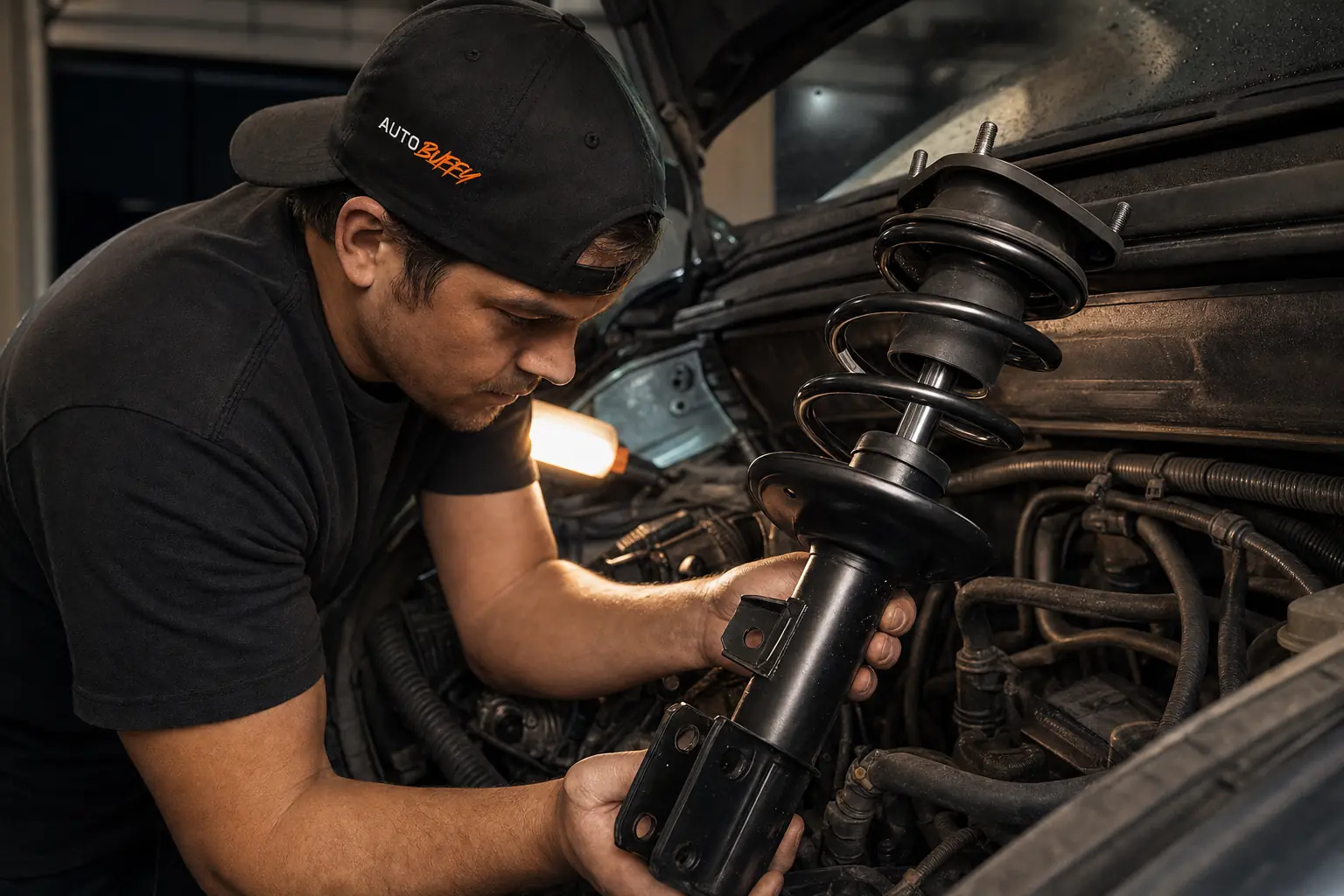
Monroe is one of the most widely recognized shock brands in North America. Founded in 1916, the brand now sits under DRiV Incorporated alongside a broad portfolio of other automotive brands including MOOG, Rancho, and Öhlins, among others. Monroe's product line covers a huge range of applications and price points, from basic OE-replacement units to performance-oriented gas shocks. KYB is an independent Japanese manufacturer headquartered in Tokyo, and one of the largest shock absorber producers in the world by volume—with an annual production capacity exceeding 75 million units across 15 factories globally. KYB was established in 1919 as Kayaba Research Center and has grown to supply both OEM and aftermarket markets on a massive scale. Their Excel-G and Gas-a-Just lines are well regarded for daily-driver and enthusiast applications respectively. Both brands are solid choices. Monroe tends to be easier to find at local retailers; KYB's OEM supply relationships mean their specs are often very close to factory fit. ### For Sway Bar Links (and Broader Suspension Kits)
MOOG is the standout name when it comes to comprehensive suspension kits. Their multi-piece kits—covering front sway bar links alongside control arms and related hardware—are engineered as direct OEM replacements. For vehicles that need a more involved front-end refresh, MOOG's suspension sets offer a high-coverage solution in a single purchase. Use the part finder below to check which kit fits your specific vehicle. > Honest take: For shock absorbers alone, KYB's production scale and OEM supply history give real confidence in their dimensional accuracy—I've seen fewer fitment complaints on KYB units than on some budget alternatives. For sway bar links and complete suspension kits, MOOG's problem-solver engineering approach is hard to argue with. ---
What a Full Combo Job Actually Costs
Parts pricing ranges widely based on vehicle type and kit scope. Here's a realistic breakdown:
| Scope | Parts Range | Labor (shop estimate) |
|---|---|---|
| Rear shocks only (pair) | $80–$250 | 1–2 hrs |
| Front struts only (pair) | $150–$450 | 2–4 hrs |
| Sway bar links only (pair) | $40–$120 | 0.5–1 hr |
| Shocks + sway bar links | $200–$600 | 2–4 hrs |
| Full front suspension kit (shocks/struts + links + control arms) | $600–$1,800+ | 4–7 hrs |
These are market ranges—your specific vehicle, region, and shop will move the needle. Always get the alignment included in the labor quote; any front suspension work requires it. For exact pricing on kits that fit your vehicle, use the part finder. Inventory and pricing shift; the finder is always current. ---
DIY Considerations
Replacing sway bar links is one of the more approachable suspension jobs for a home mechanic. The fasteners are accessible, you don't need a spring compressor, and most links come off with basic hand tools—though a breaker bar and some penetrating oil help with rusty hardware. Shocks and struts are a step up in complexity, particularly struts that require a spring compressor to disassemble safely. If you're doing a full front suspension kit that includes control arms, budget for a full day and make sure you have the right tools before you start. A torque wrench is non-negotiable; suspension fasteners have specific torque specs for a reason. ---
Why buy from AutoBuffy
- Fitment check: add your vehicle and we confirm the part fits before you buy. If it doesn't fit because of our listing, you get a free return and a full refund, including original shipping.
- 24-month limited warranty on new parts bought on autobuffy.com.
- Real reviews: rated 4.9 by 19,069 verified customers.
- 30-day returns on unused parts in the original packaging.
- Free shipping on orders $50+. Orders placed before 12:00 PM ET (Mon-Fri) ship the same business day.
- Questions about an order? Call 888-477-2530 or email help@autobuffy.com.
Find the right part for your vehicle
Guaranteed fit, ships free
FAQ / People Also Ask
A combo kit bundles shock absorbers with related suspension components—most commonly sway bar links, and sometimes control arms—into a single package. The idea is to replace worn parts together, saving on labor and ensuring all components are at the same service life.

Comments
Loading comments...
Comments are moderated by the AutoBuffy team.