

Tie Rod Replacement Cost and Symptoms
Learn what tie rod replacement actually costs, how to spot a failing tie rod, and when to DIY vs. call a shop.
The Short Answer
Tie rod replacement costs $150–$450 per side at a shop (parts plus labor), and you should always budget an additional $80–$150 for a wheel alignment afterward.
| Job | DIY Parts Cost | Shop Total (Parts + Labor) | Alignment Needed? |
|---|---|---|---|
| Outer tie rod (one side) | $20–$80 | $150–$300 | Yes |
| Inner tie rod (one side) | $30–$100 | $200–$450 | Yes |
| Both outer tie rods | $40–$160 | $250–$550 | Yes |
| Full tie rod assembly | $60–$180 | $300–$600 | Yes |
Those ranges assume a typical passenger car or light truck. Luxury vehicles, larger trucks, or models with complex rack setups push costs higher.
What Is a Tie Rod and What Does It Do?
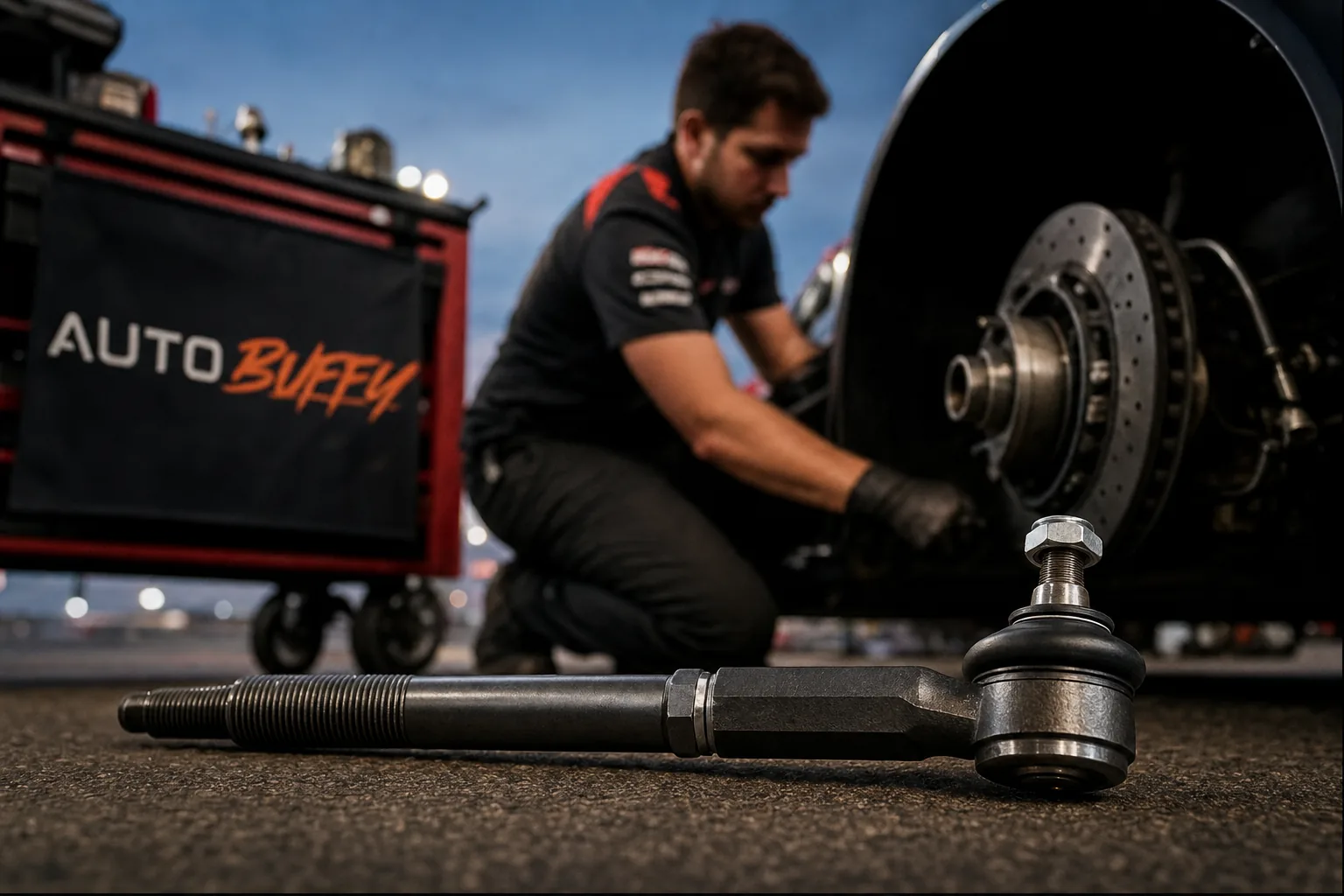
Your steering rack converts the rotation of the steering wheel into side-to-side movement. The tie rod is the metal link that carries that movement from the rack out to the steering knuckle — which actually turns the wheel. Without it, turning the steering wheel would accomplish nothing.
Every car has two tie rods (one per side), and each is made of two sections:
- Inner tie rod — threaded into the rack; protected by a rubber boot
- Outer tie rod end — the ball-joint-style piece that bolts to the knuckle
The outer end sees more articulation and exposure, so it wears first. That's why most tie rod replacements involve the outer end.
6 Symptoms of a Failing Tie Rod
Tie rods don't usually snap without warning. They give you signs first. Here's what to watch for:
1. Steering Wheel Vibration
If you feel a shake through the wheel — especially at highway speeds or when cornering — a loose tie rod end is a common culprit. Wheel balance issues cause similar symptoms, so have both checked.
2. Uneven or Feathered Tire Wear
A worn tie rod throws toe alignment off. The tire scrubs sideways with every mile you drive. You'll see feathered tread wear, or one tire wearing faster than its partner on the same axle.
3. Clunking or Knocking When Turning
That metallic knock when you pull out of a parking space? If it intensifies when turning at low speed, the ball socket inside the tie rod end is likely worn past its limit.
4. The Car Pulls to One Side
A failed tie rod changes the geometry of one wheel relative to the other. The vehicle pulls toward the worn side. This can mimic alignment issues — the difference is that alignment fixes won't hold if the tie rod itself is bad.
5. Loose or Vague Steering
When the tie rod has significant play, steering inputs feel delayed or imprecise. The car wanders on the highway. Some people describe it as the steering feeling "disconnected."
6. Visible Damage or a Torn Boot
A cracked or torn inner tie rod boot lets dirt and moisture contaminate the grease. That accelerates wear dramatically. If a tech spots a shredded boot during an oil change, the inner tie rod underneath it likely needs attention soon.
What Affects the Price?
Several factors move the needle on your final bill.
Inner vs. outer: Inner tie rods require a special removal tool and more time to access. Labor is higher — plan on $50–$100 more per side compared to an outer replacement.
Vehicle type: A compact sedan is straightforward. A full-size truck or SUV with a larger rack and heavier components means more labor time. Some European or luxury models carry parts premiums.
Labor rates: A dealership typically charges $120–$180/hour. An independent shop runs $80–$130/hour. That difference matters when a job takes 1–2 hours.
Alignment: Non-negotiable after any tie rod work. Skip it and you'll eat through a tire set in half the expected miles. Factor it in from the start.
DIY vs. Shop: Which Makes Sense?
Outer tie rod replacement is genuinely doable at home if you're comfortable with basic suspension work. You'll need a ball joint separator (pickle fork or tie rod puller), a torque wrench, and patience counting the thread turns when removing the old end — those turns are your temporary toe setting.
Inner tie rod replacement is trickier. You need an inner tie rod tool to unthread the end from the rack without damaging it. If you don't own one and your local parts store doesn't loan it, the rental may close the gap on DIY savings.
Either way: you cannot skip the alignment. No matter how carefully you count threads or mark positions, a proper four-wheel alignment on a lift is the only accurate way to restore toe. Budget that in whether you DIY the parts or pay a shop for the whole job.
My honest take: for most people, paying a shop to do the full job including alignment comes out close to DIY once you factor in tool rental and a separate alignment appointment. The math changes if you already have the tools or enjoy the work.
How to Confirm It's the Tie Rod (Not Something Else)
Steering symptoms have overlapping causes — worn ball joints, bad wheel bearings, and loose struts can all feel similar. Here's the quickest way to narrow it down:
- Safely lift the front of the vehicle and support it on jack stands.
- Grip the tire at the 9 o'clock and 3 o'clock positions (horizontal).
- Try to move the tire back and forth in that horizontal plane.
- Any movement or clunking points to tie rod wear. (Vertical play at 12 and 6 o'clock typically indicates ball joints or wheel bearings instead.)
If you're not sure, most shops will do a free or low-cost front-end inspection. That diagnostic is worth it before spending money on parts.
When to Replace Both Sides
If one tie rod end has failed and the vehicle has over 80,000 miles, it's worth having the opposite side inspected closely. Both ends wear under similar conditions. Replacing both at the same visit means one labor charge and one alignment fee — not two. That's usually the smarter call, and most mechanics will be straight with you about whether the second side genuinely needs it.
Find the right part for your vehicle
Guaranteed fit, ships free
FAQ / People Also Ask
Total cost typically runs $150–$450 per side at a shop, covering parts and labor. An alignment afterward adds $80–$150. Inner tie rods cost more to replace because they require a special socket and more disassembly time.
Comments
Loading comments...
Comments are moderated by the AutoBuffy team.