

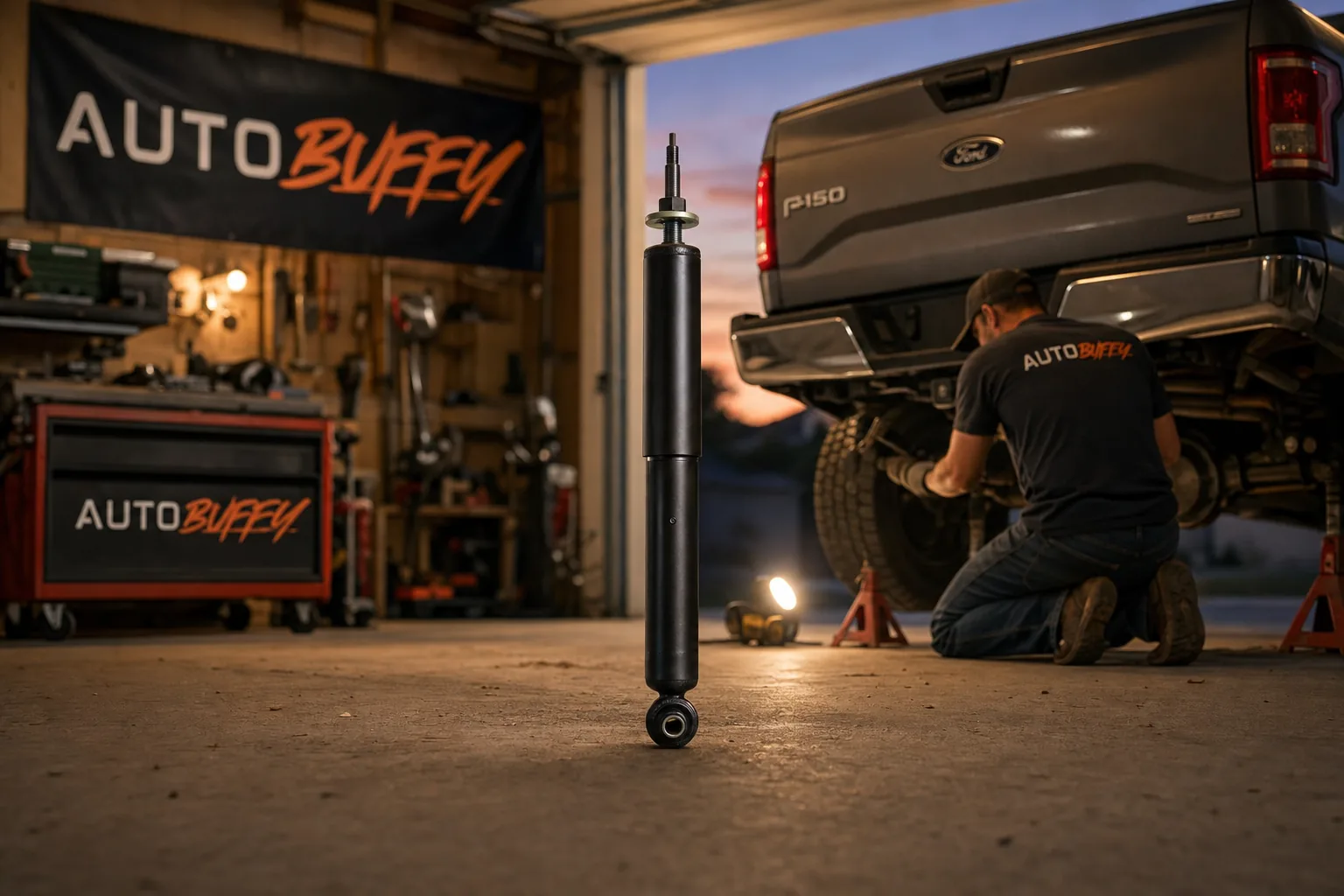
Best Shocks for the Ford F-150: What Actually Works (and What to Skip)
Find the best shock absorbers for your Ford F-150, from daily drivers to tow rigs. Real-world guidance, cost ranges, and how to pick the right fit.
The Short Answer
For most F-150 owners, a quality gas-charged or monotube shock absorber will outperform the factory unit in ride control, towing stability, and long-term durability — and the right choice depends almost entirely on how you actually use the truck.
| Use Case | Recommended Shock Type | Typical Cost (Set of 4, Parts Only) |
|---|---|---|
| Daily driver / commuter | OE-replacement, twin-tube gas | $120–$280 |
| Light towing / occasional hauling | Upgraded twin-tube or entry monotube | $200–$380 |
| Heavy towing / max payload | Heavy-duty monotube or load-adjustable | $300–$600 |
| Mild off-road / lifted F-150 | Lift-specific monotube | $280–$550 |
| Performance / track use | Adjustable monotube | $500–$900+ |
Why Shocks Matter More on an F-150 Than You Might Think
The F-150 is America's best-selling vehicle year after year — and it earns that title in part because it genuinely does everything. People use these trucks as grocery-getters on Monday, fifth-wheel towers on Friday, and trail rigs on Saturday. That versatility is exactly why shock selection matters so much. A shock tuned for smooth highway comfort can turn genuinely sketchy when you've got 8,000 lbs behind you on a mountain pass.
Factory shocks are a compromise. Ford engineers tune them to satisfy the widest possible range of buyers, which means they're adequate for most situations and excellent for none. Around 50,000 miles, you'll start noticing the difference — extra bounce over railroad tracks, a floaty feeling in corners, more trailer sway than you remember. That's not just annoying; NHTSA data links worn shocks to increased stopping distances and reduced vehicle stability.
Replacing shocks is one of the most underrated maintenance moves you can make on a high-mileage F-150.
How to Choose the Right Shock Type for Your F-150
Twin-Tube vs. Monotube: The Real Difference
Twin-tube shocks have two concentric cylinders — an inner working cylinder and an outer reserve tube. They're less expensive to manufacture, perfectly capable for normal driving, and what most OE applications use. The downside is that they can fade during sustained hard use (think repeated trail hits or a long mountain descent while towing) because heat builds up and causes the fluid to foam slightly.
Monotube shocks use a single, larger-diameter cylinder with a floating gas piston that completely separates the oil from the pressurized gas charge. They run cooler, respond faster to small road inputs, and maintain consistent damping even when worked hard. For towing, off-roading, or just someone who wants a more precise truck, monotube is worth the extra spend — typically $30–$80 more per shock.
Gas-Charged vs. Standard Hydraulic
Most shocks sold today are gas-charged, meaning they're pressurized with nitrogen gas. This prevents the hydraulic fluid from aerating (foaming) during rapid cycling, which keeps the ride feeling consistent whether you've been driving for 10 minutes or 3 hours. If you see a truly cheap hydraulic-only shock, skip it — the performance difference is real and the price gap is small.
Load-Adjustable and Air Shocks
If you tow frequently or haul heavy payloads, load-adjustable shocks (or a shock-and-spring helper combination) are worth serious consideration. These let you firm up the rear suspension specifically when loaded, then return to a comfortable setting when running empty. It's a practical solution that a fixed shock — no matter how good — can't replicate.
What to Look for by F-150 Generation
The F-150 has changed substantially across generations. Mounting hardware, spring rates, and even shock travel specs differ between a 2003 Heritage and a 2023 PowerBoost. A few things to always verify:
- Year and trim: FX4 packages sometimes include unique shock valving from the factory.
- Cab and bed configuration: Extended cab with a short bed vs. SuperCrew with an 8-foot bed can have different rear shock specs.
- Lift height (if applicable): A 4-inch lift needs a shock with the correct extended and collapsed length — don't assume a stock-length shock will work.
- 4WD vs. 2WD: Front shock mounting points differ.
"The single biggest mistake I see is someone buying a great shock in the wrong length for their lifted truck. Then they wonder why the ride got worse." — common feedback from suspension techs
Use the part finder below and enter your specific year, engine, and cab config. Don't guess on fitment — shock mounting geometry is not forgiving.
Top Shock Brands Worth Knowing for the F-150
We're not going to pretend all shock brands are equal, but we're also not going to invent a winner. Here's an honest breakdown of the categories you'll encounter:
OE-Replacement Grade
Brands in this category prioritize matching factory ride quality at a reasonable price. These are the right call if your truck is a daily driver, you're not towing seriously, and you want a simple, no-drama replacement. Expect a smooth ride restoration without any significant handling change.
Performance / Upgrade Grade
Brands like Bilstein, KYB, and Gabriel have long track records in the F-150 market. Bilstein's monotube design is particularly well-regarded for trucks that tow or see mixed highway/off-road use — their valving tends to firm up progressively under load rather than feeling harsh at all times. KYB's Gas-a-Just line offers a genuine upgrade over OE at a more accessible price point. Gabriel's HiJackers are a solid choice for owners who want load-support capability without going full air-bag suspension.
My honest opinion: if your F-150 tows more than 5,000 lbs regularly, spending an extra $100–$150 on a quality monotube set is the single most cost-effective suspension upgrade you can make. Towing stability alone is worth it — and the data backs it up, with controlled rear squat meaningfully reducing trailer sway risk at highway speeds.
Heavy-Duty / Off-Road Grade
Brands like Rancho and Fox cater to lifted trucks and trail use. These shocks are built with larger bore diameters, remote reservoirs (on higher-end units), and rebound tuning that accounts for the longer shock travel a lifted F-150 needs. They're overkill for a pavement-only truck, but genuinely appropriate if you're running 33s and hitting technical terrain on weekends.
What Does a Full Shock Replacement Actually Cost?
Parts for a set of four replacement shocks typically run $150–$600, depending on quality tier. Labor at an independent shop usually adds $150–$350 for a straightforward swap on a non-lifted truck. RepairPal's labor estimator can give you a local baseline for what shops in your area charge.
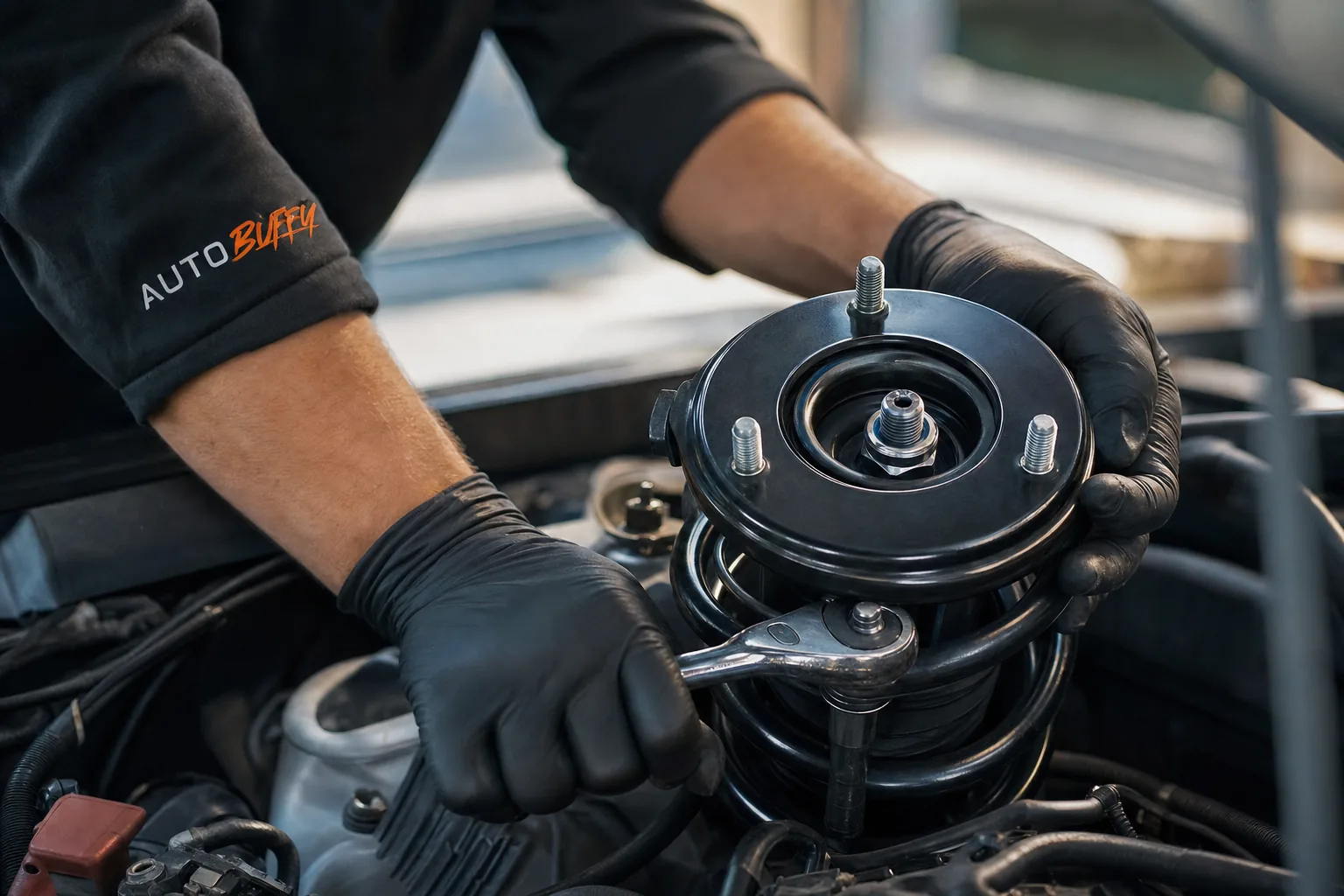
If you're doing it yourself, the rear shocks on most F-150 generations are accessible with basic tools. The front struts/shocks can be trickier depending on the generation — some require a spring compressor and proper safety precautions. If you're not confident with front suspension work, this is one job worth paying a shop for.
Installation Tips That Actually Matter
- Always torque to spec. Shock mounting bolts that are just "hand-tight plus a bit" will work loose and cause noise or, worse, failure. Check your service manual or a trusted source like Ford's owner resources for your specific torque values.
- Get an alignment check after front shock work. Front suspension geometry can shift slightly even on a direct OE-replacement swap if anything was disturbed.
- Replace bump stops if they're cracked or crumbled. They're cheap and they protect your new shocks from bottoming out.
- Let new shocks settle. Some shimmy or stiffness in the first 50–100 miles is normal as seals seat. Don't panic and don't return them after 20 miles.
Sources
- Ford F-150 Official Page — Ford Motor Company
- NHTSA — Vehicle Safety & Shock Absorber Research
- RepairPal — Shock Absorber Replacement Cost Estimator
- Ford Owner Support Resources
Find the right part for your vehicle
Guaranteed fit, ships free
FAQ / People Also Ask
Most mechanics recommend inspecting shocks every 50,000 miles and replacing them between 50,000–100,000 miles depending on how hard you use the truck. Towing, off-road driving, and rough roads accelerate wear significantly.
Comments
Loading comments...
Comments are moderated by the AutoBuffy team.