

Best Struts for the Honda Accord: What Actually Works (and What to Avoid)
Worn Accord struts ruin ride quality and handling. Here's what to look for, what brands hold up, and how much to budget for replacement.
The Short Answer
For most Honda Accord owners, a complete loaded strut assembly from a reputable aftermarket brand—matched to OEM valving specs—delivers the best balance of ride quality, fitment, and value.
| Factor | Budget Strut | Mid-Range Assembly | OEM Honda Strut |
|---|---|---|---|
| Typical cost (per axle, parts only) | $80–$160 | $180–$400 | $350–$600+ |
| Includes spring & mount? | Rarely | Usually yes | No (bare strut) |
| OE-matched valving | Often not | Usually yes | Yes |
| Warranty | 90 days–1 yr | 1–3 years | 1 year (dealer) |
| DIY-friendly? | Requires spring compressor | Yes (loaded) | Requires spring compressor |
| Best for | Tight budgets, older cars | Most drivers | Purists, warranty-covered repairs |
Why Honda Accord Struts Wear Out Faster Than You'd Think
The Accord uses a MacPherson strut setup up front and a multi-link rear on most generations from the 7th gen onward. It's a well-engineered system, but it's not immune to time and mileage.
Struts work by damping the energy of your springs. Every pothole, speed bump, and hard stop cycles the internal piston through hydraulic fluid. Over tens of thousands of miles, that fluid degrades, the seals weaken, and the damping force drops off. You won't notice it happening day to day—it's gradual—which is exactly why so many Accord owners are still driving on 100,000-mile original struts without realizing how much handling they've lost.
RepairPal data puts strut replacement among the top 15 most common Honda Accord repairs, which tells you something: this isn't a rare failure. It's a wear item, full stop.
The Real Choice: Loaded Assembly vs. Bare Strut
Before you compare brands, you need to settle this question. It shapes everything else.
Loaded (Complete) Strut Assemblies
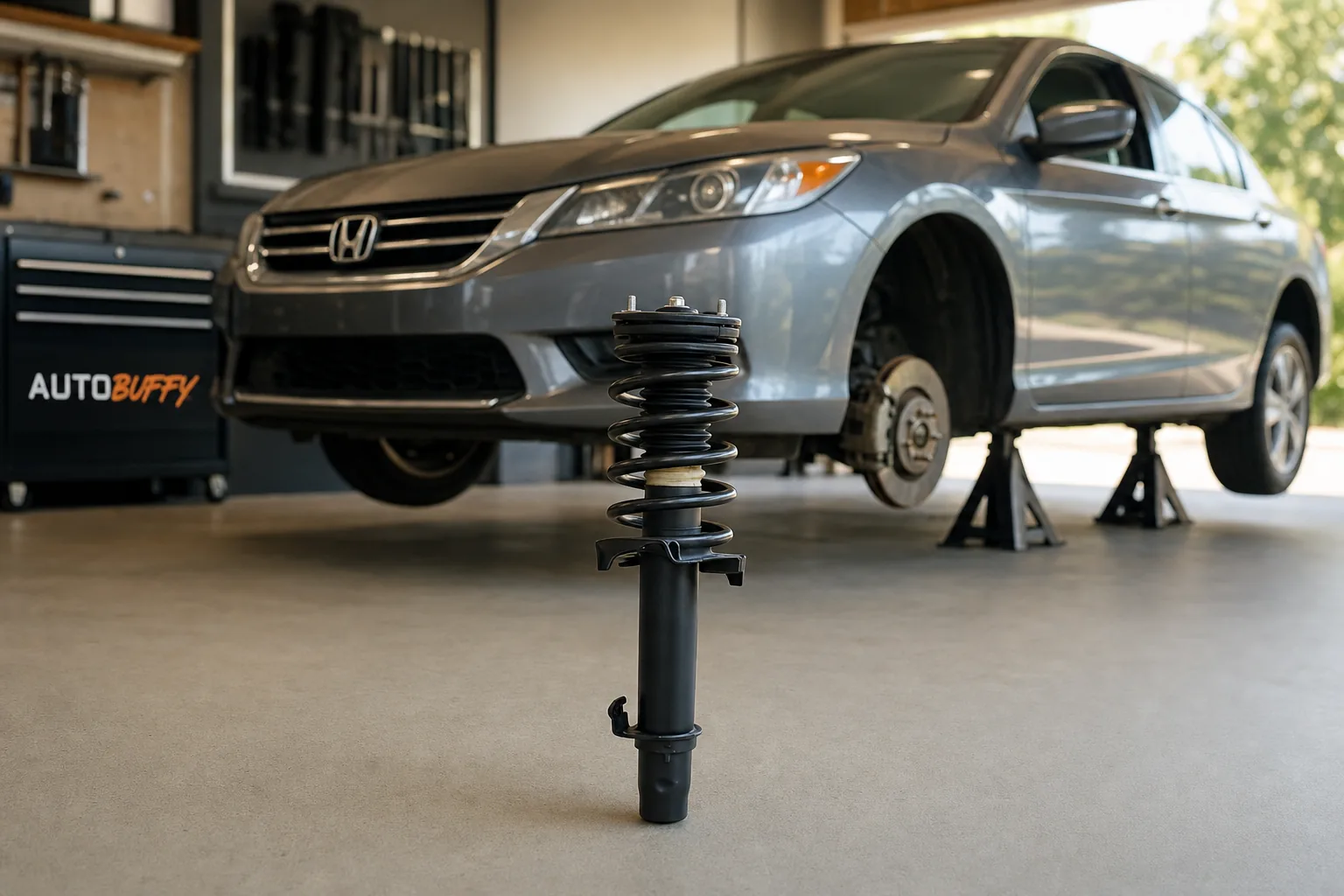
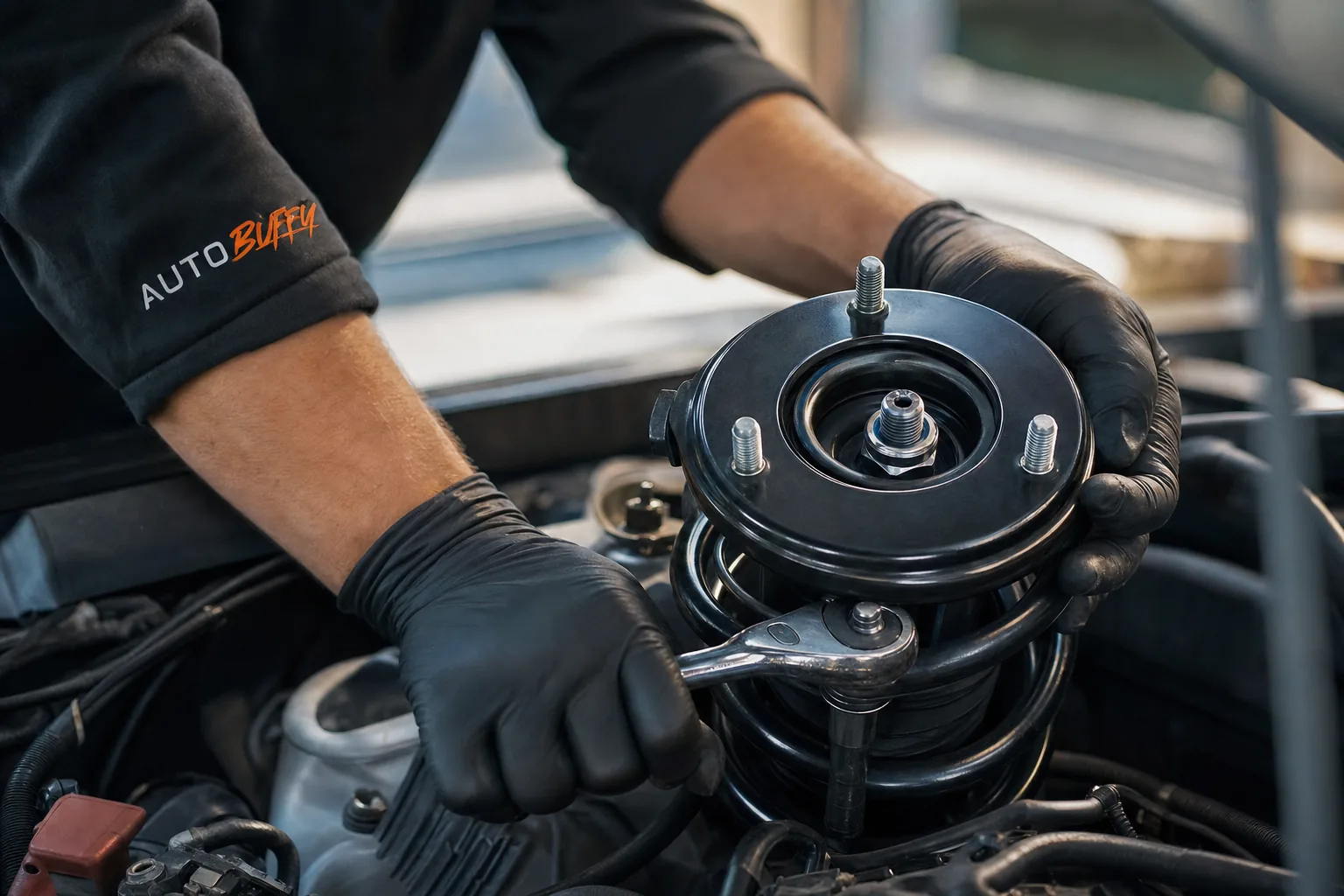
A loaded strut comes with the coil spring, upper strut mount, and bearing pre-assembled on the strut body. You unbolt the old unit, bolt in the new one, done. No spring compressor. No risk of a coil spring launching across your garage.
For DIYers, this is the move. And even at a shop, the reduced labor time often offsets the higher parts cost. On a front Accord strut, you can save 30–60 minutes of labor per side going loaded vs. bare.
Bare Struts
A bare strut is just the damper. You reuse your existing spring, mount, and bearing—which saves money if those components are still in good shape. Makes sense if your Accord's springs aren't sagging and the mounts aren't cracked or corroded. A shop can swap these quickly with the right equipment.
Honest take: If your Accord has over 80,000 miles, the spring and mount have been through the same cycles as the strut. Spending another $40–$80 to get fresh components already installed is almost always the smarter call.
What to Look for in an Accord Strut
Not all aftermarket struts are equal. Here's what the specs actually mean:
OE-Matched Valving
This is the big one. Some budget struts are intentionally tuned soft to appeal to a "comfortable" feel in the store—but that softness translates to excessive body roll and longer stopping distances. Look for manufacturers that publish OE-equivalent valving specs or explicitly state their units are engineered to match factory tune.
Corrosion Resistance
Accords are driven nationwide, including in states that salt roads heavily. A powder-coated body or zinc-plated finish on the strut housing matters. A rusting strut body isn't just ugly—it can seize the strut to the knuckle and make your next replacement a nightmare.
Upper Mount Quality
The upper strut mount takes the rotational load every time you turn the wheel. A cheap bearing in the mount creates a clunking or creaking noise that's easy to mistake for a ball joint. Quality assemblies use a sealed, pre-greased bearing that holds up for the life of the assembly.
Warranty
Reputable strut brands back their products with at least a one-year warranty, and many mid-range assemblies come with a limited lifetime warranty on the housing. Anything less than a year is a signal to keep looking.
Quality Tiers Explained
Budget Tier (~$40–$80 per strut)
These exist, and they'll get your car off jackstands. But independent suspension testers consistently find that budget struts degrade faster and frequently don't match OEM damping curves. According to NHTSA complaint data, handling and suspension complaints often follow aftermarket component replacements when quality is compromised. Fine for a beater with a few months of life left. Not fine for a daily driver you care about.
Mid-Range / OE-Replacement Tier (~$80–$200 per strut, $150–$350 as a loaded assembly)
This is where most Accord owners should shop. Brands at this tier engineer their valving against OEM specifications, use quality seals and coatings, and back the product with meaningful warranties. The ride quality difference between a good mid-range strut and a factory Honda unit is genuinely difficult to notice for most drivers.
OEM Honda Struts
Honda's genuine parts are exactly right for the car—that's the obvious upside. The downside is cost. Expect to pay 2–3× what a quality aftermarket unit costs, and you still need to source and pay for the spring and mount separately. Makes sense if you're doing a dealer-sponsored repair, or if you're restoring a low-mileage Accord to like-new spec.
What the Installation Actually Involves
Here's the real-world sequence for a front strut swap on an Accord:
- Loosen the lug nuts, jack and support the car safely
- Remove the wheel and brake caliper (hang it—don't let it dangle by the hose)
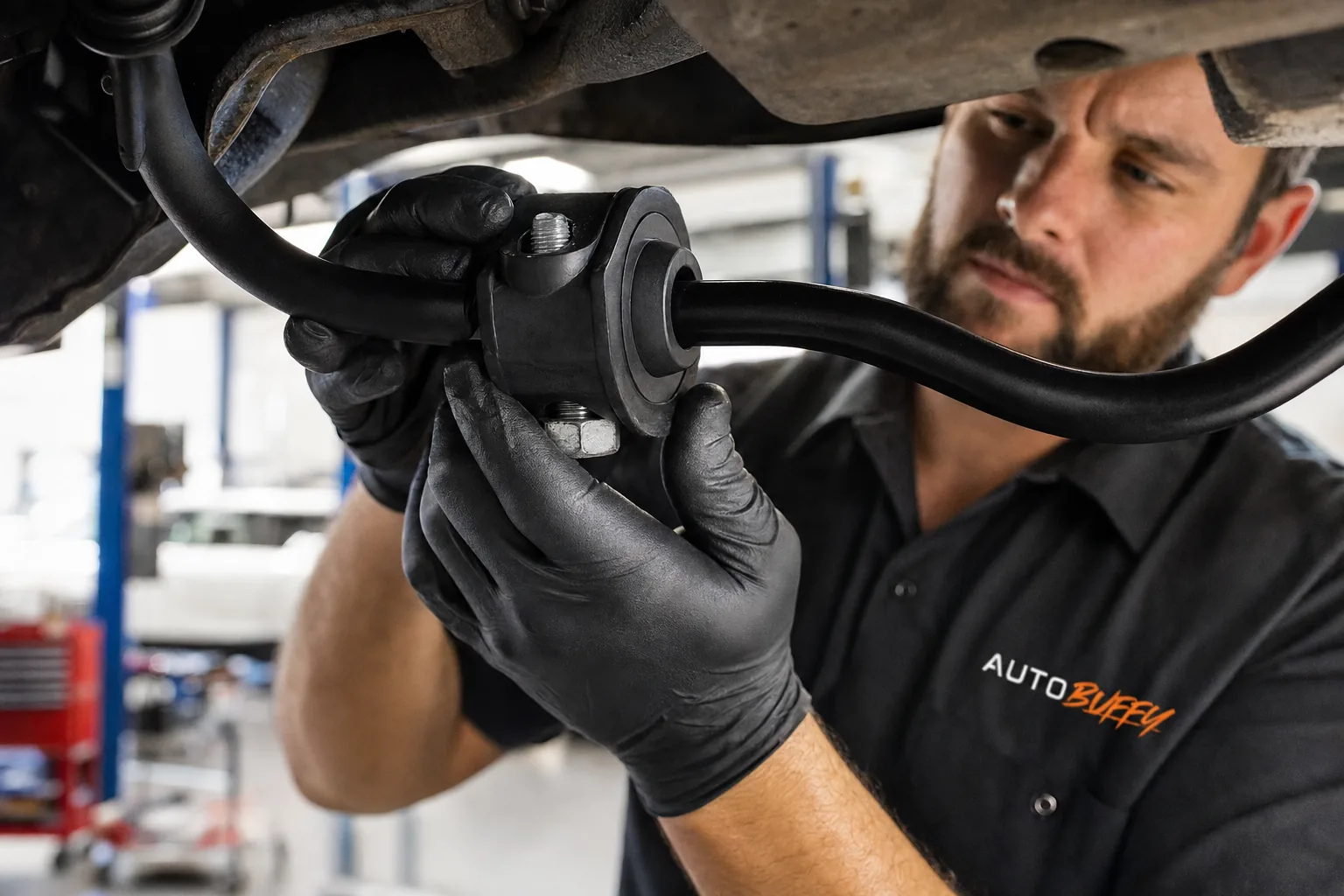
- Disconnect the sway bar end link and ABS wire if present
- Separate the strut from the steering knuckle (two pinch bolts on most Accords)
- Remove the three top hat nuts in the engine bay
- If using a loaded assembly: bolt in the new unit and reverse
- If using a bare strut: compress the spring, swap the strut, carefully release tension
- Torque everything to spec (the knuckle pinch bolts on 8th-gen Accords are typically 40 ft-lbs + 90° turn—verify yours in a service manual)
- Get a four-wheel alignment before driving more than a few miles
Step 9 is non-negotiable. Skipping alignment after a strut swap is how people end up buying tires two months later wondering why they're worn at the edge.
Generation-Specific Notes
7th Gen (2003–2007): These are old enough that springs are frequently sagging. Loaded assemblies are especially worth it here.
8th Gen (2008–2012): A high-volume generation with plenty of aftermarket fitment coverage. Front loaded assemblies are widely available.
9th Gen (2013–2017): The rear multi-link setup uses separate shocks and springs, not a strut assembly. Confirm front vs. rear before ordering.
10th Gen (2018–2022): Newer, but high-mileage examples are showing up. OE-spec valving matters more on newer platforms where the suspension tuning is more complex.
Always confirm fitment by your exact model year, trim (the Sport trim's stiffer spring rates differ from the LX), and whether your car has electronic suspension before ordering anything.
Sources
- RepairPal – Honda Accord Strut Replacement Cost
- NHTSA – Vehicle Complaints Database
- Honda Genuine Parts
Find the right part for your vehicle
Guaranteed fit, ships free
FAQ / People Also Ask
Common signs include a bouncy or floaty ride, nose-diving under braking, cupped or uneven tire wear, clunking noises over bumps, and the car pulling to one side. A simple bounce test—push down hard on each corner and let go—should settle in one bounce. More than that usually means the strut is tired.
Comments
Loading comments...
Comments are moderated by the AutoBuffy team.