

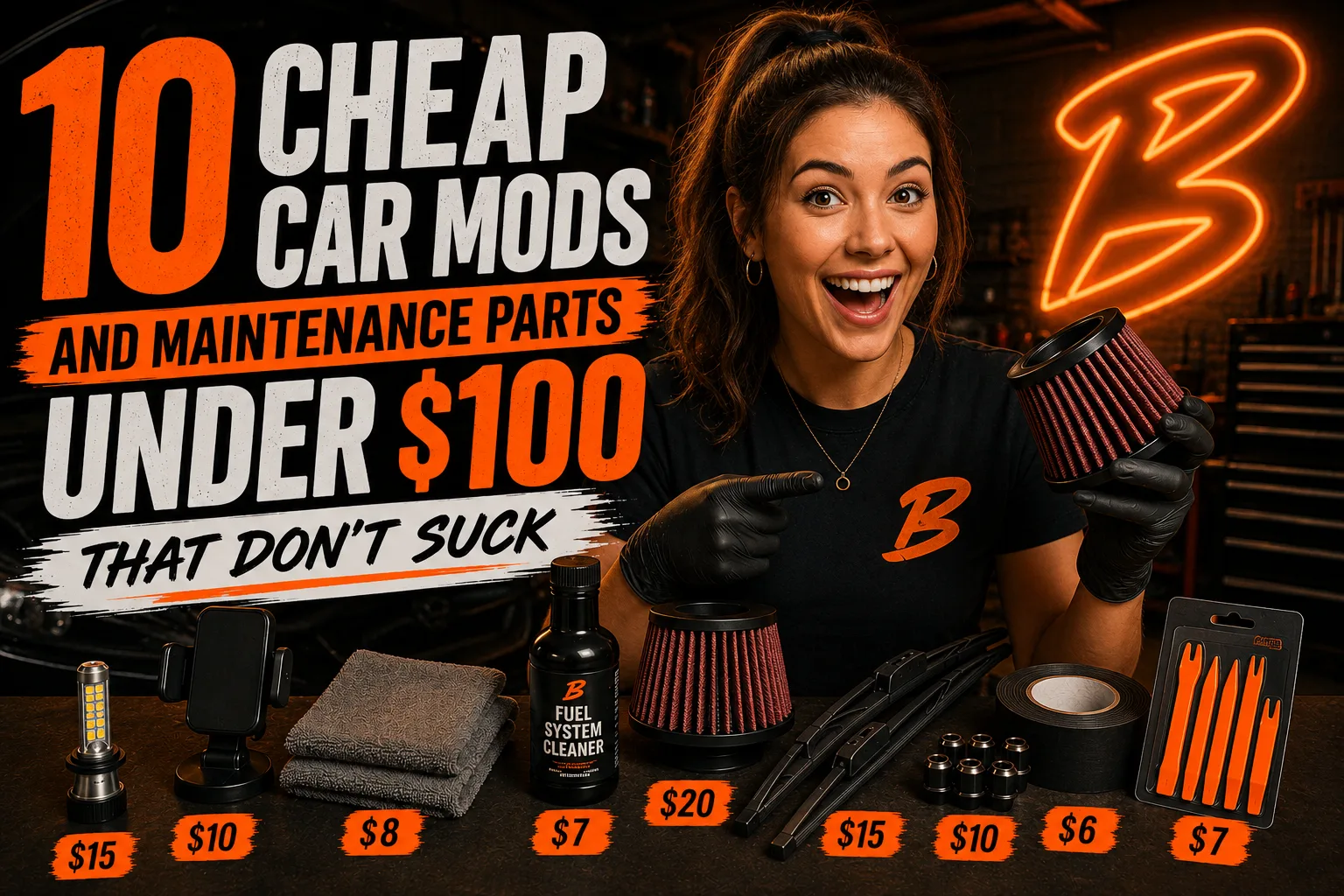
10 Cheap Car Mods and Maintenance Parts Under $100 That Don't Suck
Ten honest upgrades under $100 that actually change how your daily drives — wipers, filters, plugs, sway bar links — with real prices, DIY difficulty, and the trap version of each one called out by name.
The Honest Version of a "Cheap Mods" List
Search "cheap car mods" and you'll drown in the same recycled junk: fake vents, plasma "chips" that plug into your OBD port, $89 coilovers. Most of it does nothing. Some of it makes your car actively worse.
Here's the truth nobody clicks on. The best under-$100 upgrades for a daily driver are mostly maintenance parts and quality-of-life fixes. Fresh plugs, clean filters, wipers that actually wipe, tight suspension links. A car with those feels newer, drives better, and costs less to run. That's the real mod.
So this list plays it straight. Ten things under $100 that genuinely change how your car feels, with the honest price, the real DIY difficulty, and the trap version of each one called out by name. Then a short list of the under-$100 "mods" you should skip entirely.
The 10 That Are Actually Worth It
1. LED Headlight and Interior Bulb Upgrade — $20 to $80
What it does: If your car came with halogen bulbs, a proper LED conversion is the single biggest night-driving upgrade you can buy. Whiter, brighter light, better color rendering, and LEDs don't dim with age the way halogens do. Interior LED bulbs (dome, map, trunk, license plate) are a $10 afterthought that makes an older cabin feel a decade newer.
DIY difficulty: Easy on most cars. Unplug, swap, done in 15 to 30 minutes. Some vehicles need a trim panel or wheel-well liner out of the way.
The trap: The $15 "12,000 lumen" LEDs that blind oncoming traffic. Cheap LEDs put the diode in the wrong spot, so your headlight housing scatters light everywhere instead of projecting a clean beam. You get glare, angry flashes from other drivers, and ironically *worse* distance vision because the light isn't going down the road. Buy LEDs designed to replicate the halogen filament position for a correct beam pattern, and check your cutoff line against a wall after installing. If the top of the beam isn't crisp, they're the wrong bulbs.
2. New Wiper Blades — $15 to $40 a Pair
What it does: The most underrated two-minute upgrade in all of car ownership. Wiper rubber hardens and tears within a year or two, and because it degrades slowly, you never notice how bad it's gotten. Then the first rainstorm with fresh blades feels like someone replaced your windshield. Streak-free glass in heavy rain is a genuine safety upgrade, not a cosmetic one.
DIY difficulty: Trivial. Most blades clip on in under two minutes with no tools. Do it in the parking lot.
The trap: Gas-station bargain-bin blades that chatter and streak within a month, and paying a shop $60 in labor for something that takes 120 seconds. Buy a known brand, match the exact lengths for your car (driver and passenger are usually different sizes), and just replace them every 6 to 12 months.
3. Engine Air Filter — $10 to $30
What it does: Your engine breathes through this thing. A filter packed with a couple years of dust and leaves restricts airflow, and on older vehicles that can mean lazier throttle response and slightly worse fuel economy. A fresh one costs less than lunch and takes five minutes.
DIY difficulty: Easy. On most cars it's a few clips or screws on the airbox lid. No jack, usually no tools.
The trap: The oiled "performance" drop-in filter pitch. Honest take for a daily driver: the horsepower gain on a stock engine is small enough that you will not feel it, and an over-oiled filter can foul your mass airflow sensor. That causes real drivability problems and a real repair bill. Reusable filters can make financial sense over many years if you clean and oil them correctly, but as a *performance* mod on a stock daily, a clean quality paper filter does the job. Replace it roughly every 15,000 to 30,000 miles, sooner if you drive dusty roads.
4. Cabin Air Filter — $10 to $25
What it does: The filter everyone forgets exists. It cleans the air coming through your vents (pollen, dust, exhaust soot), and when it clogs, your A/C blows weaker, the defroster takes longer to clear the windshield, and the car develops that musty smell nobody can locate. If you've never changed it, prepare to be horrified by what comes out: leaves, dirt, sometimes evidence of a rodent.
DIY difficulty: Easy. Usually behind the glovebox. Drop the glovebox door, slide the old filter out, slide the new one in. Ten minutes, no tools on most cars.
The trap: Letting a shop charge you $50 to $90 in parts-plus-labor for a $15 filter and ten minutes of work. This is the definition of a do-it-yourself job. Change it once a year or every 15,000 to 20,000 miles.
Refresh Yours Today
Find Filters That Fit
5. A Phone Mount That Doesn't Fall — $15 to $50
What it does: Pure quality of life, and worth every dollar. A solid mount puts your navigation at eye level, ends the phone-in-the-cupholder shuffle, and makes the car meaningfully safer because you stop glancing down at your lap. If your car predates wireless CarPlay, a good mount plus a cable is 80% of the modern-infotainment experience for 5% of the cost.
DIY difficulty: None. Clamp it, stick it, or slot it into a vent.
The trap: The $8 suction mount that releases its grip the first hot day and launches your phone under the brake pedal, and flimsy vent clips that sag under a big phone. Spend $25 to $40 on a mount with a real clamping mechanism or a properly prepped adhesive base. MagSafe-style magnetic mounts are excellent if your phone supports them. This is a category where the mid-priced option is dramatically better than the cheapest one.
6. Fuel System Cleaner — $8 to $25 a Bottle
What it does: Here's the no-snake-oil version. Quality fuel system cleaners with polyetheramine (PEA) genuinely can dissolve carbon deposits on intake valves and port fuel injectors. On a higher-mileage car that's lived on cheap gas, a proper cleaning dose can smooth a slightly rough idle and restore a bit of lost responsiveness.
What it can't do: fix a mechanical problem, revive a dead injector, cure a misfire caused by bad plugs or coils, or add horsepower to a healthy engine. If your engine runs fine, a bottle of cleaner will not make it run *better than fine*. And on direct-injection engines, fuel additives never touch the backs of the intake valves at all. That carbon needs physical cleaning.
DIY difficulty: Pour it in the tank. That's it.
The trap: The miracle-in-a-can products promising horsepower gains and 20% better fuel economy. No additive does that. Buy a reputable PEA-based cleaner, use it at the full cleaning dose every 5,000 to 10,000 miles, and keep your expectations honest.
7. Microfiber Towels and Proper Wash Media — $25 to $60 to Start
What it does: Most of the swirl marks and spiderweb scratches on a car's paint aren't from the road. They're self-inflicted, from washing with a crusty sponge and drying with an old bath towel. A stack of quality microfiber towels, a proper wash mitt, and the two-bucket method will keep paint glossy for years. On dark-colored cars, the difference is night and day.
DIY difficulty: Easy, because it's technique, not skill. Two buckets (wash and rinse), a clean mitt, straight-line motions, and a dedicated plush drying towel. Never let a towel that hit the ground touch the paint again until it's washed.
The trap: Automatic brush car washes (those spinning brushes are loaded with the last hundred cars' grit) and "5-pack for $4" towels that are basically sandpaper with a soft reputation. Paint correction to remove swirls costs hundreds. The towels that prevent them cost thirty bucks.
8. Trim and Plastic Restorer — $10 to $25
What it does: Nothing ages a car like gray, chalky, sun-faded plastic trim and bumpers. A quality trim restorer brings faded black plastic back to a deep, even dark finish, and the transformation on a 10-year-old car is genuinely dramatic. It's the highest visual-impact-per-dollar product in detailing.
DIY difficulty: Easy. Clean the trim thoroughly, let it dry completely, apply a thin coat with an applicator, wipe the excess. An hour for the whole car.
The trap: Silicone-heavy "shine" dressings that look wet for two weeks, then wash off in the first rain and leave the plastic grayer than before, streaking your paint on the way down. Look for an actual restorer or coating rated in months, not a glorified oil. Applying to dirty or damp trim is the other classic mistake, because it seals the chalkiness in.
9. Spark Plugs on Schedule — $20 to $80 a Set
What it does: Here's the secret: fresh plugs feel like a mod because most cars are running plugs that are past due. Electrode gaps widen as plugs wear, the spark weakens, and the decline is so gradual you never notice the hesitation, the harder cold starts, the mpg slipping. Put in a fresh set at the proper interval and the car suddenly idles smoother and pulls cleaner. Not because plugs add power, but because you just got back what wear had quietly stolen. On most engines a set of quality iridium plugs lands well under $80.
DIY difficulty: Moderate. On many four-cylinders it's a ratchet, a spark plug socket, and an hour. On V6s with plugs buried under an intake manifold, it's a bigger job, so know your engine before you commit. Torque them properly and never install plugs in a hot aluminum head.
The trap: Two of them. Exotic "racing" plugs that promise horsepower on a stock engine, where the wrong heat range can cause real damage and the gains are fiction. And counterfeit plugs from sketchy marketplace sellers, which are common enough that buying from a legitimate parts source matters. Stick with the plug type and gap your engine was designed for. AutoBuffy stocks OE-spec ignition parts by vehicle, so what fits is what's listed.
10. Sway Bar End Links and Small Suspension Refresh Parts — $20 to $90
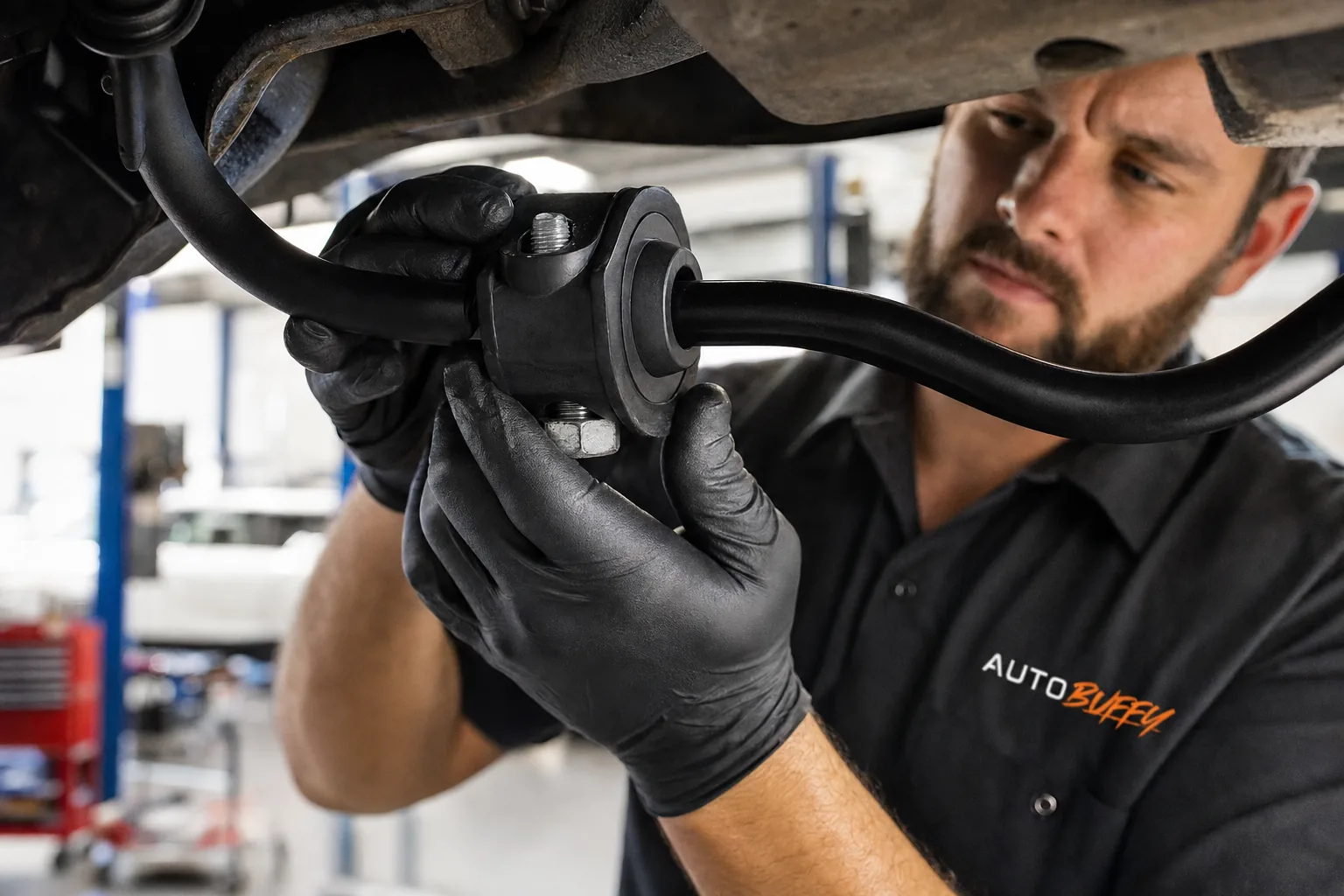
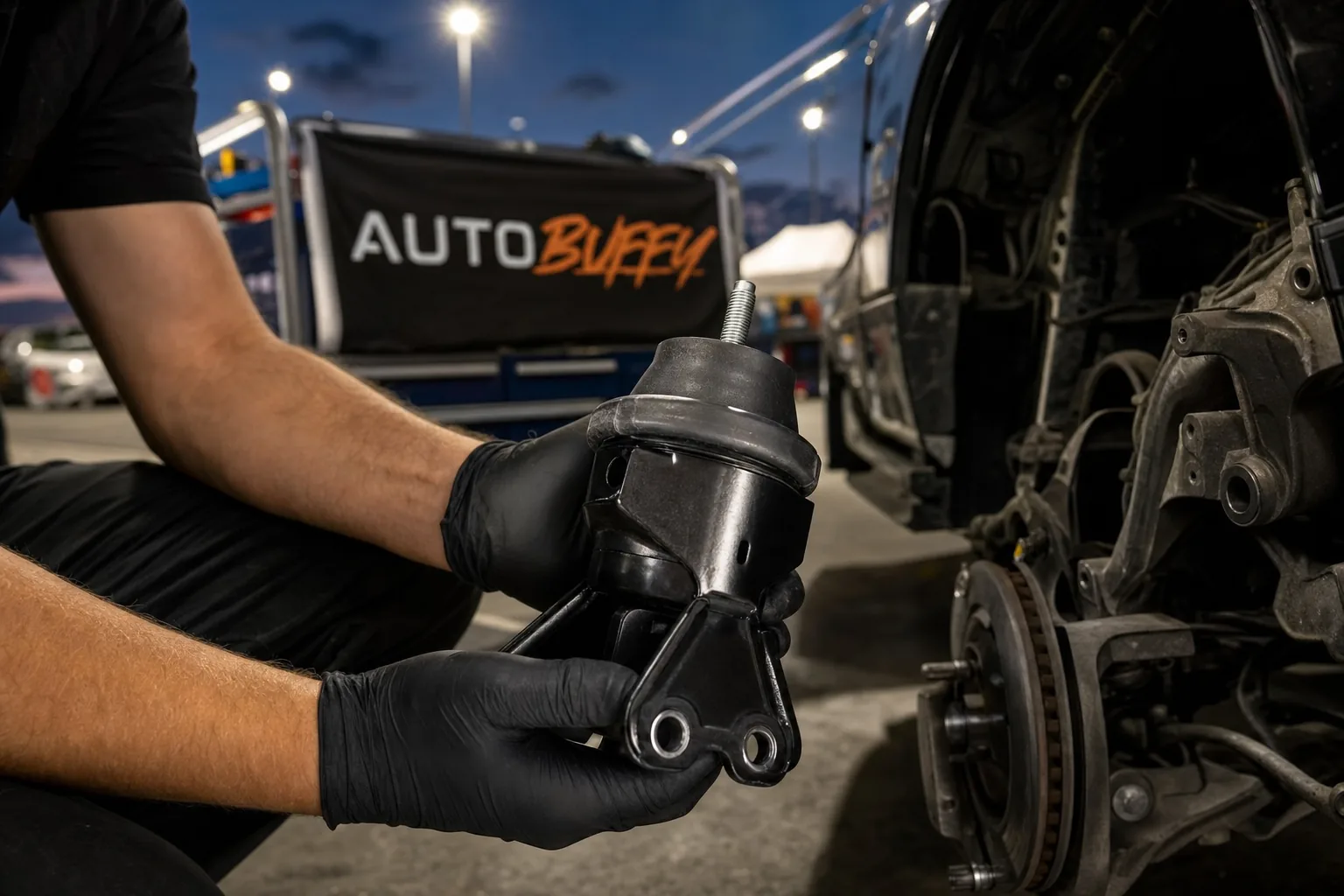
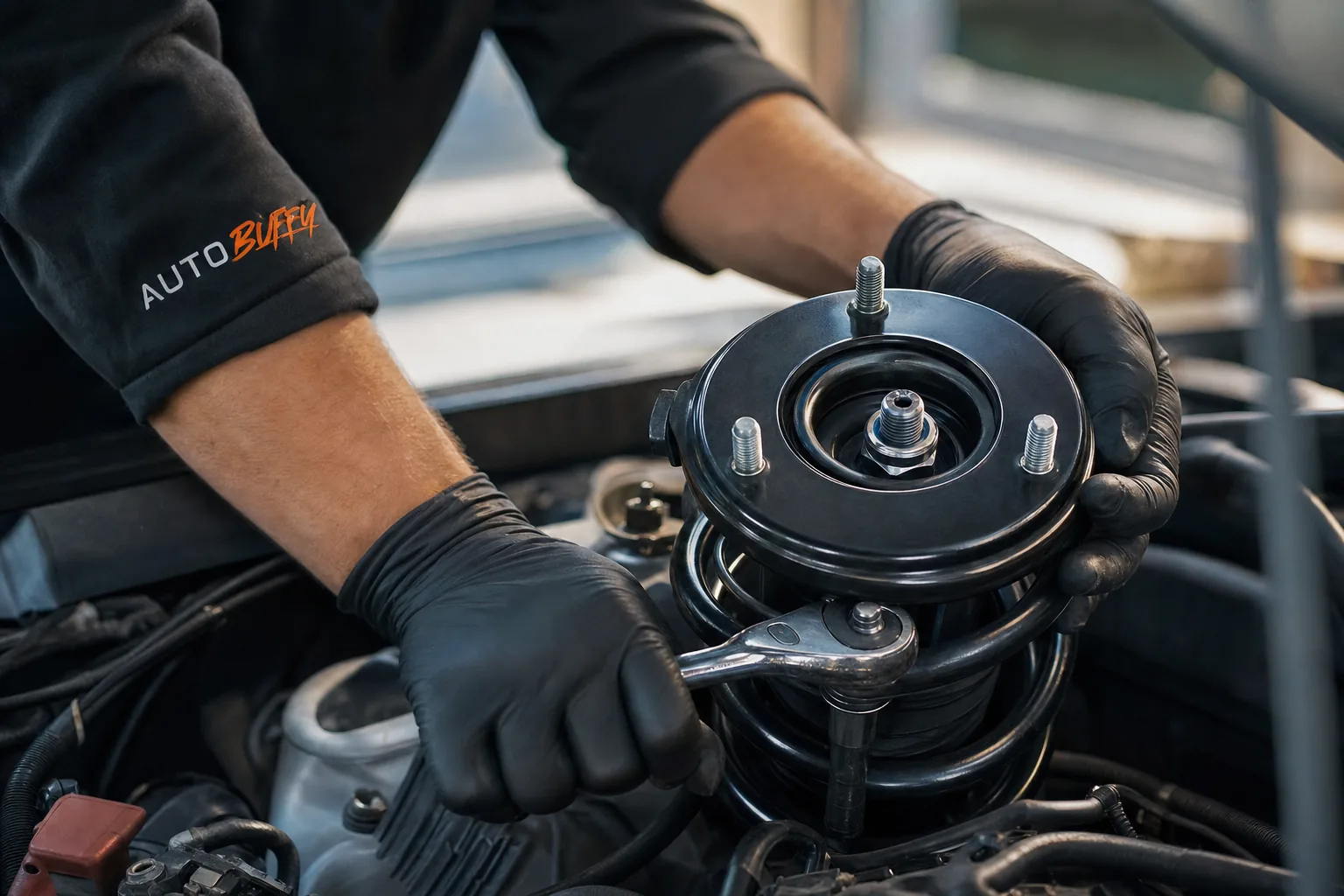
What it does: This is the sleeper on the list. On a car with 80,000-plus miles, worn sway bar end links announce themselves as a clunk or rattle over speed bumps and potholes. And because the links connect your sway bar to the suspension, worn ones mean the bar reacts late and the car leans more in corners than it should. New links kill the rattle and restore the crisp, tied-together feel the car had when it was new. Same story for a worn control arm bushing or a tired strut mount: individually cheap parts that give back real handling. It's the closest thing to a legitimate under-$100 handling mod for a daily driver.
DIY difficulty: Moderate. End links are usually two nuts per side, very doable with hand tools, though rusted hardware in the salt belt can turn a 30-minute job into a two-hour fight. Penetrating oil the night before is your friend.
The trap: Misdiagnosis and mystery-brand parts. A clunk can also be a ball joint or strut mount, so confirm before buying. Grab the link with the car safely supported and check for play. And skip the $9 no-name pair with plastic-feeling joints. They're often loose again within a year. A quality set is still well under $100 for most cars.
The $60 Handling Fix
Check Your Vehicle
The Under-$100 Traps: Save Your Money
The flip side of this list. Cheap "upgrades" that range from useless to harmful:
- Open pod/cone intake filters on a stock car. They pull hot engine-bay air, often confuse the mass airflow sensor's calibrated tube diameter, and can make the car run worse. All noise, no power.
- eBay coilovers. Suspension is the last place to buy the cheapest option on the internet. Bargain coilovers ride harshly, wear fast, and occasionally fail, and a failed damper is a safety problem, not a cosmetic one.
- Tint from the cheapest guy. Bad tint bubbles, turns purple, and peels within a couple of years. Then you pay again to have it stripped and redone. Know your state's legal limits before anyone touches the glass.
- "Performance chips" and OBD plug-in tuners. The $20 to $60 dongles that claim 35 horsepower and better mpg do nothing. Most are a resistor or a blinking LED in a plastic box. Real tuning means reflashing the ECU's actual maps with proper hardware and a dyno-developed calibration, and that costs several hundred dollars, not twenty.
The Real Takeaway
A daily driver doesn't need gimmicks. It needs the cheap stuff done right. Fresh wipers, clean filters, plugs on schedule, tight end links, decent bulbs with a proper beam pattern. Do those ten and you'll feel a bigger difference than any plastic trinket promises, for less than the cost of one fake "performance chip" that does nothing.
AutoBuffy carries filters, wiper blades, bulbs, ignition parts, and suspension components with guaranteed fitment. Add your vehicle and you'll only see what actually fits.
FAQ / People Also Ask
For a daily driver: quality LED bulbs with a correct beam pattern, fresh wiper blades, engine and cabin air filters, spark plugs on schedule, and sway bar end links on higher-mileage cars. These restore how the car felt new, which beats any gimmick "mod" at the same price.
Comments
Loading comments...
Comments are moderated by the AutoBuffy team.