

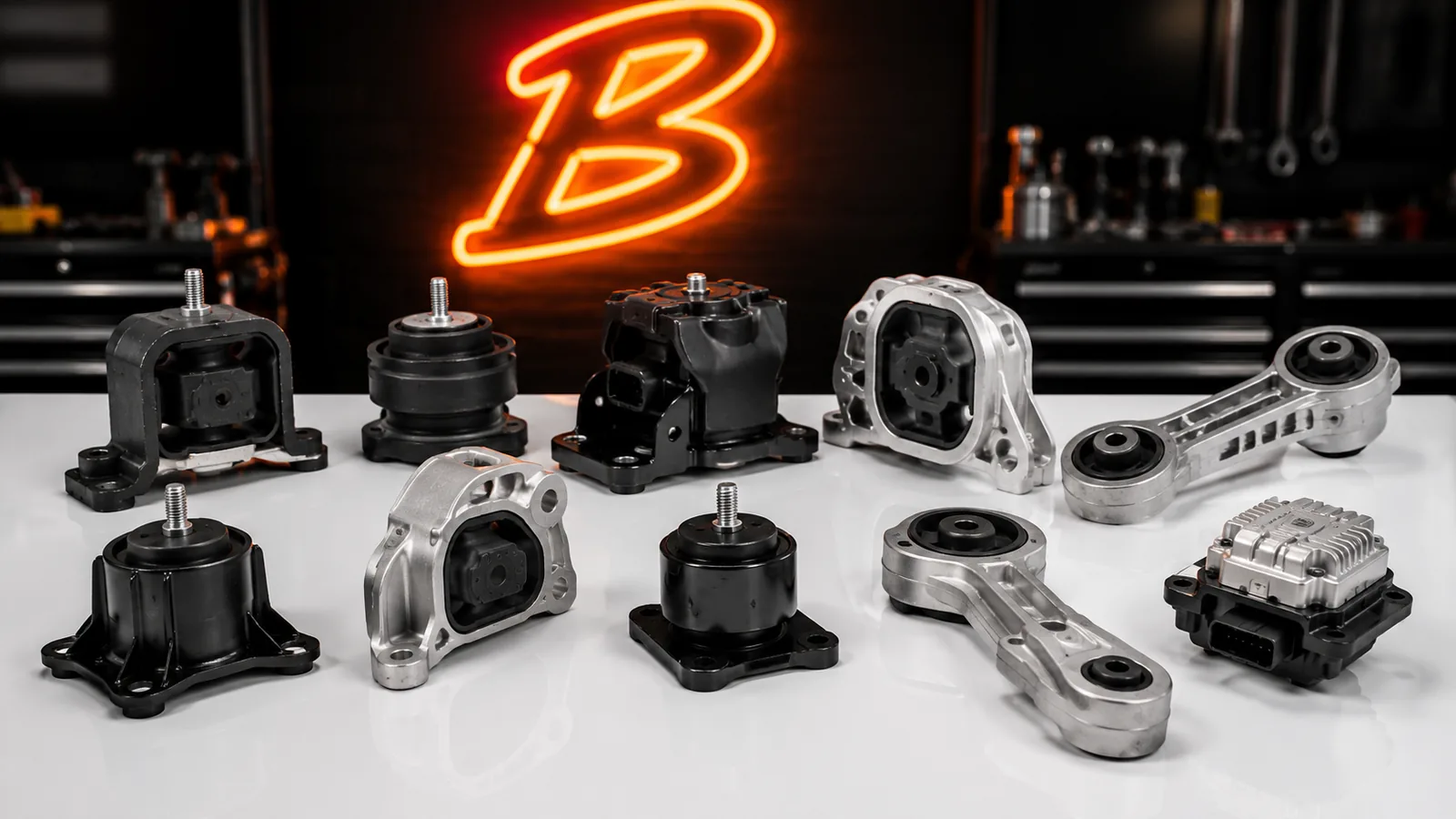
Engine Mount Types: Rubber vs Hydraulic vs Polyurethane
Solid rubber, hydraulic, polyurethane, or electronic? An honest, no-BS breakdown of the four engine mount types — durometer numbers, NVH tradeoffs, and which one actually belongs on your car.
Engine mounts (also called motor mounts) do two jobs at the same time. They bolt your engine and transmission to the chassis, and they absorb the vibration those parts make so it never reaches your seat. Every mount does the first job. Where they differ, and where shopping gets confusing, is *how* they handle the second one.
There are four real types on the road today: solid rubber, hydraulic (fluid-filled), polyurethane, and electronic/active. These aren't tiers of good, better, best. They're different tools with different tradeoffs. The right mount for a track car is the wrong mount for a daily commuter. Here's the honest breakdown, with real numbers.
Find the Right Motor Mount for Your Car
Enter your year, make, and model — we'll show the correct OE-style type and fit
The Short Answer
For a normal daily driver, replace a worn mount with the same type your car came with from the factory, usually solid rubber or hydraulic. That keeps the ride quiet and drama-free. Polyurethane and solid billet mounts are firmer *performance* choices. They cut engine movement but push more vibration and noise into the cabin. Only pick those if you actually want a stiffer, more connected (and buzzier) feel.
The Four Types of Engine Mounts
1. Solid rubber mounts
The original and still the most common design. A block of natural rubber (typically 45–60 durometer, Shore A) is vulcanized-bonded between two steel plates. One plate bolts to the engine, the other to the frame. That's it. No moving parts, no fluid.
Rubber's flex gives you moderate vibration isolation while still holding the engine in place. It's cheap to make, reliable, and standard on the majority of cars and trucks ever built. The downside is that it's a compromise: soft enough to isolate is also soft enough to let the engine rock under hard acceleration. Over years of heat cycling the rubber cracks, hardens, and eventually separates from the steel.
Best for: most daily drivers, trucks, and older vehicles. If your car shipped with rubber, rubber is almost always the right replacement.
2. Hydraulic (fluid-filled) mounts
A hydraulic mount looks like a rubber mount but hides a sealed chamber of glycol fluid inside, divided into two pockets by an internal orifice. At idle the fluid sloshes slowly to damp low-frequency shake. At speed it flows faster to isolate high-frequency buzz. That two-stage behavior is why hydraulic mounts give the best vibration damping of any passive design.
This is why automakers put them on the front (engine-side) mount of most modern, comfort-tuned cars, especially four-cylinders, which shake more than they'd like you to feel. The catch is the fluid. When the rubber chamber cracks or the seal fails, the fluid leaks out and you'll see a dark, oily residue weeping from the mount. Once it's leaked, damping is gone and the engine shakes harder than a plain rubber mount would.
Best for: modern passenger cars and anything that came with a fluid-filled mount from the factory. Replacing a leaked hydraulic mount with a cheap solid rubber substitute will make your car noticeably buzzier.
3. Polyurethane mounts
Polyurethane ("poly") mounts are an aftermarket performance part, not a factory design. Instead of soft rubber, they use a much firmer polyurethane bushing, commonly around 80 durometer (Shore A) for street use, up to ~95A for track-focused parts. Some enthusiasts insert poly into the factory mount's voids. Others buy full poly-and-billet mounts.
The firmer material dramatically reduces engine movement, which sharpens throttle response and cuts torque steer and wheel hop on high-power front-drive cars. That's the upside. The honest downside: poly transmits far more vibration and engine noise straight into the cabin. You'll feel a buzz through the shifter and pedals and hear a drone at certain RPMs. That trade is exactly what a track-day driver wants and exactly what a commuter does not.
Best for: performance builds, autocross, and drivers who *want* a more connected, mechanical feel. Wrong for a comfort-first daily.
4. Electronic / active mounts
The most sophisticated (and most expensive) type. An active mount is essentially a hydraulic mount that can change its stiffness on command, either by a vacuum solenoid or a fully electronic actuator controlled by the ECU. Soft and cushy at idle, firmer under load.
You'll find these on luxury cars, larger V6/V8 engines, and especially engines with cylinder deactivation (which run rough on half their cylinders and need active help staying smooth). They deliver the best of both worlds, but they're costly, and when the electronics or vacuum actuator fail, replacement isn't cheap.
Best for: vehicles that came with them. Don't try to "upgrade" a normal car to active mounts, and don't downgrade an active mount to a plain one.
Engine Mount Type Comparison
| Mount Type | Typical Durometer | Vibration Isolation (NVH) | Engine-Movement Control | Best For | Relative Cost |
|---|---|---|---|---|---|
| Solid rubber | ~45–60A | Moderate | Moderate | Most daily drivers & trucks | $ |
| Hydraulic (fluid-filled) | Rubber + glycol fluid | Best (passive) | Moderate | Modern comfort cars, 4-cyl | $$ |
| Polyurethane | ~80A street / ~95A track | Poor (buzzy) | High | Performance / track builds | $$ |
| Electronic / active | Fluid + actuator | Best (adaptive) | Adjustable | Luxury, V6/V8, cyl. deactivation | $$$ |
What Causes Motor Mounts to Go Bad
Mounts don't fail randomly. A few clear culprits do most of the damage:
- Age and heat. Rubber lives inches from a hot engine. Years of heat cycling harden it until it cracks and separates from the steel. Most mounts last 60,000–100,000 miles.
- Oil contamination. A leaking valve cover or oil pan drips onto the mount; petroleum swells and rots rubber fast.
- Fluid leaks (hydraulic). The sealed chamber splits and the glycol weeps out. Look for oily residue around the mount body.
- Hard launches and high torque. Repeated aggressive acceleration tears mounts, which is exactly why modified cars go to poly.
- A worn mount overloading the others. Once one lets go, the rest carry more shock and fail sooner. Mounts tend to die in sequence.
Want the tell-tale signs before you crawl under the car? Read our guide to Bad Motor Mount Symptoms, and see what a job runs in Motor Mount Replacement Cost.
Which Type Should You Choose?
The rule is simple: match the OE type unless you specifically want a firmer, more connected (and noisier) feel.
- Daily driver, comfort matters? Replace like-for-like. Rubber for rubber, hydraulic for hydraulic. Never swap a hydraulic mount for a plain rubber one to save a few dollars, or you'll feel every bit of that lost damping.
- Building for performance and you accept the buzz? Polyurethane cuts engine movement and torque steer. Go in eyes open about the added NVH.
- Car came with electronic/active mounts? Replace with the same. Don't try to convert.
That's where matching the correct part actually matters. Westar has been building engine and transmission mounts in the U.S. since 1986, and they engineer OE-style replacements in the correct type and durometer for each application. A fluid mount where the factory used fluid, the right rubber hardness where it used rubber, so it drops in and drives quiet, the way the car did new. No guesswork, no upselling you a stiff performance mount you didn't ask for.
Use your year, make, and model to pull the exact mount your car is engineered for: shop Motor Mounts or browse Westar Mounts directly.
Get the Exact Mount for Your Vehicle
We match the correct OE type and durometer so it fits and drives right
FAQ / People Also Ask
Usually not. Polyurethane mounts (~80A street, up to ~95A track) reduce engine movement and torque steer, which is great for performance driving, but they transmit noticeably more vibration and engine noise into the cabin: a buzz through the shifter and a drone at certain RPMs. For a comfort-focused commuter, stick with the factory rubber or hydraulic mount.


Comments
Loading comments...
Comments are moderated by the AutoBuffy team.