


P0011 Code: Camshaft Position Timing Over-Advanced (Bank 1) — Causes, Fix, and Cost
P0011 means Bank 1's intake cam is over-advanced versus ECU command. Learn the exact fault signature, ranked causes, and how to tell it apart from P0012/P0014.
The Short Answer
P0011 means the intake camshaft on Bank 1 is more advanced than the ECU commanded — almost always caused by a sticking VVT solenoid, restricted oil flow, or a worn camshaft phaser, not the camshaft position sensor itself.
| Factor | Details |
|---|---|
| Official definition | 'A' Camshaft Position Timing Over-Advanced or System Performance (Bank 1) |
| Code type | Generic OBD-II / EOBD (appears on any VVT-equipped vehicle) |
| 'A' camshaft | Intake camshaft on the left/front of Bank 1 |
| Bank 1 | The cylinder bank containing cylinder #1 |
| Most common fix | VVT solenoid replacement + fresh oil change |
| Typical repair cost | $80–$250 (solenoid + labor); up to $900+ for phaser or timing chain |
| Can you drive it? | Short distances only — risk of accelerated engine wear |
| Clearing code alone | Will not fix it — code returns until system follows ECU commands |
P0011 vs P0014 / P0012: How to Tell Them Apart
These three codes all live in the VVT neighborhood and get confused constantly. The differences matter because the diagnosis starts from a completely different place depending on which one you have.
| Code | What the PCM actually saw | Most likely cause | First test |
|---|---|---|---|
| P0011 | Bank 1 intake cam is more advanced than commanded | Stuck-open VVT solenoid; oil sludge in phaser passages | Check oil condition, then resistance-test the solenoid |
| P0012 | Bank 1 intake cam is more retarded than commanded | Stuck-closed VVT solenoid; low oil pressure | Check oil level first, then solenoid function |
| P0014 | Bank 1 exhaust cam is more advanced than commanded | Exhaust VVT solenoid stuck open; sludged phaser | Identify which solenoid controls the exhaust cam, test that one |
The cam direction (over-advanced vs. over-retarded) and the cam identity (intake vs. exhaust) tell you which solenoid to test and whether the cam is stuck open or closed in the hydraulic circuit. If you skip that distinction and just swap the nearest solenoid, you can easily fix the wrong part.
The Exact Fault Signature for P0011
This is the part most write-ups skip, and it's why people end up replacing sensors that don't need replacing.
The PCM continuously compares two values: the commanded cam angle (how many degrees it wants the intake cam advanced relative to crankshaft TDC) versus the actual cam angle reported by the camshaft position sensor. P0011 sets when the actual position is advanced beyond the commanded target by more than the manufacturer's calibrated threshold — typically 10–15° of crankshaft rotation — for a sustained period (usually 5–10 continuous seconds of error, though this varies by platform).
Two specific scenarios trigger it:
- Cam advances past the commanded target. The solenoid is feeding more oil to the phaser advance chamber than it should, even when the PCM is commanding a hold or retard.
- Cam can't retard when commanded. The PCM tells the phaser to return to a less-advanced position (common at idle and deceleration), but the cam stays stuck advanced because the solenoid won't drain the advance chamber.
Enable criteria the PCM needs before it can set P0011:
- Engine coolant temperature above roughly 160–185°F (cold-start behavior is excluded — this is a key clue)
- Engine RPM above a minimum threshold, typically 600–1,000 RPM
- No disqualifying codes that would make the crankshaft-to-camshaft angle comparison unreliable (a failed CKP sensor, for example, blocks P0011 from setting)
- Oil temperature within the normal operating window
That warm-engine requirement is diagnostic gold. If you only get the code after the engine is fully warmed up, the VVT system's hydraulic behavior under heat — thinner oil, greater leakage past worn seals — is almost certainly involved.
Ranked Probable Causes for P0011
1. Stuck or Sludged VVT Oil Control Solenoid — Very Common
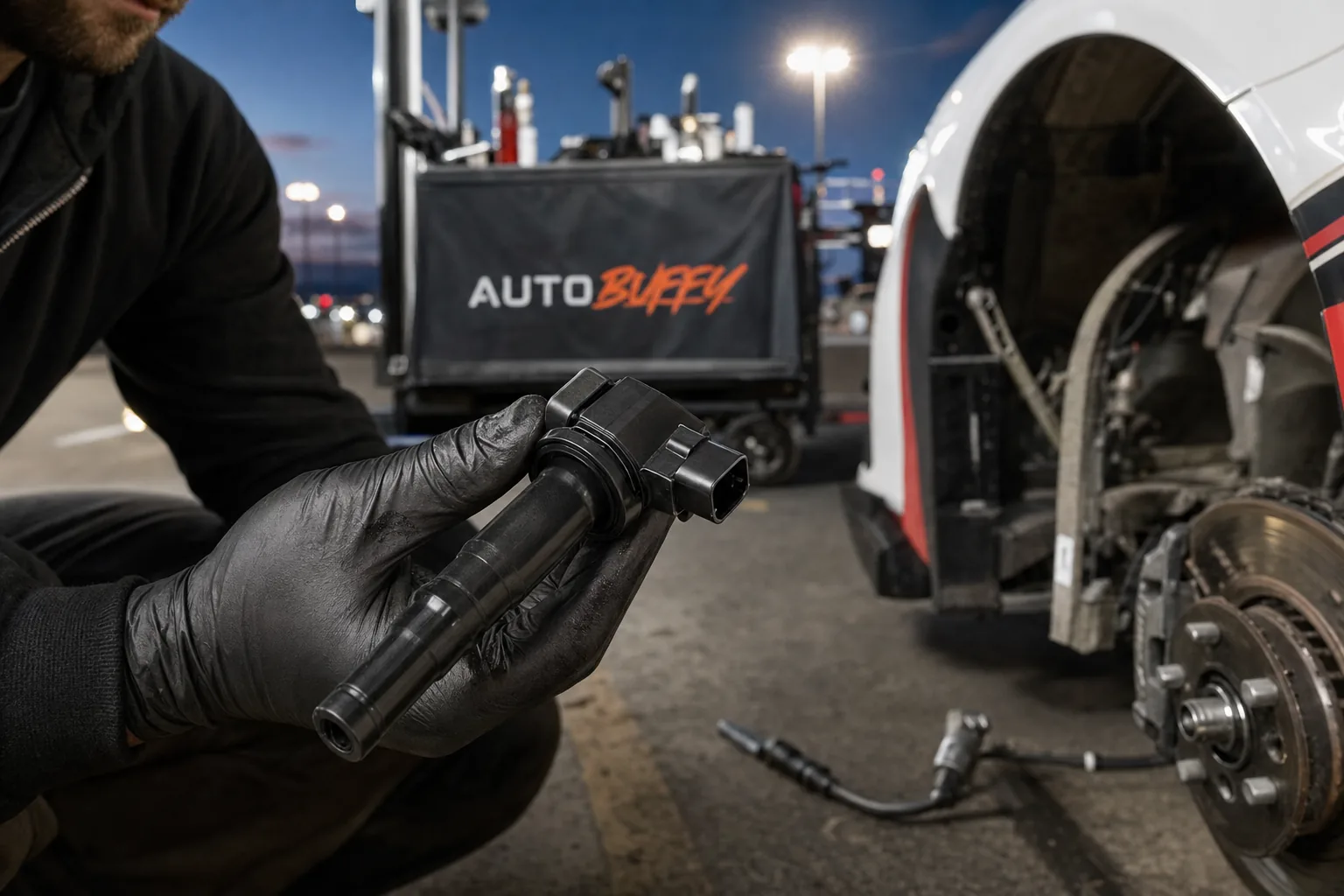
The solenoid has a small screen filter inside it. Dirty or degraded oil deposits varnish and sludge on that screen, restricting flow or holding the valve partially open. When it's stuck open, oil pressure continuously advances the phaser even when the PCM calls for retard. This is the #1 cause, by a significant margin.
2. Degraded or Low Engine Oil — Common
VVT actuators are hydraulic. Thin, dirty, or low oil can't maintain the pressure gradients needed for the phaser to hold position. The system over-advances because there's not enough pressure in the retard circuit to counteract the advance side. An oil change alone resolves P0011 in a meaningful number of cases — always check oil condition before buying parts.
3. Worn Camshaft Phaser — Moderately Common
The phaser's internal vanes and seals wear over time. A worn phaser leaks internally, meaning the advance chamber can't hold pressure, and the cam drifts advanced when it shouldn't. You'll often see this on higher-mileage engines. Testing the solenoid won't reveal this — you need to watch live cam timing data while commanding the solenoid to retard and see if the cam responds at all.
4. Timing Chain Stretch or a Jumped Tooth — Less Common, but Serious
A stretched or skipped timing chain shifts the cam's mechanical position relative to the crank. The PCM calculates cam angle based on assumed mechanical relationships — if those are off, even a perfect solenoid and phaser can produce a persistent P0011. You typically see this alongside rough running, rattling on cold start, or accompanying crankshaft codes. This requires a timing inspection, not a solenoid swap.
5. Wiring or Connector Faults — Occasional
Corrosion or damage at the solenoid connector causes erratic or intermittent solenoid operation. The solenoid can be perfectly good electrically but still behave unpredictably if the supply voltage is dropping across a bad connector. Inspect the connector and harness before replacing anything.
Diagnostic Sequence That Starts From P0011's Signature
Don't start by replacing the solenoid. Start from the fault signature and work backward.
- Check oil level and condition first. Dirty, sludgy, or low oil is both a cause and a warning sign of solenoid screen fouling. If the oil is overdue, change it — this costs less than any part and sometimes fixes the code outright.
- Scan for companion codes. P0011 rarely travels alone. A simultaneous P0021 suggests system-wide low oil pressure. Crankshaft position codes suggest a timing chain or tone ring issue. Address those first.
- Reproduce the enable criteria. P0011 sets when the engine is warm and above idle. Use a scanner with live data and let the engine reach full operating temp. Watch commanded cam angle vs. actual cam angle. Confirm the cam is actually reading advanced when the PCM is commanding retard — this is your fault signature confirmation.
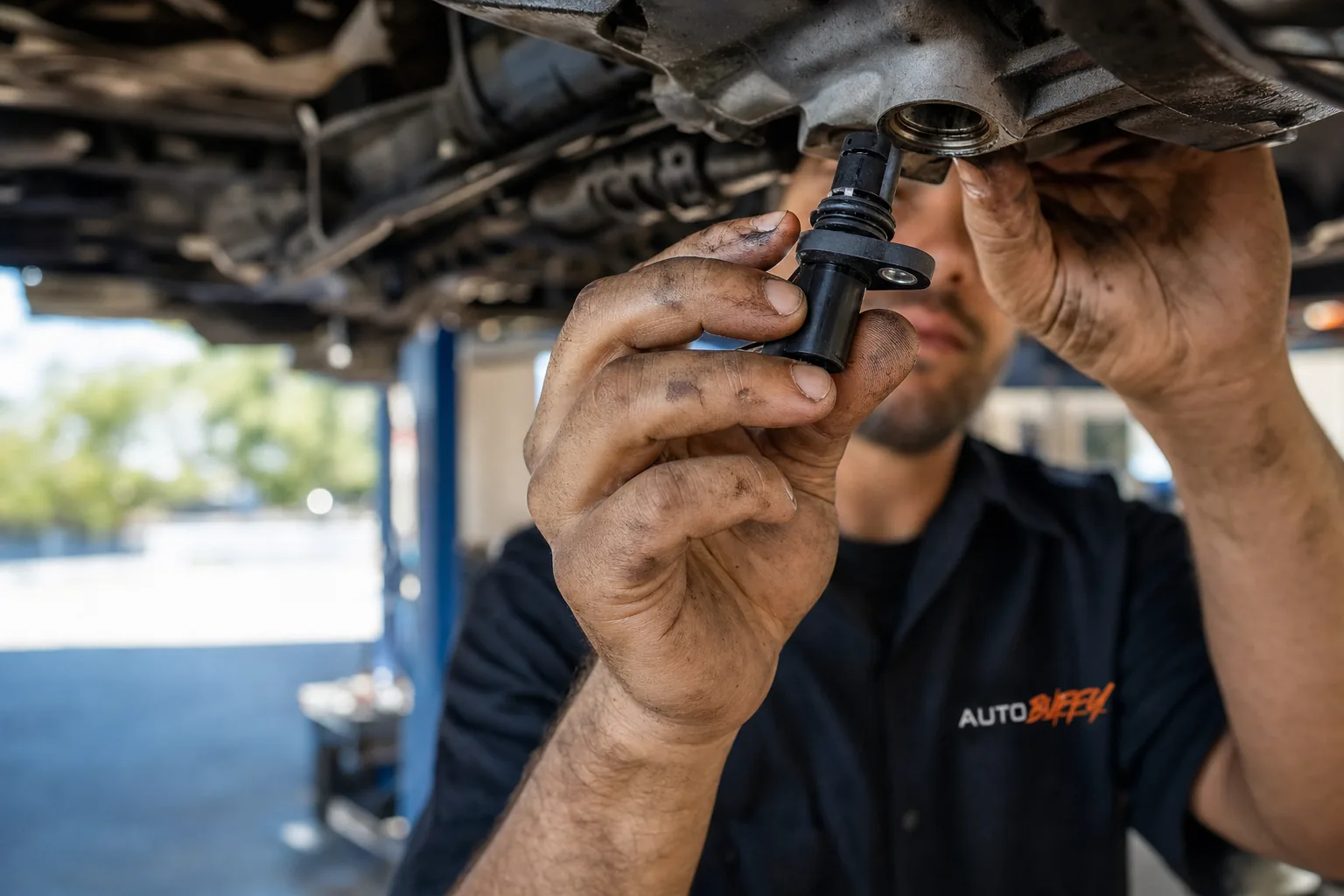
- Test the solenoid electrically. Unplug it; measure resistance (target: 5–15 Ω). Check for 12V supply at the harness connector with the key on. Resistance outside range = replace the solenoid.
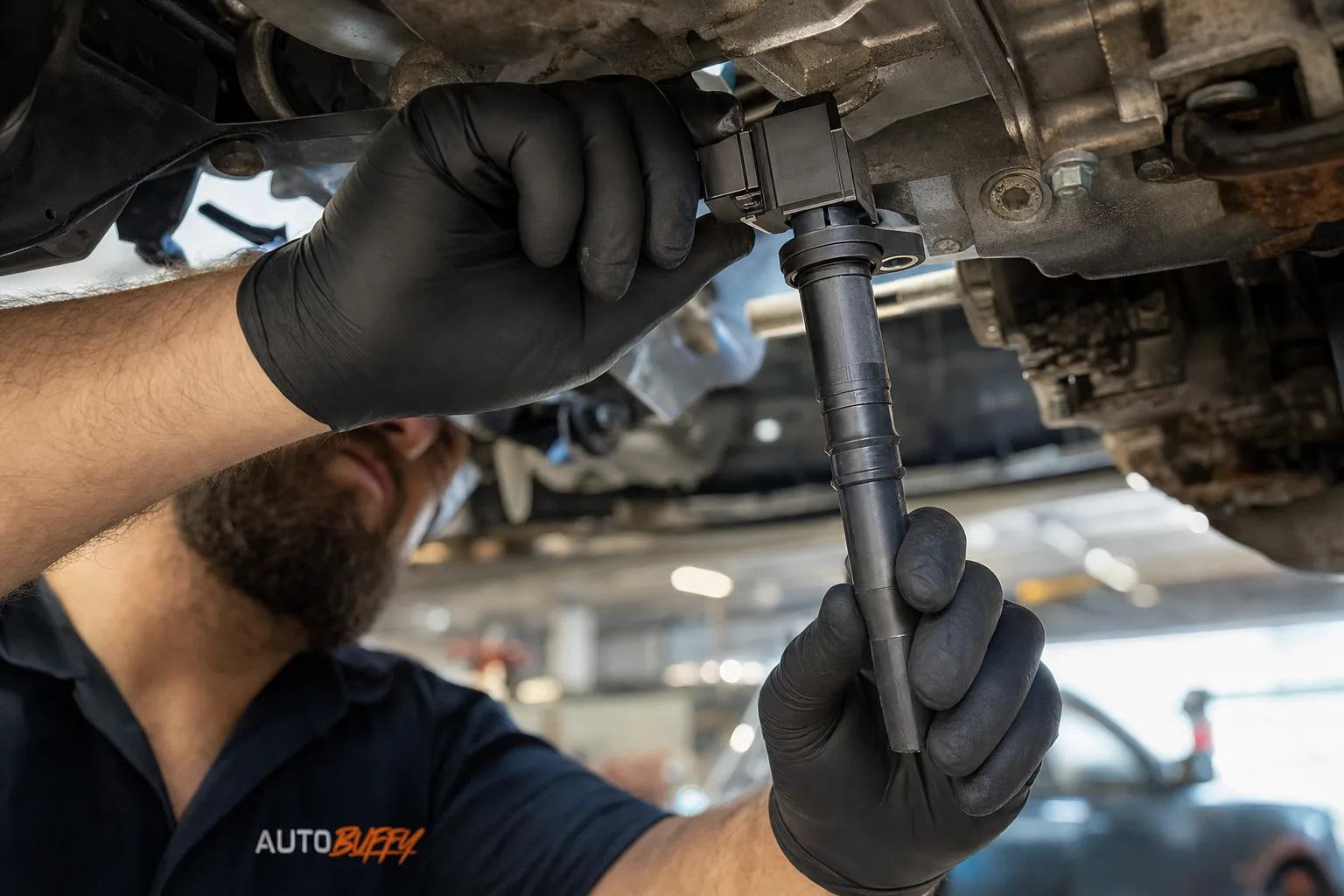
- Inspect the solenoid physically. Remove it and look at the screen filter. Significant sludge buildup? Replace the solenoid and change the oil, even if resistance tested in-range.
- If the solenoid is clean and tests good, command the solenoid with a bi-directional scanner while watching live cam timing. If the PCM commands retard but the cam doesn't move, the phaser is the next suspect.
- If phaser response is slow or absent, check timing chain wear — look at timing marks or use a scope to compare CKP and CMP waveform relationships.
Honest opinion: Doing the solenoid and an oil change together when the solenoid tests bad is the right call. A new solenoid in dirty oil is a temporary fix. The data consistently shows that oil maintenance is a major factor in how often P0011 comes back after a solenoid repair.
What to Expect After the Repair
Once the repair is complete, clear the code with an OBD-II scanner and run a full warm-up cycle. Use live data to confirm the actual cam angle tracks the PCM's commanded angle across the RPM range — at idle, during acceleration, and at deceleration. If it tracks cleanly, you've fixed it. If P0011 returns within a drive cycle or two, the phaser or timing chain is still in play.
Sources
- SAE J2012 OBD-II Diagnostic Trouble Code Definitions
- OBD-II Standardization, 40 CFR Part 86 (EPA)
- General vehicle service documentation for VVT system operation
Find the right VVT solenoid for your vehicle
Guaranteed fit, ships free
FAQ / People Also Ask
P0011 is defined as "'A' Camshaft Position Timing Over-Advanced or System Performance (Bank 1)." It means the ECU commanded the intake camshaft on Bank 1 to move to a specific timing position, but the cam is reading more advanced than commanded — or can't return to its base (retarded) position when told to. It's a hydraulic/mechanical fault, not a sensor fault.
Comments
Loading comments...
Comments are moderated by the AutoBuffy team.