

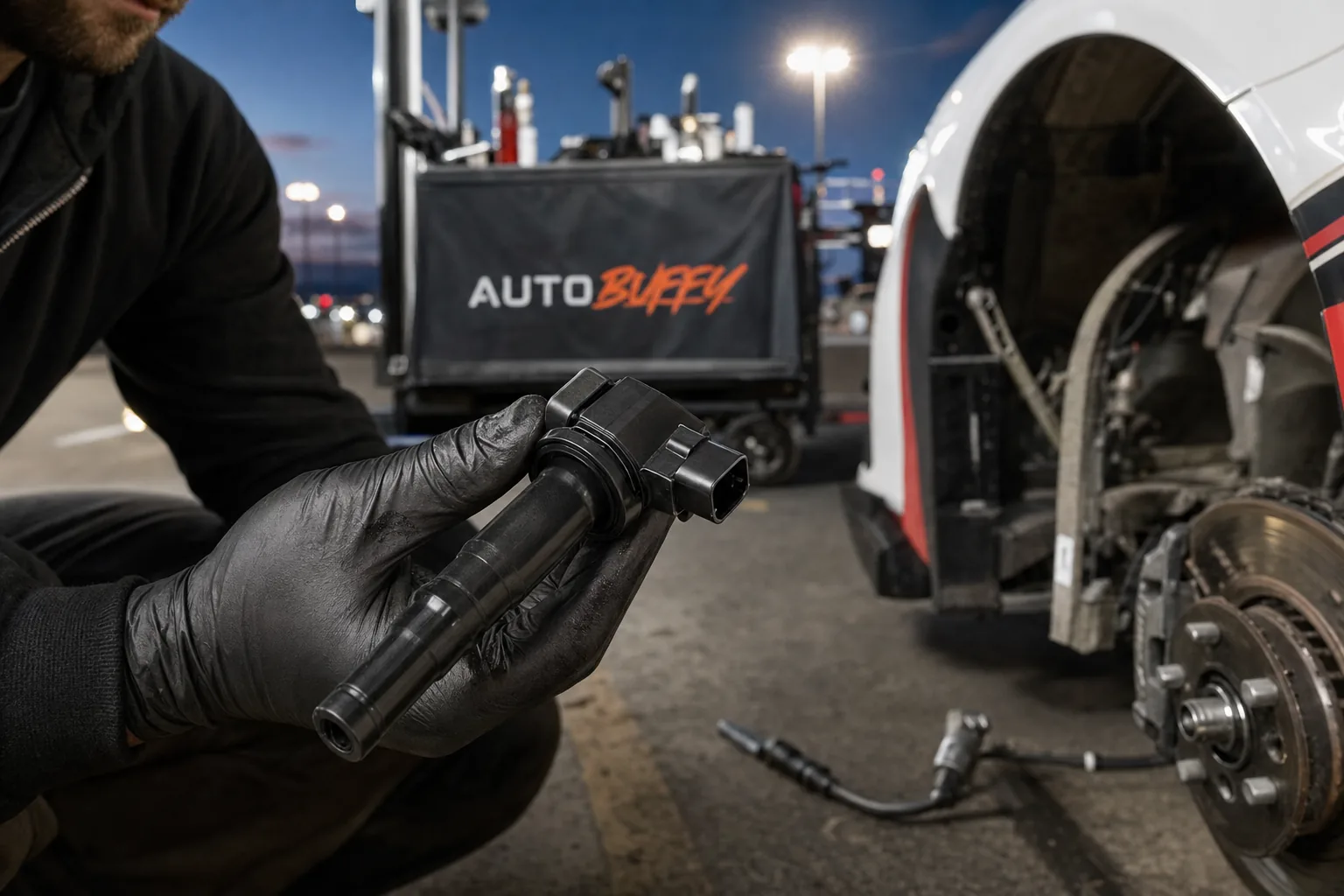
P0351 Code: Ignition Coil A Primary/Secondary Circuit Malfunction — Causes and Cost
P0351 means your PCM found an electrical fault in the ignition coil for cylinder #1. Here's what causes it, what it costs, and how to fix it.
The Short Answer
P0351 means the PCM detected an electrical fault in the primary or secondary circuit of the ignition coil assigned to Cylinder "A" — the first cylinder in your engine's firing order — and the car will likely misfire until you fix it.
| Factor | Detail |
|---|---|
| Official definition | Ignition Coil "A" Primary/Secondary Circuit Malfunction |
| What "A" means | First cylinder in the engine's firing order |
| Code type | Generic OBD-II (same meaning on every make/model) |
| Severity | High — extended driving risks catalytic converter damage |
| Most common fix | Replace ignition coil ± spark plug on cylinder 1 |
| Typical DIY part cost | $20–$80 (single coil); $150–$650+ (multi-coil kit) |
| Typical shop repair cost | $80–$250 total for single coil replacement |
What P0351 Actually Means
The SAE/OBD-II definition is "Ignition Coil 'A' Primary/Secondary Circuit Malfunction." That letter A doesn't mean there's a sticker on the coil that says "A" — it refers to the first cylinder in your engine's firing order. On most inline-4 and inline-6 engines, that's cylinder 1. On V-engines it depends on how the manufacturer numbers the bank. The ignition coil's job is to transform the 12 volts your battery puts out into 40,000+ volts — enough to jump the spark plug gap and ignite the air-fuel mixture. There are two electrical circuits inside every coil: the primary (low voltage side, controlled by the PCM) and the secondary (high voltage side, sends power to the plug). P0351 fires when the PCM detects a problem in either one. Because it's a generic code, it triggers the same fault on a 2010 Honda Accord, a 2018 F-150, and a 2022 Camry. The diagnosis steps and coil location differ — the code meaning doesn't. ---
P0351 Symptoms You'll Actually Notice
The check engine light is the obvious one. But you'll usually feel the problem before you see the light:
- Rough, shaky idle — especially pronounced when the engine is cold
- Misfires under load — that hesitation when you accelerate onto a highway
- Reduced power — one dead cylinder costs you a meaningful chunk of performance
- Poor fuel economy — unburned fuel passes straight through
- Hard starts — particularly after the vehicle sits overnight
On some vehicles the PCM will enter a reduced-power or "limp" mode to protect the engine. Don't dismiss these symptoms hoping they'll clear up on their own. They won't. ---
The Six Most Common Causes
1. Failed Ignition Coil
The most frequent culprit by far. Coil windings degrade from heat cycles over time. The secondary winding fails more often than the primary. If you have 80,000+ miles on the original coils, this is the first thing to check. ### 2. Damaged Wiring or Connector
The harness running to the coil is routed near hot engine components. Insulation cracks, connector pins corrode, and terminals loosen. A broken wire can look fine until you flex it — that's why visual inspection alone isn't enough. ### 3. Worn or Fouled Spark Plug
A plug that's gapped too wide, worn down to a nub, or oil-fouled forces the coil to work much harder than it's designed to. That electrical strain burns out the secondary winding faster. Always check the plug on cylinder 1 when you pull the coil. ### 4. Coil Boot Cracking or Carbon Tracking
The rubber boot connecting the coil to the plug can crack and allow high-voltage current to arc to the engine block instead of the plug. You might even see a faint carbon trail on a cracked boot if you look closely. ### 5. PCM Driver Circuit Fault
Less common, but real. The PCM itself controls the primary circuit through an internal transistor. If that driver fails, you'll get a P0351 even with a brand-new coil installed. This is diagnosed by confirming the coil has proper voltage and ground but no trigger signal from the PCM. ### 6. Aftermarket Accessory Interference
Poorly installed remote starters, alarm systems, or tuning modules occasionally inject electrical noise into the ignition circuit. Worth mentioning during diagnosis if the code appeared shortly after an installation. ---
How to Diagnose P0351 Step-by-Step
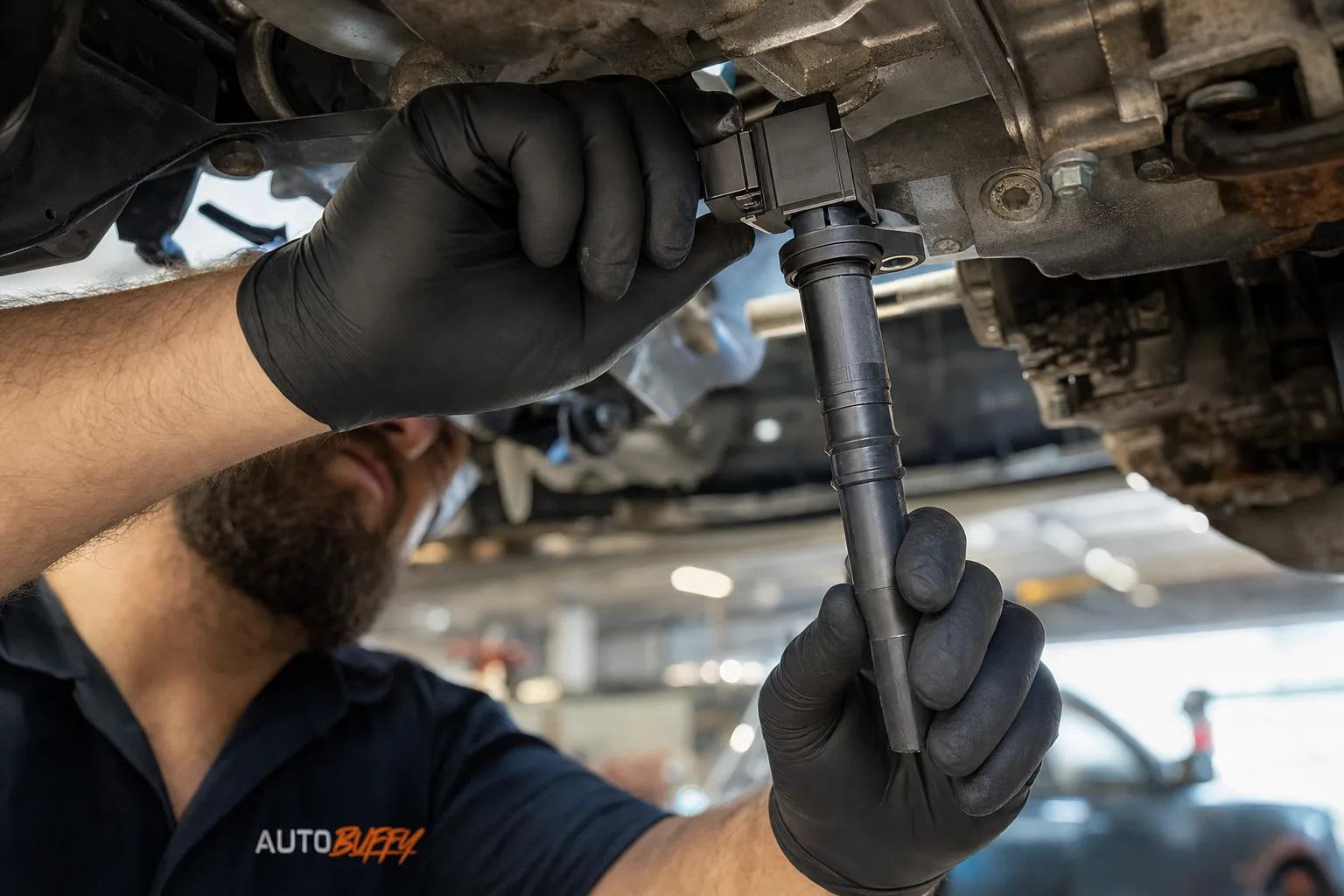
You don't need a dealer-level scan tool. A basic OBD-II reader and a digital multimeter will get you most of the way there. 1. Scan and record all codes. Note any companion codes — P0301 (cylinder 1 misfire) alongside P0351 is strong confirmation of a coil or plug issue on that cylinder. 2. Inspect the coil connector and wiring. Look for cracked insulation, pushed-back terminals, corrosion, and melted plastic near heat sources. 3. Pull the coil and inspect the boot. Check for cracks, carbon tracking, or oil contamination. 4. Inspect the spark plug. Pull cylinder 1's plug and look at the condition. Heavy wear or fouling is a red flag. 5. Swap-test the coil. Move the cylinder 1 coil to another cylinder (say, cylinder 3) and clear the codes. If the misfire and coil fault follow the coil to cylinder 3, the coil is bad. If P0351 and P0301 stay on cylinder 1, focus on the wiring and PCM. 6. Check primary circuit voltage. With the connector plugged in, verify the coil is receiving proper battery voltage and a clean ground. No voltage = wiring fault. Good voltage but no trigger signal = dig into the PCM side. > *Pro tip: The swap test is the single fastest way to distinguish a bad coil from a bad circuit. It takes five minutes and costs nothing.*
What the Repair Actually Costs
Costs vary by vehicle, but here's an honest range based on typical market pricing:
| Repair Scenario | Parts Estimate | Labor Estimate | Total Range |
|---|---|---|---|
| Single coil replacement (DIY) | $20–$80 | $0 | $20–$80 |
| Single coil replacement (shop) | $20–$80 | $60–$150 | $80–$230 |
| Coil + plug (one cylinder, shop) | $30–$100 | $75–$160 | $100–$260 |
| Full coil + plug kit (high-mileage vehicle, DIY) | $150–$650+ | $0 | $150–$650+ |
For most everyday vehicles — a 4-cylinder commuter car with straightforward coil access — this is a relatively affordable fix. V8 engines or vehicles where coils sit deep in the valley of the engine take more labor time and push costs higher. ---
Which Brands Are Worth Buying? For ignition coils, the brands with the strongest track records among working technicians are **DENSO** and **NGK**. Both are OEM suppliers to major automakers, which means the parts going into your repair are built to the same specs (or better) as what came out of the factory. DENSO offers coil kits — some bundled with spark plugs — in configurations from 6-cylinder sets up to 24-piece fleet kits. NGK's coil-on-plug (COP) kits, often paired with their Laser Iridium spark plugs, are a solid choice when you want to do the coil and plug job in one shot at high mileage. **ACEON** also appears in inventory for connector kits covering a range of Toyota, Hyundai, and Kia applications — useful if your diagnosis points to the coil connector rather than the coil itself. My honest take: at over 80,000 miles, spending a little more on a coil-and-plug kit is almost always the smarter call. Individual coils keep failing one by one, and labor adds up fast if you're paying a shop. Doing it all at once is worth it — and the data backs this up, since coil failure rates increase significantly after the 70,000-mile mark. Use the finder below for your exact fit and today's pricing. {partfinder:ignition coil|Find the right ignition coil for your vehicle|Guaranteed fit, ships free}
FAQ / People Also Ask
P0351 is the SAE/OBD-II code for 'Ignition Coil A Primary/Secondary Circuit Malfunction.' The 'A' refers to the first cylinder in the engine's firing order, and the code means the PCM detected an electrical fault in that coil's primary or secondary winding circuit.
Comments
Loading comments...
Comments are moderated by the AutoBuffy team.