

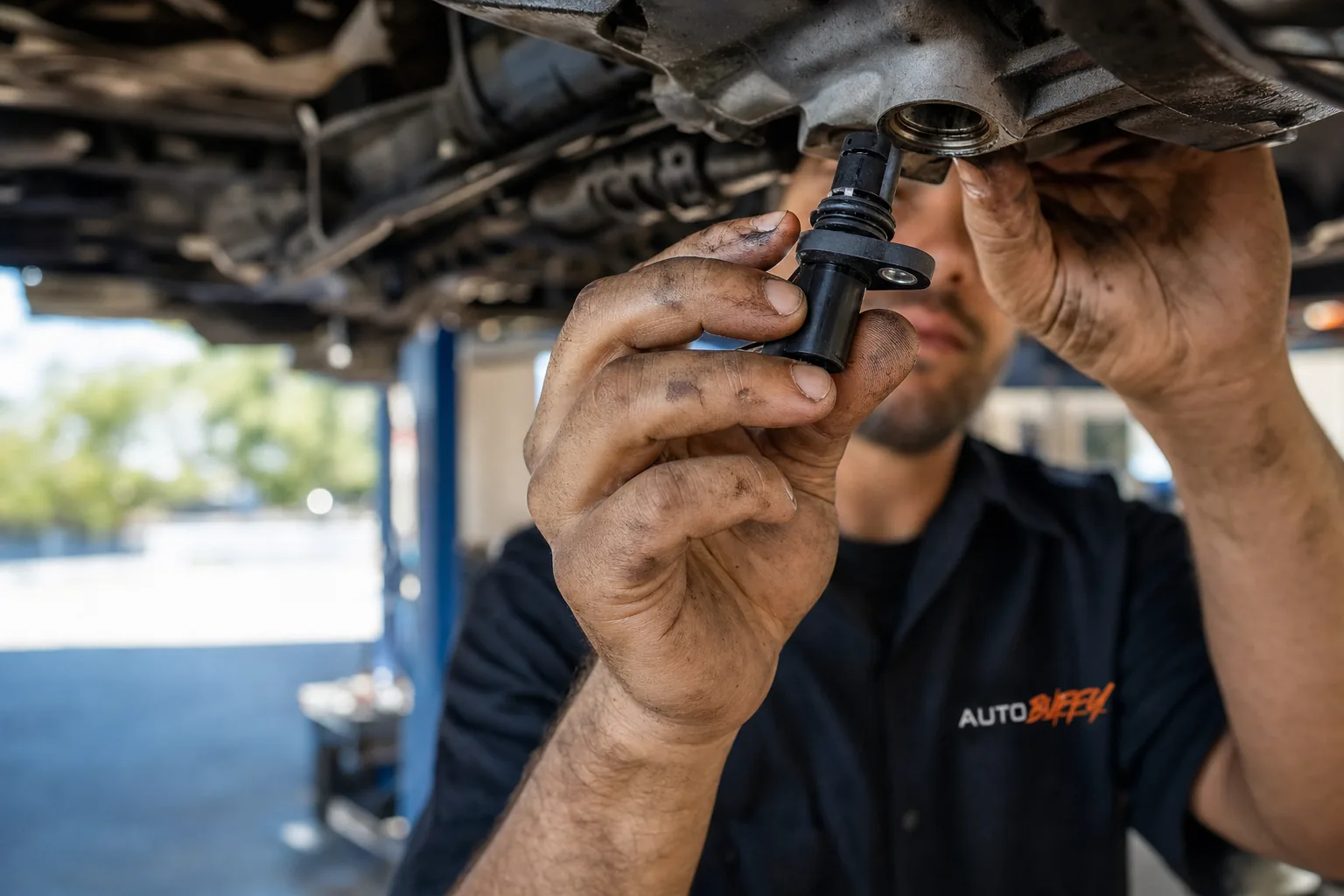
P0340 Code: Camshaft Position Sensor Circuit Malfunction — Causes and Cost
P0340 means your cam position sensor circuit has failed. Learn the real causes, what it costs to fix, and how to avoid throwing parts at it.
The Short Answer
P0340 is the SAE-standardized code for "Camshaft Position Sensor 'A' Circuit (Bank 1) Malfunction," meaning your engine control module isn't getting a valid signal from the Bank 1 cam sensor circuit — and the sensor itself may not even be the culprit.
| Factor | Typical Range |
|---|---|
| Cam sensor part cost | $20–$400 depending on brand/vehicle |
| Sensor replacement labor | $80–$120 |
| ECM reprogramming (if needed) | $120–$200 |
| ECM replacement (module + labor) | $1,000–$1,500 total |
| Timing chain involvement | $500–$1,500 total repair |
| DIY skill level required | Moderate — diagnosis first, then repair |
What P0340 Actually Means (And What It Doesn't)
The full SAE definition is "Camshaft Position Sensor 'A' Circuit (Bank 1) Malfunction." That word *circuit* is doing a lot of work here, and it's the most important thing to understand before you order any parts. P0340 tells you the ECM isn't happy with the signal it's receiving from that circuit. It doesn't tell you *why*. The fault could be inside the sensor, inside the connector, somewhere along the wiring harness, at the reluctor wheel the sensor reads, or — in rarer cases — inside the ECM itself. Throwing a new sensor at it without diagnosing the circuit first is the most common and most expensive mistake people make with this code. Bank 1 is always the side of the engine that contains cylinder #1. On inline-4 and inline-6 engines, there's only one bank, so Bank 1 is the whole engine. ---
Common Causes of P0340
Not all of these are equally likely, so here's a rough probability order based on what technicians see most often:
- Failed camshaft position sensor — the sensor itself has died or is producing an erratic signal
- Damaged, corroded, or chafed wiring — a broken wire or corroded connector pin kills the signal just as effectively as a dead sensor
- Faulty or dirty connector — even light oxidation on the terminals can drop the signal enough to trip the code
- Damaged reluctor wheel — the tone ring the sensor reads can crack, lose teeth, or get coated with debris
- Low or degraded engine oil (on VVT engines) — on variable valve timing systems, oil pressure and cleanliness directly affect cam phaser movement; sludge can mimic a sensor fault
- Failed ECM — uncommon, but it happens, and it's the most expensive fix on the list
One thing worth knowing: if you're also seeing P0335 or other crank sensor codes at the same time, don't assume they're related. Read all codes separately and diagnose each circuit independently. ---
Symptoms You'll Notice With P0340
The check engine light is the obvious one. But P0340 can also cause:
- Hard start or no-start — the ECM relies on cam position data to time fuel injection and ignition
- Engine stalling at idle or under load
- Rough idle or misfires
- Reduced power and sluggish throttle response
- Poor fuel economy — the ECM may run a richer safety map when cam data is missing
- Limp mode on some vehicles
Can you drive on it? Short distances in a pinch, maybe. But stalling at highway speed or a no-start far from home are real possibilities. Get it looked at soon. ---
How to Properly Diagnose P0340 (Before You Buy Anything)
Here's the honest sequence a good technician follows:
Step 1: Visual Inspection
Pull the cam sensor connector and look hard at both the connector and the sensor tip. Corrosion, oil contamination, bent pins, and chafed wires near heat sources or sharp edges are all common findings. Fix anything you see here first. ### Step 2: Check Power and Ground
With the connector unplugged and the key on, probe the circuit. The reference wire should show around 5V. The ground wire should read less than 0.1V. No reference voltage usually points to a wiring or ECM issue, not the sensor. ### Step 3: Live Data
Reconnect the sensor and use a scan tool to watch the cam sensor signal in real time while cranking. A functioning sensor will show a patterned signal. A flatline or erratic reading points toward the sensor or reluctor wheel. ### Step 4: Inspect the Reluctor Wheel
If you have access, check the tone ring for missing or damaged teeth. This requires timing cover access on many engines, but it's worth knowing about before you've replaced everything else. ### Step 5: Sensor Swap (Last Resort)
Only after ruling out wiring and power issues does it make sense to replace the sensor. On some vehicles the sensor is a 10-minute job. On others it's buried under intake manifolds and heat shields. Know what you're getting into. ---
Which Sensor Should You Buy? The right brand depends heavily on your vehicle's make and platform. Here's an honest breakdown of what's available and why it matters:
DENSO makes OEM-specification sensors for many Toyota, Lexus, Scion, and Mazda applications. If your vehicle is one of those platforms, a DENSO sensor is essentially the same unit that was on the car from the factory — that's a meaningful advantage over generic alternatives. Standard Ignition has been manufacturing ignition and sensor components for a long time and covers an impressively wide range of domestic and import applications. Their sensors are built to OE fit and function specs, and they're a go-to for technicians who want reliable coverage across a diverse shop. Beck/Arnley focuses specifically on foreign-nameplate vehicles and sources parts to OE specifications. If you're driving a European or Japanese vehicle, Beck/Arnley's fitment accuracy is worth the attention. Their quality control tends to be tighter on import applications than broad-coverage alternatives. Dorman is an independent public company (NASDAQ: DORM) known for remanufactured and aftermarket components. Their cam sensor sets can be a practical option when you're replacing multiple sensors on a platform-specific repair. Mopar OEM sensors are the right call for Chrysler, Dodge, Jeep, and Ram vehicles when you want factory-spec parts with no fitment questions whatsoever. > My honest take: don't cheap out on the sensor when the labor to access it is more expensive than the part. On an engine where the cam sensor takes two hours to reach, paying a bit more for a DENSO or Standard Ignition sensor beats pulling it all apart again in six months. Use the part finder below to match the right sensor to your exact year, make, model, and engine — fitment here matters more than it does with a lot of other parts. ---
What Does It Cost to Fix P0340? Here's an honest breakdown, not a single number:
| Repair Scenario | Estimated Cost |
|---|---|
| Sensor only (DIY, budget part) | $20–$80 |
| Sensor only (OE-quality part) | $150–$400 |
| Sensor + labor (shop) | $230–$520 total |
| Wiring harness repair | $100–$300 depending on damage |
| ECM reprogramming | $120–$200 |
| ECM replacement (module + programming + labor) | $1,000–$1,500 |
| Timing chain repair (if worn chain is root cause) | $500–$1,500 |
The wide range on sensor cost reflects the difference between a generic part for a common domestic engine and an OEM-equivalent sensor for a Japanese or European application. Neither is wrong — just make sure the part matches your platform. If a shop quotes you ECM replacement right out of the gate without exhausting the sensor and wiring diagnosis first, get a second opinion. ECM failures do happen, but they're far less common than a $15 connector repair. ---
Can You Clear P0340 Yourself? Yes. P0340 can be read and cleared on any 1996 or newer vehicle using a standard OBD-II scanner. Clear the code after the repair and drive the vehicle through a complete drive cycle. If the check engine light doesn't return, the fix worked. If it comes back, something in the circuit is still wrong. A cheap Bluetooth OBD-II adapter and a phone app will read and clear the code. A better scanner will also show you live cam sensor data, which is far more useful for actual diagnosis. ---
Find the right cam sensor for your vehicle
Guaranteed fit, ships free
FAQ / People Also Ask
P0340 is the SAE-standardized code for 'Camshaft Position Sensor A Circuit (Bank 1) Malfunction.' It means the ECM is not receiving a proper signal from the Bank 1 cam sensor circuit — but it doesn't tell you whether the sensor itself, the wiring, or the power supply is at fault.
Comments
Loading comments...
Comments are moderated by the AutoBuffy team.