

P0016: Crankshaft/Camshaft Correlation (Bank 1 Sensor A) — What It Means & Fix Cost
P0016 means the ECM sees a timing mismatch between your crankshaft and Bank 1 intake cam. Here's what causes it and what it costs to fix.
The Short Answer
P0016 — officially "Crankshaft Position – Camshaft Position Correlation (Bank 1 Sensor A)" — means your ECM detected a timing mismatch between the crankshaft signal and the Bank 1 intake camshaft signal, and it needs to be diagnosed before you drive far.
| Factor | Detail |
|---|---|
| Full OBD-II Definition | Crankshaft Position – Camshaft Position Correlation (Bank 1 Sensor A) |
| Code Type | Generic powertrain (applies to all OBD-II vehicles) |
| Bank 1 | Side of engine containing cylinder #1 |
| Sensor A | Typically the intake camshaft sensor on Bank 1 |
| Severity | High — interference engines risk internal damage |
| Most Common Cause | Worn timing chain or VVT system problem |
| DIY Difficulty | Low (sensor swap) to Very High (timing chain) |
| Typical Repair Range | $50–$1,500+ depending on root cause |
What Exactly Is P0016 Telling You?
Your engine control module constantly compares signals from the crankshaft position sensor and the camshaft position sensor. They need to stay in sync within a tight tolerance so the ECM can correctly time fuel injection and ignition. When those signals drift out of correlation on Bank 1's intake cam side, P0016 fires.
The key thing to understand: P0016 identifies a correlation problem, not a failed part. The ECM is telling you the relationship between two signals is wrong. Why that relationship is wrong — that's what you still need to find out.
What Are the Symptoms of P0016?
Some codes let you drive normally for weeks. P0016 usually isn't one of them.
- Check Engine Light — often the first and only early warning
- Rough idle or engine misfires — timing errors disrupt combustion events
- Hard starting or no-start in severe cases
- Reduced power and poor throttle response
- Rattling noise from the engine on startup, especially if the timing chain is worn
- Increased fuel consumption
- Failed emissions test — timing problems knock catalytic efficiency
If you hear a chain rattle on a cold start that quiets down after a few seconds of oil pressure buildup, pay close attention. That's a classic early sign of timing chain wear, and P0016 could follow shortly.
The 6 Real Causes of P0016 (Most Likely First)
1. Worn or Jumped Timing Chain (or Belt)
This is the cause most technicians find. Timing chains stretch over time — a stretched chain lets the camshaft fall behind the crankshaft's position. On high-mileage engines or vehicles with neglected oil changes, the chain can skip a tooth entirely, immediately throwing correlation out of spec. Timing belt engines can experience the same thing if the belt is old or tensioner-worn.
2. VVT Oil Control Solenoid Failure
Most modern engines use Variable Valve Timing to optimize performance and efficiency. The VVT system relies on engine oil pressure to advance or retard camshaft position through an oil control valve (solenoid). A stuck or clogged solenoid can hold the cam in the wrong position, triggering P0016 even when the mechanical timing is intact.
3. Low or Dirty Engine Oil
This one surprises people. Low oil level or sludge-contaminated oil starves the VVT system of the hydraulic pressure it needs to operate correctly. The cam timing drifts, the ECM sees a correlation error, and P0016 sets. Check your oil before anything else — it takes 30 seconds and could save you a diagnostic fee.
4. Faulty Camshaft or Crankshaft Position Sensor
A sensor that's sending an erratic or out-of-range signal can make a perfectly timed engine look like it's out of correlation. Sensor failures are more common after exposure to heat cycles, oil contamination, or connector corrosion. They're also one of the cheaper fixes if that's genuinely the root cause.
5. Damaged Reluctor Wheel
The reluctor (tone) wheel on the crank or cam is what the sensor reads. A chipped, cracked, or debris-contaminated reluctor generates bad pulses. The ECM sees irregular timing signals and throws P0016. This is less common than the causes above, but it does happen — particularly after engine work where something contacted the wheel.
6. Wiring and Connector Problems
Corroded terminals, chafed wires, or a loose connector in the cam or crank sensor circuit can mimic a sensor or mechanical failure perfectly. Always inspect the harness physically before condemning a sensor.
How to Diagnose P0016 the Right Way
Skipping steps here is expensive. Here's the logical order:
- Check oil level and condition first. If it's low or black with sludge, do an oil change and recheck.
- Scan for additional codes. P0017, P0018, P0019, or VVT-related codes alongside P0016 point you toward the VVT system specifically.
- Inspect cam and crank sensor connectors and wiring for damage, moisture, or corrosion.
- Check live data on a scan tool. Monitor cam and crank correlation values in real time — some scan tools display cam retard/advance angle, which tells you if the cam is consistently late (stretched chain) or erratic (sensor/wiring issue).
- Test the VVT solenoid. Apply voltage directly and listen for the click. Check oil flow through it.
- Assess timing chain condition. If you've ruled out sensors, wiring, oil, and the VVT solenoid, the chain or belt is almost certainly the culprit. This usually requires a physical inspection of chain slack or belt condition.
Honest opinion backed by data: In my experience, roughly 60% of P0016 cases on higher-mileage vehicles (100k+ miles) trace back to a worn timing chain or a gummed-up VVT solenoid from infrequent oil changes — not a bad sensor. Replace the sensor last, not first.
What Does It Cost to Fix P0016?
| Repair | DIY Part Cost | Shop Estimate (Part + Labor) |
|---|---|---|
| Camshaft position sensor | $25–$100 | $100–$250 |
| VVT oil control solenoid | $20–$90 | $100–$300 |
| Oil change (if oil is the cause) | $30–$80 | $60–$150 |
| Timing chain kit (chain, guides, tensioner) | $100–$400 | $600–$1,500+ |
| Timing belt + tensioner kit | $50–$200 | $400–$900 |
| Wiring repair | $10–$50 in materials | $100–$400 |
These are typical market ranges. Your exact cost depends on the vehicle, labor rate in your area, and which part is actually at fault. Use the part finder below for your specific vehicle's sensor pricing.
Can You Drive With P0016?
Short answer: not for long, and not at all on an interference engine without understanding the risk.
On an interference engine, if the timing slips far enough, a piston can collide with an open valve. That's a bent valve at minimum, and potentially a destroyed engine. Many common vehicles — including a wide range of four-cylinder and V6 engines — use interference designs.
Even on a non-interference engine, you're running with imprecise timing. Fuel economy drops, misfires can damage the catalytic converter, and the root cause (a stretched chain, for example) will only get worse with continued driving.
Camshaft Position Sensor: When It's Actually the Fix
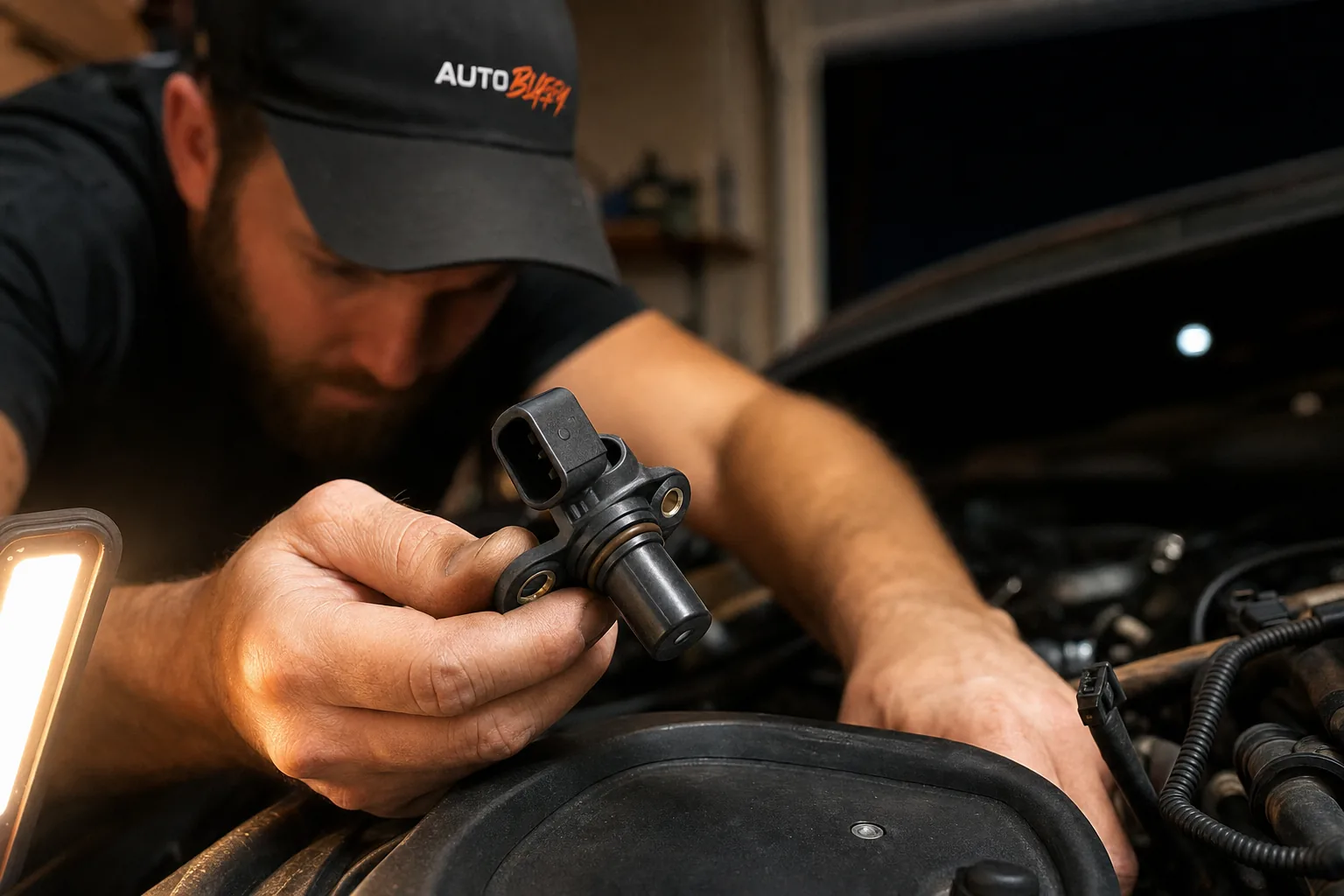
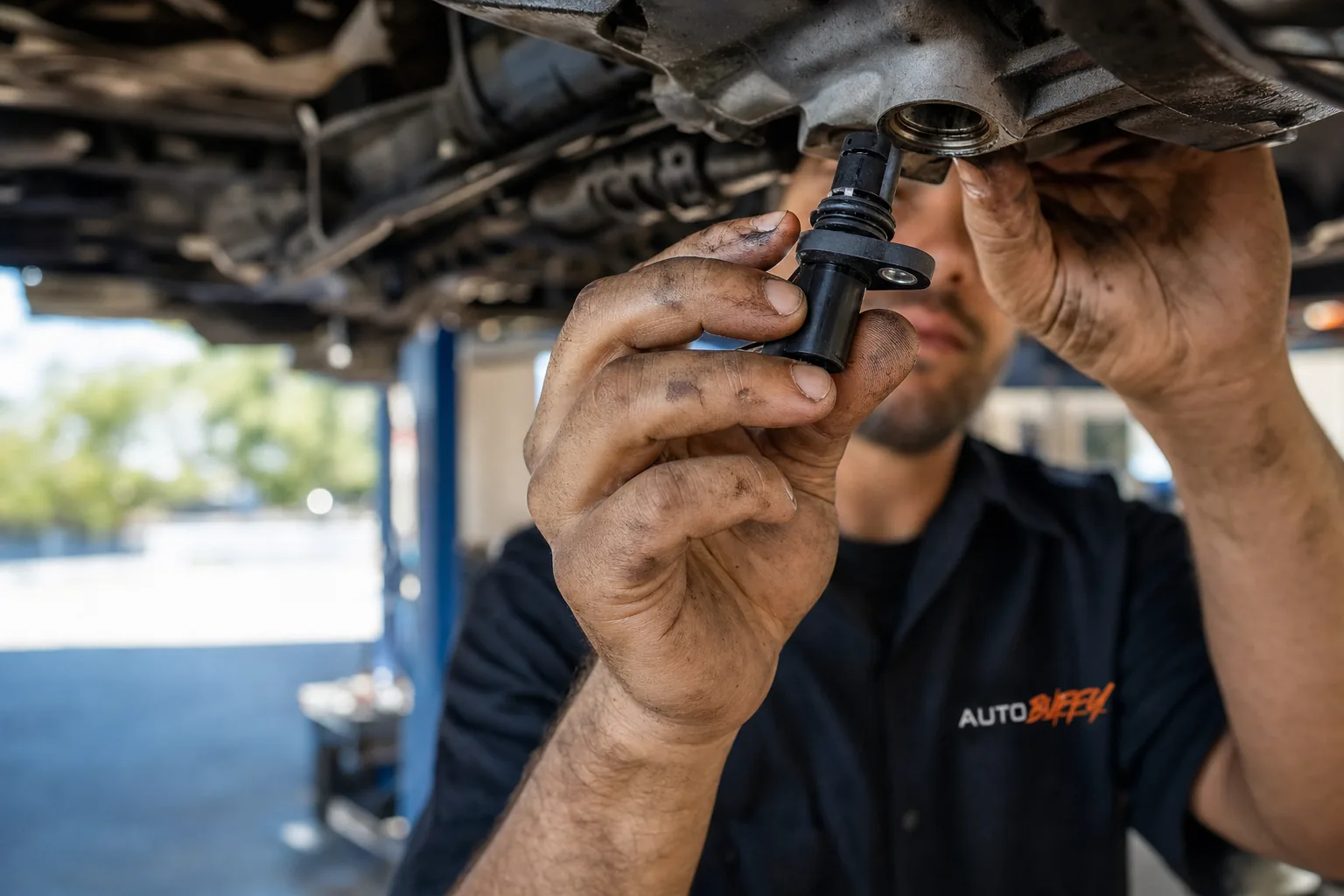
If diagnostics point to the sensor — erratic signal on live data, connector corrosion, or the code returns immediately after a confirmed good timing chain and fresh oil — a camshaft position sensor replacement is a straightforward repair. The sensor itself is typically a magnetic or Hall-effect device that reads teeth on the cam reluctor wheel and sends a digital signal to the ECM.
When shopping for a replacement, fit matters. The sensor has to match your engine's connector style and mounting configuration exactly. A specialist supplier with broad OEM-spec coverage is worth seeking out over a generic fit. Use the finder below to match the right sensor to your vehicle before ordering.
Find the right camshaft position sensor for your vehicle
Guaranteed fit, ships free
FAQ / People Also Ask
P0016's full OBD-II definition is 'Crankshaft Position – Camshaft Position Correlation (Bank 1 Sensor A).' It means your engine control module detected a timing mismatch between the crankshaft signal and the Bank 1 intake camshaft signal. It tells you there's a correlation problem — not necessarily which part has failed.
Comments
Loading comments...
Comments are moderated by the AutoBuffy team.