

P0113: Intake Air Temp / MAF Sensor High Input — Causes & Fix Cost
P0113 means your PCM sees voltage above 4.7V from the IAT sensor. Here's what causes it, what it costs to fix, and when to replace the MAF sensor.
The Short Answer
P0113 means your PCM detected a voltage above 4.7 volts on the Intake Air Temperature (IAT) sensor circuit — a signal it interprets as impossibly cold air, triggering a check engine light and failsafe mode.
| Quick Facts | Details |
|---|---|
| Code | P0113 — IAT Sensor Circuit High Input |
| Trigger | PCM voltage > 4.7V on IAT circuit |
| Common Location | Inside MAF sensor housing (most vehicles) |
| DIY Difficulty | Moderate |
| Standalone IAT sensor cost | $50–$150 (parts) |
| MAF sensor assembly cost | $150–$400 (parts) |
| Labor estimate | $50–$150 at an independent shop |
| Safe to drive? | Short distances only — engine damage risk with extended use |
Getting this code doesn't automatically mean your MAF sensor is toast. But if the IAT element lives inside that MAF housing — which it does on most modern vehicles — you'll need to work through a logical diagnostic before reaching for your wallet.
What Is the IAT Sensor and How Does It Work?
The IAT sensor is a thermistor. That means its electrical resistance changes based on temperature. As intake air temperature rises, resistance drops. As temperature drops, resistance climbs.
The PCM supplies exactly 5 volts as a reference signal to the sensor. Depending on how much resistance the sensor presents, some of that voltage drops across the sensor and the PCM reads the remainder. Under normal operating conditions, that return voltage floats somewhere between 0.5 and 4.5 volts.
When the PCM sees a signal above 4.7 volts, it means almost none of the reference voltage is dropping across the sensor. That only happens if the circuit is open — broken wire, bad connector, or a failed sensor that's gone to high resistance. The PCM says: this can't be real, and stores P0113.
Where Is the IAT Sensor Located?
This varies more than most people expect. The IAT sensor can live:
- Inside the MAF sensor housing — by far the most common setup on modern fuel-injected vehicles
- Inside the MAP sensor — common on speed-density systems
- In the intake manifold — some older or higher-displacement engines
- Somewhere in the air intake path between the air filter box and throttle body
Check a vehicle-specific wiring diagram before you start pulling connectors. Chasing the wrong sensor wastes time.
What Causes P0113?
You'll see a short list of real culprits come up again and again:
- Failed IAT sensor — The thermistor element breaks down internally, resistance goes to infinity, and voltage spikes to near 5V.
- Failed MAF sensor assembly — When the IAT is integrated into the MAF unit, a bad MAF can kill the IAT circuit along with it.
- Open circuit in the wiring — A broken wire anywhere between the PCM and the sensor kills the voltage drop and sends it high.
- Corroded or loose connector — Moisture intrusion is one of the most underrated causes. A green, crusty connector adds resistance just like a bad sensor.
- Short to voltage — Less common, but a chafed wire touching a 12V source anywhere in the harness can fake a high-voltage reading.
- Dirty or clogged air filter — Won't cause P0113 directly, but always worth checking. Restricted airflow changes conditions around the sensor.
In my experience, wiring and connectors account for roughly 30–40% of IAT-related codes. Don't skip that step.
Symptoms You'll Notice
Some of these are obvious. Some aren't.
- Check engine light — Always present with P0113
- Poor fuel economy — The PCM is calculating air-fuel mixture with bad temperature data
- Rough idle or hesitation — Especially common on cold starts when the PCM can't correctly adjust for actual intake conditions
- Failed emissions test — Hard to pass smog with a check engine light active
- ECM failsafe / limp mode — The PCM may default to a fixed temperature value, limiting performance
Extended driving with P0113 active carries real risk. Running lean from miscalculated fueling can cause pre-detonation and internal engine damage over time. Don't let this one sit.
How to Diagnose P0113 Step by Step
Step 1: Visual Inspection First
Before plugging in any tool, look at the sensor connector and wiring harness. Corrosion, cracked insulation, or a connector that isn't fully seated will show up in thirty seconds of looking. Fix obvious physical damage first.
Step 2: Check for the 5-Volt Reference
With the connector unplugged and the key on (engine off), use a multimeter to verify the PCM is actually sending 5 volts to the sensor reference wire. No voltage here points to a PCM or wiring issue upstream.
Step 3: Test Sensor Resistance
With the sensor connector disconnected, measure resistance across the IAT sensor terminals. At room temperature, most IAT sensors read somewhere in the 2,000–3,000 ohm range. Apply heat carefully with a heat gun — resistance should drop noticeably. No change means the sensor is dead.
Step 4: Check Live Data
If you have a decent scan tool, watch the IAT reading live. A functioning IAT sensor should read close to ambient temperature on a cold start, then climb as the engine warms up. A sensor stuck at –40°F or –40°C on a warm day is a classic P0113 signature.
Step 5: Wiggle Test
With the connector plugged back in and the engine idling, wiggle the harness near the connector while watching the IAT live data. If the reading spikes or jumps, you have an intermittent connection issue.
What's the Fix?
If the connector is corroded: Clean it with electrical contact cleaner, apply dielectric grease, and reseat it. Clear the code. Done — for some people, that's the whole repair.
If the wiring is damaged: Repair or replace the affected section. Splice kits work fine; just use proper heat-shrink connectors, not electrical tape alone.
If the IAT sensor is standalone: Replace it. Parts typically run $50–$150 depending on the vehicle. Most are straightforward to swap.
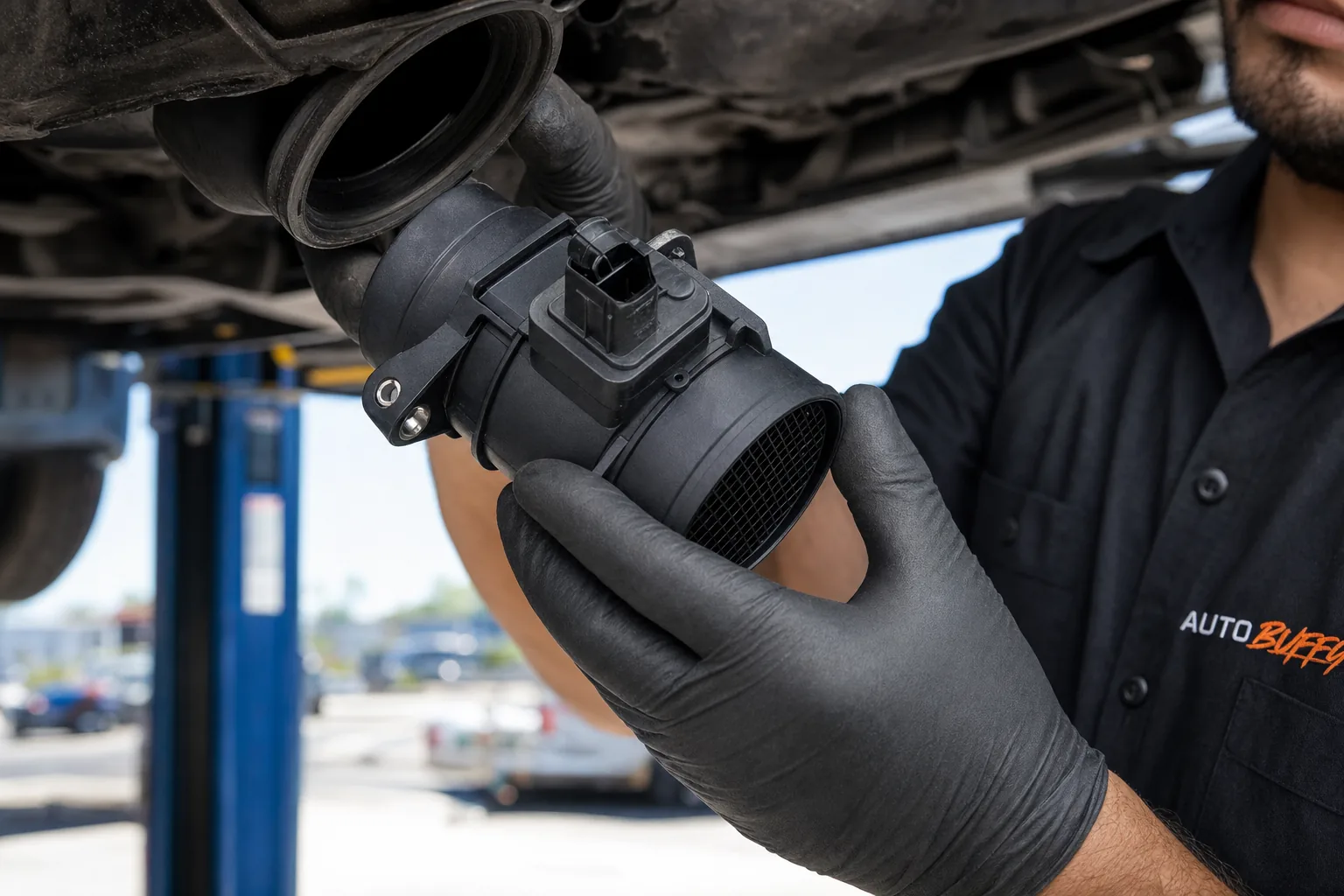
If the IAT is integrated into the MAF sensor: You'll replace the entire MAF assembly. Expect to pay $150–$400 for the part, depending on the application. Labor at an independent shop usually adds $50–$150.
After any repair, clear the code and let the vehicle run through a full drive cycle. Confirm the code doesn't return before calling it fixed.
Which MAF Sensor Should You Buy?
When you're replacing a MAF sensor that includes the IAT element, quality matters more than most people realize. Cheap no-name sensors frequently trigger the same code within a few thousand miles because the IAT element inside doesn't meet OE resistance tolerances.
For a MAF sensor, OE-spec calibration is what actually matters — the PCM meters fuel off that air-mass and intake-temp signal, so a unit that reads slightly off forces the computer to compensate and can trip the code again. Choose a mass air flow sensor built to OE spec for your specific application — use the part finder below to confirm fit.
Use the part finder below to confirm the right sensor for your year, make, and model — fitment matters, and a mismatched MAF calibration can cause entirely different driveability codes.
Find the right part for your vehicle
Guaranteed fit, ships free
FAQ / People Also Ask
P0113 means the PCM detected a voltage above 4.7 volts on the IAT (Intake Air Temperature) sensor circuit. That reading is outside the realistic range, so the PCM sets a check engine light and logs the code.


Comments
Loading comments...
Comments are moderated by the AutoBuffy team.