

P0128: Coolant Thermostat Below Regulating Temperature — Causes & Fix Cost
P0128 means your engine isn't reaching normal operating temp. Here's what causes it, what it costs to fix, and when to DIY vs. visit a shop.
The Short Answer
P0128 means your engine's coolant temperature isn't reaching the thermostat's regulating range — typically 180–200°F — and the most common fix is a thermostat replacement costing $150–$350 at a shop or $15–$80 in parts if you do it yourself.
| Factor | Detail |
|---|---|
| Official definition | Coolant Temperature Below Thermostat Regulating Temperature |
| Target coolant temp | 180–200°F (82–93°C) |
| #1 cause | Thermostat stuck in the open position |
| Urgency | Moderate — not a breakdown risk, but fix it soon |
| DIY difficulty | Easy to moderate depending on engine layout |
| Typical shop repair cost | $150–$350 (parts + labor) |
| DIY parts cost | $15–$80 |
What P0128 Actually Means
Your car's powertrain control module (PCM) is constantly watching engine coolant temperature. It knows how long the engine has been running, how fast you're going, and what the ambient air temperature is. Using all of that data together — intake air temp (IAT), engine coolant temp (ECT) sensor readings, vehicle speed, and elapsed run time — it calculates when the coolant *should* be up to operating temperature.
If the coolant hasn't climbed into that 180–200°F range within the expected window, the PCM logs P0128 and lights the check engine light.
That's really it. The code isn't saying something is broken in a dramatic way. It's saying the engine is running too cold for too long, and that's a problem worth fixing.
The Most Common Cause: A Stuck-Open Thermostat
About 90% of P0128 cases come down to one part: a thermostat that's stuck open.
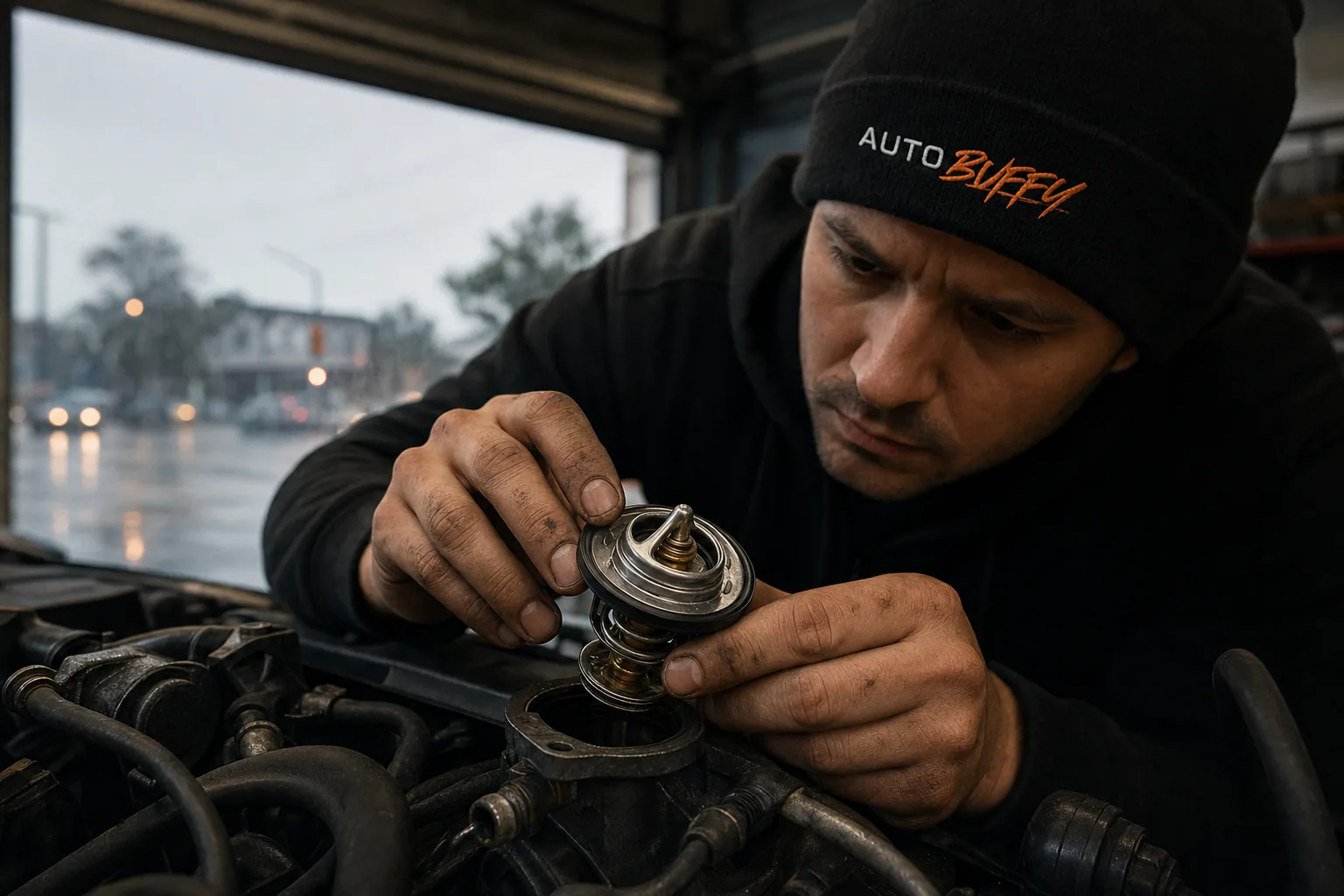
Here's why that matters. A thermostat acts like a gate between your engine and the radiator. When the engine is cold, the thermostat stays closed — coolant circulates only within the engine block, letting it heat up quickly. Once it hits the target temperature, the thermostat opens and lets coolant flow through the radiator to be cooled down.
When that gate gets stuck open, coolant flows through the radiator *constantly*, even when the engine is cold. The engine never fully warms up. In winter especially, some vehicles with a stuck-open thermostat can barely get the temperature gauge to move.
Thermostats fail open or fail closed. Failing closed is the dangerous one — that causes overheating. Failing open is what triggers P0128, and while it won't leave you stranded, it has real consequences.
What Happens When Your Engine Runs Too Cold
- Fuel economy drops. The PCM stays in open-loop fuel enrichment longer, dumping extra fuel the engine doesn't need. Expect 1–3 MPG worse than normal.
- Wear increases. Cold oil is thicker and doesn't protect engine surfaces as well. The longer you run cold, the more wear accumulates.
- Emissions go up. Catalytic converters need heat to work properly. A cold-running engine is harder on the cat.
- The heater may blow lukewarm air. Your cabin heat comes from engine coolant. No heat in the coolant, no heat in the car.
Other Causes of P0128 (Less Common, Still Worth Checking)
Faulty Engine Coolant Temperature (ECT) Sensor
The ECT sensor tells the PCM what temperature the coolant is. If it's reading falsely low, the PCM thinks the engine isn't warming up even when it is. A quick check: pull the live data on a scan tool and watch the ECT reading while the engine warms up. If it climbs slowly and steadily alongside the temperature gauge, the sensor is probably fine. If it's erratic or reads much lower than the gauge suggests, test the sensor.
Wiring or Connector Issues
Corroded connectors or damaged wiring to the ECT sensor can cause the same false-low readings. Inspect the harness connector at the sensor — this takes two minutes and costs nothing.
Coolant Level Issues
Extremely low coolant can cause air pockets near the ECT sensor, producing weird readings. Check the coolant level first. If it's fine, move on to the thermostat.
How to Diagnose P0128 Before You Buy Parts
- Check coolant level. Top off if low, clear the code, and see if it returns.
- Read live ECT data. Watch the temperature climb on a scan tool. It should reach 180°F or higher within a normal warm-up cycle (typically 5–10 minutes of driving in moderate weather).
- Monitor the temperature gauge. If it climbs to the middle of the gauge and stays, the thermostat is probably fine and the ECT sensor may be the issue.
- Inspect the ECT sensor connector. Look for corrosion or loose pins.
- If temp never gets to the gauge's midpoint — replace the thermostat. That's almost certainly the problem.
I've seen shops jump straight to thermostat replacement without reading live data first. That's usually the right call statistically, but spending 10 minutes with a scan tool can save you money if the sensor is actually at fault.
How to Fix P0128: Thermostat Replacement
On most vehicles, this is a genuine DIY job. Here's the general process:
- Let the engine cool completely — hot coolant will burn you.
- Drain the coolant into a clean container for reuse or proper disposal.
- Locate the thermostat housing (usually where the upper radiator hose meets the engine).
- Remove the housing bolts and the old thermostat, noting the orientation.
- Clean the mating surface, install the new thermostat with a fresh gasket or O-ring (most kits include one).
- Reinstall the housing, torque the bolts to spec.
- Refill the cooling system, bleed any air pockets per your vehicle's procedure.
- Warm the engine up, check for leaks, and confirm the temperature reaches normal range.
Some engines — particularly certain European models and newer vehicles with electronically controlled thermostats — make this more complicated. Check a vehicle-specific guide before starting.
What Does the Repair Cost?
DIY: Thermostat and gasket kits typically run $15–$80 in parts depending on the vehicle. Add a gallon of coolant ($15–$25) if yours is due for a change.
Shop repair: Most shops charge $150–$350 total, parts and labor. Labor is usually 1–2 hours. On vehicles with difficult thermostat locations, that can climb to $400–$500.
ECT sensor replacement (if that's the culprit): Sensors typically run $20–$60 in parts; shops charge $50–$150 total.
Always get a written estimate. P0128 is a common upsell opportunity — a straightforward thermostat job shouldn't cost the same as a timing chain replacement.
Choosing the Right Thermostat
Thermostat quality matters more than most people realize. A cheap thermostat that starts opening too early puts you right back where you started. Look for parts that open at the correct temperature for your specific engine — not just a generic 195°F unit that might not match your PCM's calibration.
Look for a thermostat with true OEM-match coverage for your specific engine, with the opening temperature dialed in per application rather than a one-size-fits-all rating. For exact fitment and today's pricing, use the finder below.
Find the right part for your vehicle
Guaranteed fit, ships free
FAQ / People Also Ask
P0128 is officially defined as 'Coolant Thermostat — Coolant Temperature Below Thermostat Regulating Temperature.' Your PCM has determined that engine coolant is not reaching its target operating range, typically 180–200°F (82–93°C), within the expected window after startup.
Comments
Loading comments...
Comments are moderated by the AutoBuffy team.