

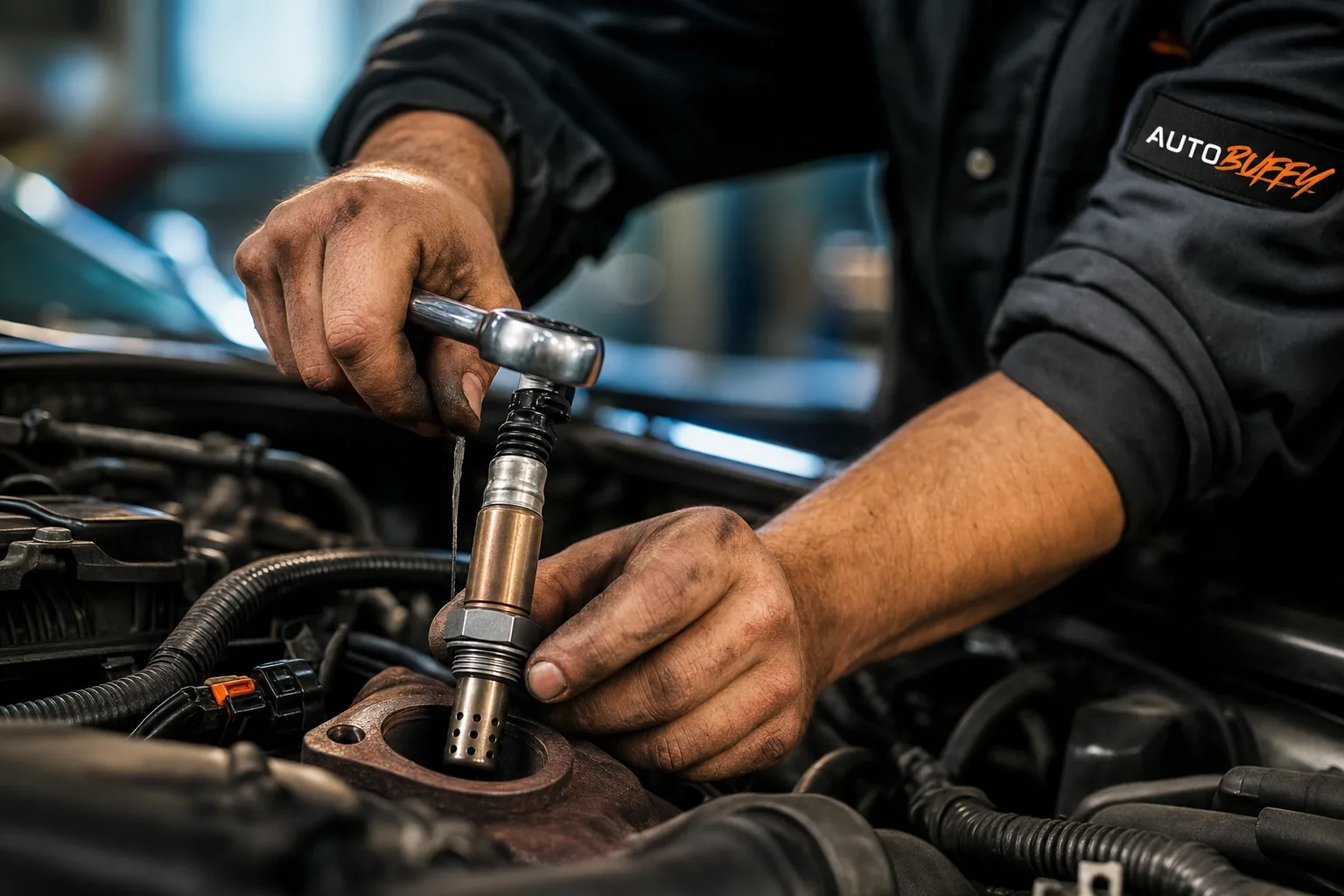
P0135: O2 Sensor Heater Circuit (Bank 1 Sensor 1) — Diagnosis & Cost
P0135 means your upstream O2 sensor heater is failing. Learn what causes it, how to diagnose it, and what it costs to fix.
The Short Answer
P0135 means your engine control module has detected a fault in the heater circuit of the upstream oxygen sensor on Bank 1 (Sensor 1), and it needs to be diagnosed and repaired before it damages your catalytic converter.
| Item | Typical Range |
|---|---|
| Oxygen sensor (part only) | $20 – $100 |
| Shop labor | $50 – $150 |
| DIY total cost | $20 – $100 |
| Catalytic converter (if neglected) | $800 – $2,500+ |
| Heater element resistance (healthy) | 5 – 20 ohms |
| Sensor operating temperature needed | ~600°F |
What Exactly Is P0135?
P0135 is officially defined as "Oxygen O2 Sensor Heater Circuit Malfunction (Bank 1, Sensor 1)." The ECM monitors the heater circuit constantly and throws the code when it detects an open circuit, a short, or current draw that's out of spec relative to coolant temperature.
The sensor itself measures oxygen content in the exhaust to help the ECM fine-tune the air-fuel ratio. But an O2 sensor only produces a reliable voltage signal once it reaches around 600°F. On a cold start, exhaust gas alone takes too long to heat it. That's why every modern upstream sensor has a built-in electric heater — it gets the sensor up to operating temperature within 30–60 seconds so closed-loop fuel control kicks in fast.
When the heater circuit fails, the sensor runs cold too long, the ECM can't trust its signal, and you get the code.
Where Is Bank 1 Sensor 1?
Bank 1 is whichever side of the engine contains cylinder number 1. On a straight-four or straight-six, there's only one bank, so Bank 1 is straightforward. On a V6, V8, or H4 (boxer), you need to know which cylinder is #1 for your specific engine — check your service manual if you're unsure.
Sensor 1 is always the upstream sensor, sitting in the exhaust manifold or in the pipe immediately after it, before the catalytic converter. That location matters because pre-cat is where the ECM needs live air-fuel data to control combustion. The downstream sensor (Sensor 2) monitors converter efficiency — that's a different job, a different code.
What Causes P0135?
Most of the time it's one of four things:
- Dead heater element inside the sensor — the most common cause, especially on high-mileage vehicles. The element simply burns out like any resistive heater coil.
- Wiring or connector damage — heat, vibration, and age crack the insulation on the sensor pigtail. Rodent damage is more common than people admit.
- Blown heater fuse — the O2 sensor heater has its own fuse on most vehicles. Check this first. It takes two minutes and costs nothing.
- Faulty ECM — rare, but it happens. Only suspect this after you've eliminated everything else.
How to Diagnose P0135 Step by Step
Step 1: Pull the Code and Check for Others
Use an OBD2 scanner to confirm P0135 and look for companion codes. A P0141 (Bank 1 Sensor 2 heater) alongside P0135 could point to a fuse or wiring issue rather than a sensor-specific failure.
Step 2: Check the Fuse
Find the O2 sensor heater fuse in your fuse box (the owner's manual will show you which one). A blown fuse that keeps blowing after replacement signals a short in the wiring harness — don't just keep replacing fuses.
Step 3: Inspect the Wiring
Trace the sensor's wiring harness from the connector back toward the ECM. Look for melted insulation, chafing against exhaust heat shields, or corroded terminals. Wiggle the harness with the ignition on and watch for the code to toggle — that's a classic intermittent wiring fault.
Step 4: Test Heater Resistance
Disconnect the sensor connector and set your multimeter to resistance (ohms). Probe the two heater circuit pins on the sensor itself — those are typically the same-colored wires, often both white on common vehicles. A healthy heater element reads roughly 5–20 ohms. An open reading (OL or infinite resistance) means the element is dead and the sensor needs replacing.
Step 5: Check Heater Voltage at the Connector
With the sensor unplugged and the ignition on (engine off), check for battery voltage at the heater supply wire in the harness connector. No voltage there means the problem is upstream — fuse, relay, or wiring — not the sensor.
Should You DIY or Go to a Shop?
Replacing Bank 1 Sensor 1 is a reasonable DIY job if you're comfortable with basic tools and have an O2 sensor socket (a 22mm slotted socket that clears the wire). The sensor can be seized tight from heat and corrosion, though. Penetrating oil applied the night before helps a lot. If the sensor breaks off in the bung, you're in shop territory.
For most people on a relatively accessible vehicle, budget an hour of your time. A shop will typically charge one to two hours of labor depending on location and accessibility.
What Happens If You Ignore P0135?
Here's where people get burned. A cold O2 sensor causes the ECM to stay in open-loop operation longer than normal, defaulting to a richer fuel mixture. Running rich consistently:
- Drops fuel economy noticeably
- Increases hydrocarbon emissions (you'll likely fail inspection)
- Loads the catalytic converter with unburned fuel
- Can melt or clog the catalytic converter substrate over time
A catalytic converter replacement easily runs $800–$2,500 depending on the vehicle. Compare that to a $30–$100 oxygen sensor and the math is obvious. Fix P0135 sooner rather than later.
Choosing a Replacement O2 Sensor
Bosch invented the automotive oxygen sensor — their original thimble-style sensor debuted in 1976, and Robert Bosch GmbH (still a private company) continues to produce OE-style sensors widely used as aftermarket replacements. DENSO is another long-established name in sensor technology, though it's worth noting that DENSO signed an agreement in September 2025 to transfer its spark plug and exhaust gas sensor business to another party, with the transfer not yet finalized as of this writing — so verify current sourcing if DENSO is your preference.
My honest take: for a heater circuit failure specifically, the quality of the heater element and wiring pigtail matters more than the brand name on the box. I'd rather have a sensor designed to OE fit and spec for my exact application than a universal unit that requires splicing. Wiring splice joints near exhaust heat are a future failure point.
Use the part finder below to pull up sensors that are confirmed to fit your year, make, model, and engine — and check today's pricing there. Part numbers and prices shift; the finder is always current.
Find the right part for your vehicle
Guaranteed fit, ships free
FAQ / People Also Ask
P0135 means the ECM detected a malfunction in the heater circuit of the upstream oxygen sensor on Bank 1 (Bank 1, Sensor 1). The heater circuit warms the sensor quickly after a cold start so it can generate accurate readings.
Comments
Loading comments...
Comments are moderated by the AutoBuffy team.