

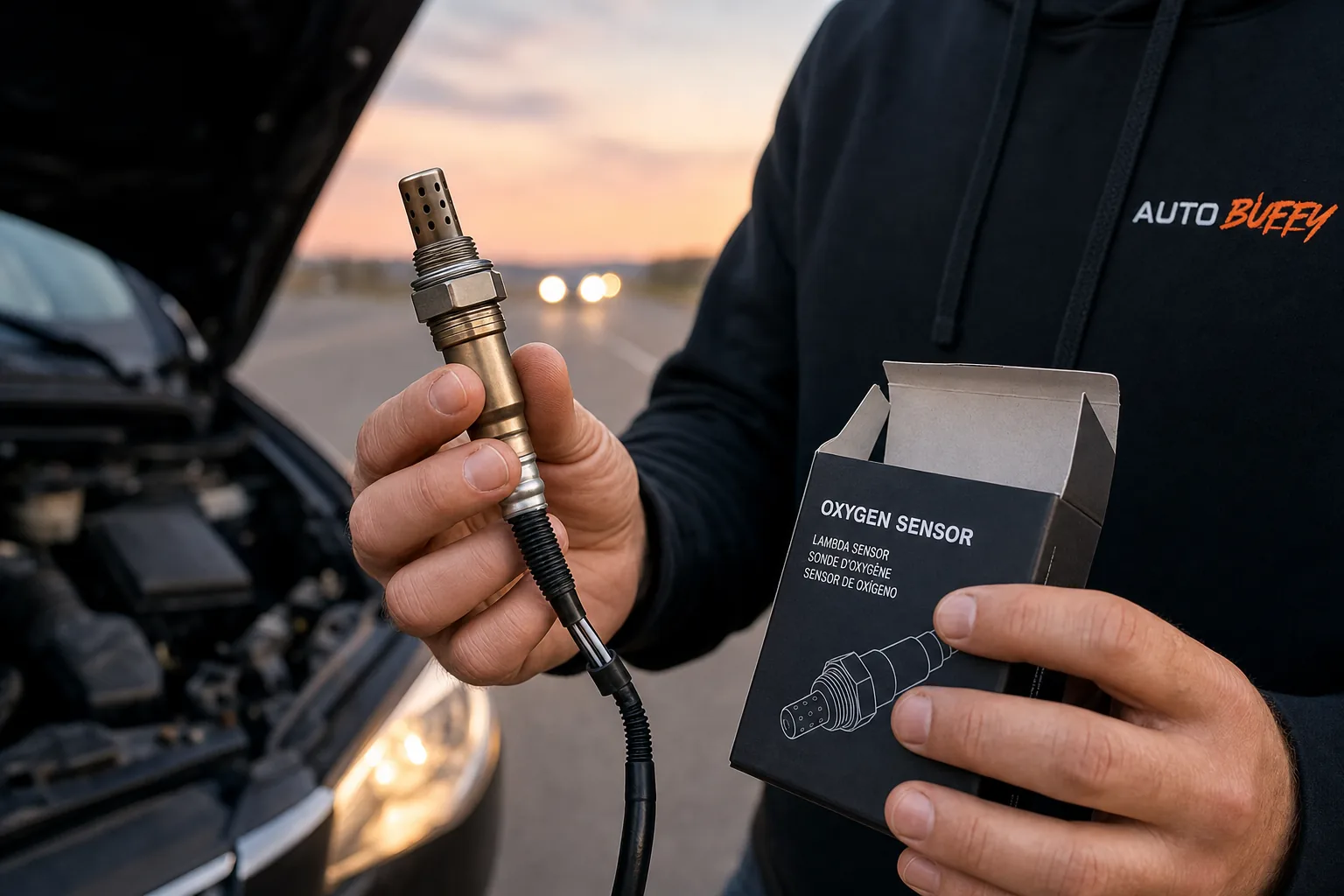
P0138: O2 Sensor Circuit High Voltage (Bank 1 Sensor 2) — Diagnosis & Cost
P0138 means your downstream O2 sensor is reading too high. Here's what triggers it, how to fix it, and what it'll cost.
The Short Answer
P0138 means the downstream oxygen sensor on Bank 1 is reporting a voltage above 1.2 volts for more than 10 seconds — a signal the engine is running rich or the sensor itself has failed.
| Detail | Spec / Range |
|---|---|
| Code definition | O2 Sensor Circuit High Voltage (Bank 1, Sensor 2) |
| Trigger threshold | Sensor voltage stuck ≥ 1.2V for 10+ seconds |
| Sensor location | After catalytic converter, Bank 1 side |
| DIY repair cost | $50 – $150 |
| Professional repair cost | $150 – $400 |
| Severity | Moderate — address within days, not weeks |
| Common fix | Replace downstream O2 sensor or diagnose rich condition |
What Is P0138, Exactly?
Your car's OBD-II system constantly checks the voltage output of every oxygen sensor. The downstream sensor on Bank 1 — the one sitting after the catalytic converter — is supposed to oscillate at a relatively low, stable voltage once the cat is doing its job. When that sensor stays above 1.2 volts for more than 10 seconds, the PCM logs P0138 and lights up your check engine light.
Bank 1 is straightforward: it's whichever side of the engine holds cylinder number one. On most inline four-cylinder engines, there's only one bank, so Bank 1 is the whole thing. On V6s and V8s, it varies by manufacturer — your repair manual or a quick search with your VIN will confirm which side.
Sensor 2 is the downstream sensor, located after the catalytic converter. Its primary job isn't to control fueling the way the upstream (Sensor 1) does. Instead, it monitors converter efficiency. When it reads high, it's essentially telling the PCM: "There's almost no oxygen back here" — which usually points to a rich-running engine or a sensor that's stopped working correctly.
What Causes P0138?
There are several directions this code can come from, and jumping straight to a new sensor isn't always the right move.
The Sensor Itself Has Failed
This is the most common fix. Oxygen sensors wear out. Heat, contamination from oil or coolant leaks, and simple age degrade the sensing element over time. A sensor that's reading artificially high voltage — or stuck at one value — is likely done. Most manufacturers recommend replacing O2 sensors every 60,000–100,000 miles anyway, so if yours hasn't been touched, it's a real suspect.
The Engine Is Running Rich
If the sensor is actually telling the truth, your engine is dumping too much fuel into the combustion process. Causes of a rich condition include:
- A stuck-open or leaking fuel injector
- A faulty mass airflow (MAF) sensor reading low
- A bad coolant temperature sensor causing the PCM to think the engine is cold
- High fuel pressure from a failing fuel pressure regulator
In these cases, clearing P0138 and throwing a new O2 sensor at it will just bring the code right back.
Wiring and Connector Problems
The harness running to the downstream sensor lives in a hot, vibration-prone environment. Frayed wires, corroded connectors, or a short to voltage in the signal circuit can all produce a false high-voltage reading without the sensor being bad at all. Always visually inspect the wiring before condemning the sensor.
Exhaust Leaks (Less Common for Sensor 2)
An exhaust leak upstream of Sensor 1 can skew the fueling system rich, which in turn affects what Sensor 2 sees. It's less direct than the causes above, but worth checking if you hear any ticking or hissing from the exhaust on a cold start.
How to Diagnose P0138 Step by Step
- Pull the code and freeze frame data. A scan tool will show you the engine conditions when the code set — RPM, coolant temp, fuel trims. High positive short-term fuel trims suggest the ECU is trying to compensate for a real rich condition.
- Check live O2 sensor data. Watch Bank 1 Sensor 2 voltage in real time after the engine and cat are fully warmed up (at least 10 minutes of driving). It should read a relatively stable voltage around 0.6–0.7V. If it's hovering near 0.9V or higher and not moving, the sensor is likely bad.
- Inspect the wiring. Look for obvious damage, melted insulation, or corrosion at the connector. Wiggle the harness while watching live data — a spike or drop can reveal an intermittent connection.
- Check fuel trims. Long-term fuel trim (LTFT) values above +10% on the same bank as the code suggest the upstream sensor or a fuel delivery issue is actually the root cause.
- Test or replace the sensor. If live data and fuel trims point to the sensor, replace it. If fuel trims are the problem, diagnose the rich condition first.
Honestly, step 4 is the one most DIYers skip — and it's the step that tells you whether you're fixing the right thing.
P0138 Repair Cost
DIY replacement of the downstream oxygen sensor typically costs $50–$150 for the part, depending on vehicle. You'll need an O2 sensor socket (22mm on most applications), penetrating oil if the sensor has been in there for years, and patience if it's corroded in place.
At a shop, expect $150–$400 total, with labor making up a significant chunk. The actual replacement often takes less than an hour on accessible sensors, but tight packaging on some vehicles adds time.
If the root cause turns out to be a fuel system issue — a leaking injector, failed MAF sensor, or bad pressure regulator — diagnostic time and additional parts will push costs higher. Get a full diagnosis before authorizing repairs.
Choosing the Right Replacement Sensor
Fit matters more than most people realize with oxygen sensors. A sensor that's physically similar but lacks the correct thread pitch, connector type, or heated circuit configuration will either not work or set additional codes. Always verify fitment by year, make, model, and engine size.
Choose an oxygen sensor built to OE specifications for your exact application — the connector, wiring, and thread all have to match, and a downstream (Sensor 2) sensor is a different part from the upstream one. Use the part finder below to confirm the correct sensor for your engine.
Use the finder below to confirm the right part for your specific vehicle and get today's pricing.
Can You Drive with P0138?
Short answer: a little, if you have to. Longer answer: the rich condition that P0138 signals raises exhaust temperatures and can slowly destroy your catalytic converter. A new cat runs anywhere from a few hundred to over a thousand dollars depending on the vehicle — significantly more than the sensor that caused the problem. Don't let this one sit.
Find the right part for your vehicle
Guaranteed fit, ships free
FAQ / People Also Ask
P0138 is the OBD-II generic code for 'O2 Sensor Circuit High Voltage (Bank 1, Sensor 2).' It triggers when the downstream oxygen sensor on Bank 1 fails to drop below 1.2 volts for more than 10 seconds, indicating it's reading less oxygen than expected in the exhaust.
Comments
Loading comments...
Comments are moderated by the AutoBuffy team.