

P0172 Code: System Too Rich (Bank 1) — Causes, Diagnosis, and Repair Cost
P0172 means your engine is running too rich on Bank 1. Learn the real causes, how to diagnose it yourself, and what repairs actually cost.
The Short Answer
P0172 means your engine's air-fuel mixture on Bank 1 is too rich — too much fuel, not enough air — and the ECM logged it because the oxygen sensors confirmed the imbalance.
| Quick Facts | Details |
|---|---|
| Code | P0172 — System Too Rich (Bank 1) |
| Ideal air-fuel ratio | 14.7:1 (stoichiometric) |
| Bank 1 location | The cylinder bank containing cylinder #1 |
| Common companion code | P0175 (Bank 2 rich condition) |
| Urgency | Medium — don't ignore it; catalytic converter damage is a real risk |
| DIY difficulty | Low to medium depending on root cause |
| Typical repair cost range | $15 (MAF cleaning) to $500+ (injector or fuel system work) |
What "Too Rich" Actually Means
Modern engines constantly chase a 14.7:1 air-to-fuel ratio. At that number, combustion is clean and complete. When the ratio drops — say, 12:1 or lower — you have excess fuel that doesn't fully burn. Unburnt hydrocarbons exit through the exhaust, the oxygen sensors detect the oxygen deficit, and the ECM logs P0172. The ECM tries to compensate by pulling fuel (you'll see negative fuel trim numbers if you check live data). But when the cause is severe enough that it can't correct the mixture on its own, it throws the code and lights the check engine light. On inline engines, every cylinder is Bank 1. On V6, V8, flat, or W-type engines, Bank 1 is the side housing cylinder number one — verify this in your vehicle's service manual since it varies by manufacturer. ---
The Most Common Causes of P0172
Dirty or Failed MAF Sensor
This is the single most common cause, and it's worth starting here every time. The mass airflow sensor measures the volume of air entering the engine. If it's coated in oil vapor or dust and reads *higher* than the actual airflow, the ECM injects more fuel than it should — instantly creating a rich condition. The good news: cleaning a MAF sensor with a purpose-made MAF cleaner spray (not brake cleaner, not carb cleaner) often completely resolves P0172 without any parts replacement. It takes about 20 minutes and costs under $15. If cleaning doesn't fix it, then replacement is the next step. ### Faulty Upstream Oxygen Sensor
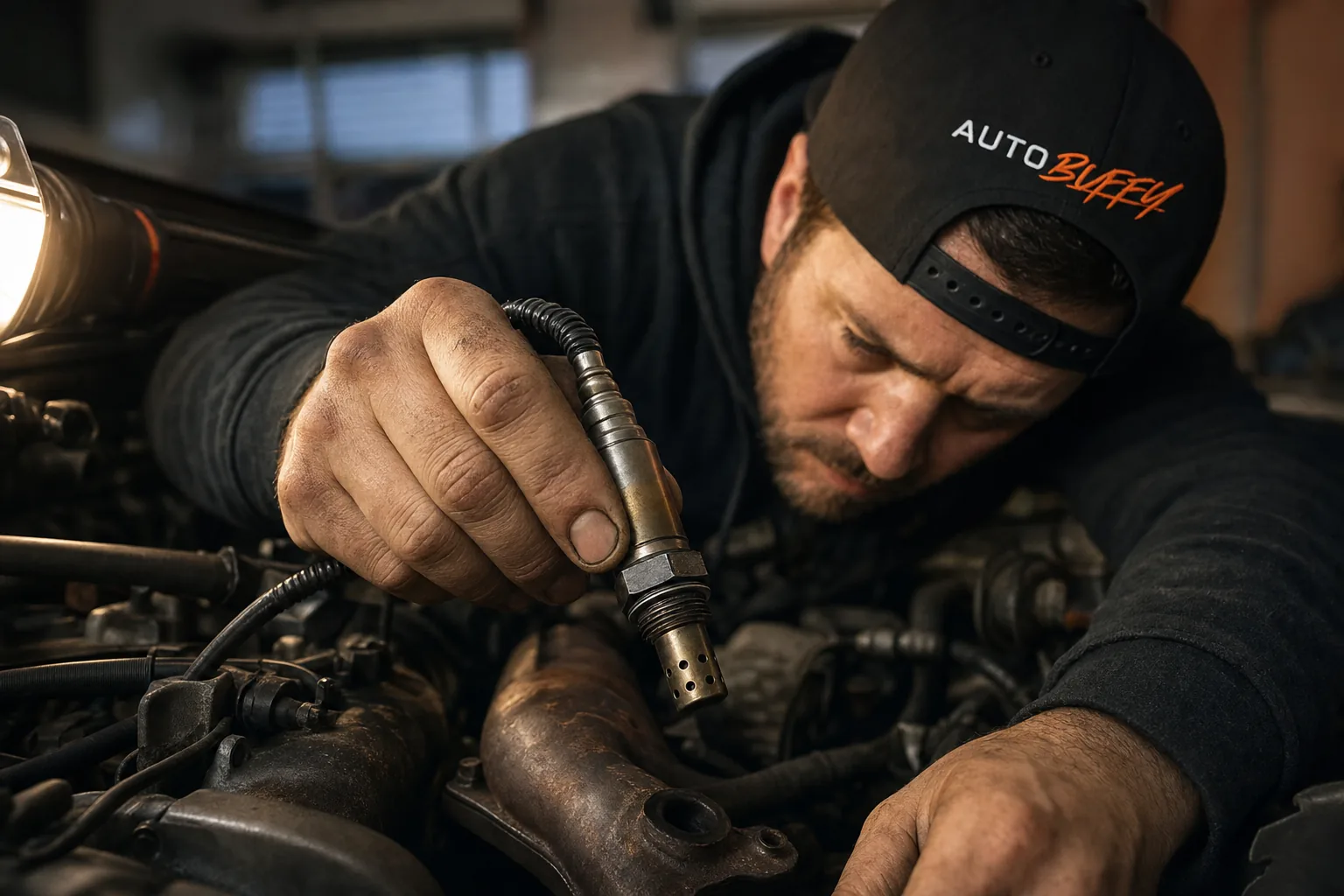
The pre-catalytic-converter (upstream) O2 sensor is the ECM's primary feedback tool for fuel trim. A sensor that's slow to respond or stuck reporting a lean signal will cause the ECM to keep adding fuel — triggering P0172. That said, a bad O2 sensor is sometimes *reacting* to the rich condition rather than causing it. Check fuel trims first. Quality matters here. DENSO is an OE supplier to multiple major automakers, and their sensors are built to OE specifications. Motorcraft is the correct choice for Ford and Lincoln platforms — the DY-1624, for example, is a direct upstream fitment for specific Ford applications. Detroit Axle offers multi-sensor kits that cover Honda, Cadillac, Acura, Buick, Chevrolet, and Nissan applications when you need upstream and downstream sensors together. VEMO is a solid pick for Volkswagen and Audi platforms. Use the part finder below to confirm which sensor fits your exact year, make, and model before ordering. ### Leaking or Stuck-Open Fuel Injector
A fuel injector that drips when it should be closed dumps excess fuel into the cylinder. This is harder to diagnose at home — you'll often see it as a misfire code alongside P0172, and a mechanic can test injector balance with a pressure gauge or oscilloscope. ### Failing Fuel Pressure Regulator
If the regulator fails high, fuel pressure stays elevated and injectors push more fuel per pulse than the ECM expects. This creates a consistent rich condition across all cylinders on Bank 1 (or all cylinders in a single-bank engine). Fuel trim data will show a consistent negative correction that doesn't improve with RPM changes. ### Coolant Temperature Sensor Reading Cold
The ECM runs a richer mixture when it thinks the engine is cold — that's normal. But if the coolant temp sensor (CTS) is stuck reading a cold temperature even when the engine is fully warmed up, the ECM never exits its cold-start enrichment strategy. The result is a perpetually rich mixture. It's an easy sensor to overlook. ### Vacuum Leaks (Wait — That's Lean, Right?)
Here's where it gets nuanced. A large vacuum leak generally causes a *lean* condition, not rich. But a small leak downstream of the MAF can confuse the calculation in certain engine configurations. More importantly, ruling out vacuum leaks is fast and free — just something to check before you spend money. ### Clogged Air Filter
A severely restricted air filter cuts airflow to the engine. Less air with the same fuel = rich mixture. Check and replace it if it looks dirty. This is the cheapest possible fix and takes two minutes. ---
How to Diagnose P0172 Step by Step
- Read the code and check for companions. Note whether P0175 also appears. If both codes are set, the issue is likely system-wide (MAF, fuel pressure, coolant temp sensor) rather than a single-bank problem. 2. Check live fuel trim data. Connect a scanner and watch short-term fuel trim (STFT) and long-term fuel trim (LTFT) on Bank 1. Values more negative than -10% confirm the ECM is actively pulling fuel. This is the most important diagnostic step. 3. Inspect and clean the MAF sensor. Remove it carefully, spray with MAF-specific cleaner, let it dry completely, reinstall. Clear the code and drive two warm-up cycles. 4. Check the air filter. Replace if it's visibly dirty or past its service interval. 5. Look for fuel-smell or black smoke. Both point toward a rich condition. Black sooty exhaust at idle is a strong indicator. 6. Check coolant temp sensor operation. With a warmed-up engine, the CTS should read close to operating temperature (typically 195-220°F depending on the vehicle). A scan tool makes this easy. 7. Test fuel pressure. If you have a fuel pressure gauge, check it against spec. An elevated reading points to the regulator. 8. Inspect injectors. Listen for consistent clicking at idle. Uneven sounds or a misfire code alongside P0172 can point to a leaking injector. > Pro tip: Don't replace the oxygen sensor first just because P0172 involves fuel trim feedback. The O2 sensor is often the messenger, not the culprit. Diagnose fuel trims and MAF data first — you'll save money. ---
What Happens If You Ignore P0172? A prolonged rich condition causes real damage. Unburnt fuel reaching the catalytic converter can ignite inside it, destroying the substrate. Catalytic converter replacement is typically a $500-$1,500+ job depending on the vehicle — far more expensive than fixing the root cause early. The oxygen sensors themselves can also be fouled by the excess fuel, and fuel economy takes a measurable hit in the meantime. ---
Repair Cost Breakdown
| Repair | DIY Cost | Shop Cost (Est.) |
|---|---|---|
| MAF sensor cleaning | $10-$15 (spray) | $50-$100 (labor) |
| MAF sensor replacement | $50-$150 (part) | $150-$300 (part + labor) |
| Oxygen sensor replacement | $50-$200 (part) | $150-$400 (part + labor) |
| Coolant temp sensor | $15-$60 (part) | $80-$200 (part + labor) |
| Fuel injector cleaning service | N/A (professional tool) | $100-$300 |
| Fuel pressure regulator | $30-$100 (part) | $100-$250 (part + labor) |
These are honest market ranges. Your actual cost depends on vehicle make, labor rates in your area, and which part is actually at fault. There's no shortcut around a proper diagnosis. ---
Choosing the Right Oxygen Sensor
If the oxygen sensor is confirmed faulty, fit matters more than brand loyalty. A sensor built to OE specifications will restore accurate fuel trim feedback; a cheap generic may introduce new inaccuracies. - DENSO sensors are OE suppliers to Toyota, Honda, and others — a reliable choice for Japanese makes, and their coverage extends to Land Rover, Volvo/Polestar, Mercedes-Benz, and Honda Civic applications. - Motorcraft is the right call for Ford and Lincoln vehicles — no adaptation required. - Detroit Axle kits cover multiple sensors at once for Cadillac, Honda, Acura, Buick, Chevrolet, and Nissan — useful when you need both upstream and downstream replaced. - VEMO is engineered for European platforms, particularly VW Group vehicles. Always confirm upstream vs. downstream position before ordering. The upstream sensor (before the catalytic converter) is the one directly involved in fuel trim feedback for P0172. The downstream sensor monitors converter efficiency and is a different repair. {partfinder:oxygen sensor|Find the right oxygen sensor for your vehicle|Guaranteed fit, ships free}
FAQ / People Also Ask
P0172 means 'System Too Rich (Bank 1).' The engine control module detected that the air-fuel mixture on Bank 1 contains too much fuel relative to air. The ideal ratio is 14.7:1; when the mixture drops well below that (more fuel, less air), you get P0172.
Comments
Loading comments...
Comments are moderated by the AutoBuffy team.