

P0301: Cylinder 1 Misfire — Causes, How to Diagnose & Repair Cost
P0301 means cylinder 1 is misfiring. Learn the real causes, step-by-step diagnosis, repair costs, and when a flashing CEL means stop driving now.
The Short Answer
P0301 means your engine control module has detected a misfire specifically in cylinder 1, and the most common fix on modern engines is a failed ignition coil or worn spark plug.
| Likely Cause | DIY Difficulty | Typical Part Cost | Total Repair Range |
|---|---|---|---|
| Worn spark plug | Easy | $5–$25 | $20–$80 |
| Failed ignition coil | Easy–Moderate | $40–$150 | $80–$250 |
| Bad fuel injector | Moderate | $50–$200 | $150–$400 |
| Low compression (mechanical) | Hard | Varies widely | $500–$2,000+ |
| Vacuum leak | Moderate | $5–$50 | $50–$200 |
⚠️ Flashing check engine light + P0301 = stop driving. A blinking CEL means the misfire is severe enough to push raw, unburned fuel into the catalytic converter. Even short trips can turn a $100 coil fix into a $1,500 catalyst replacement.
What Exactly Is P0301?
P0301 is an SAE-standard OBD-II code — not brand-specific — which means it applies the same way whether you're driving a Ford F-150, a Honda Accord, or a BMW 3 Series. The "03" means misfire, and the "01" points to cylinder 1.
Here's the part most people don't realize: there's no dedicated misfire sensor in your engine. The ECM infers a misfire by monitoring tiny variations in crankshaft rotational speed. When a cylinder fires correctly, it accelerates the crank slightly. When it misfires, that acceleration is absent. After the ECM counts enough of these events within a set number of engine revolutions, it stores the fault code and lights up the check engine light.
One more thing people get wrong: cylinder 1 isn't always the front-left cylinder. On inline engines it usually is, but on V6 and V8 engines the numbering depends entirely on the manufacturer and engine layout. Don't guess. Pull up your under-hood emissions label or factory service manual before you start pulling boots off coils.
The Most Common Causes of P0301
Failed Ignition Coil
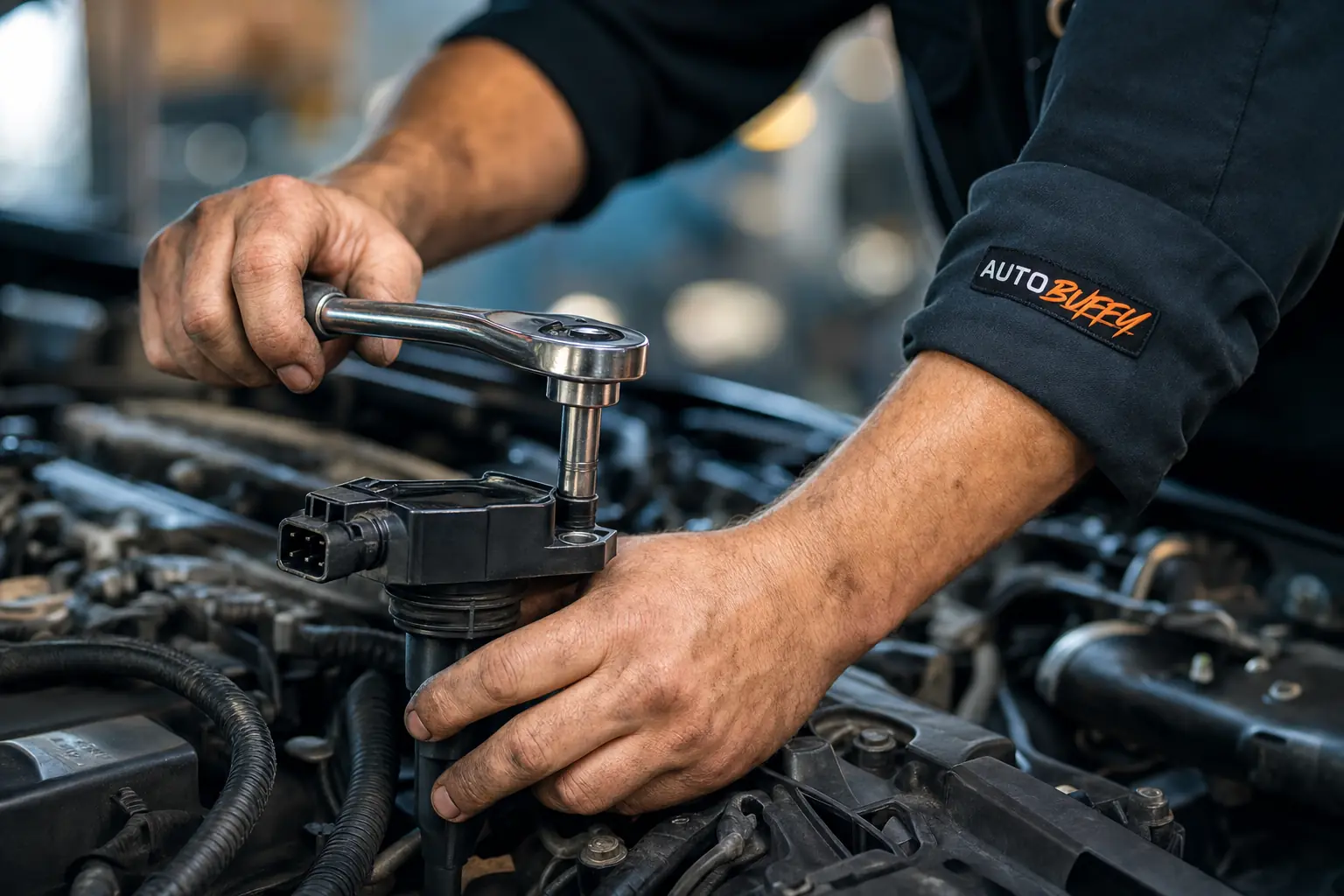
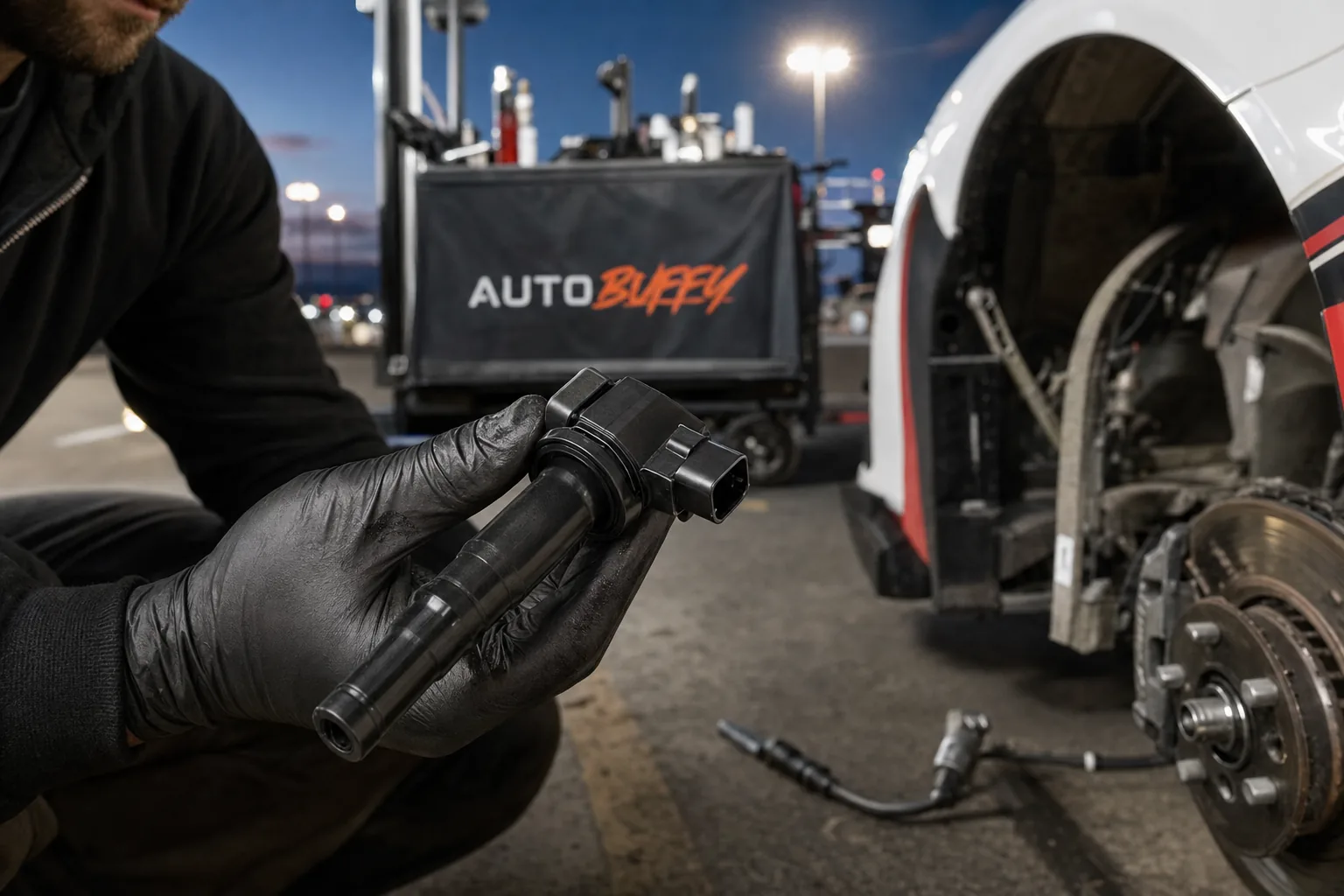
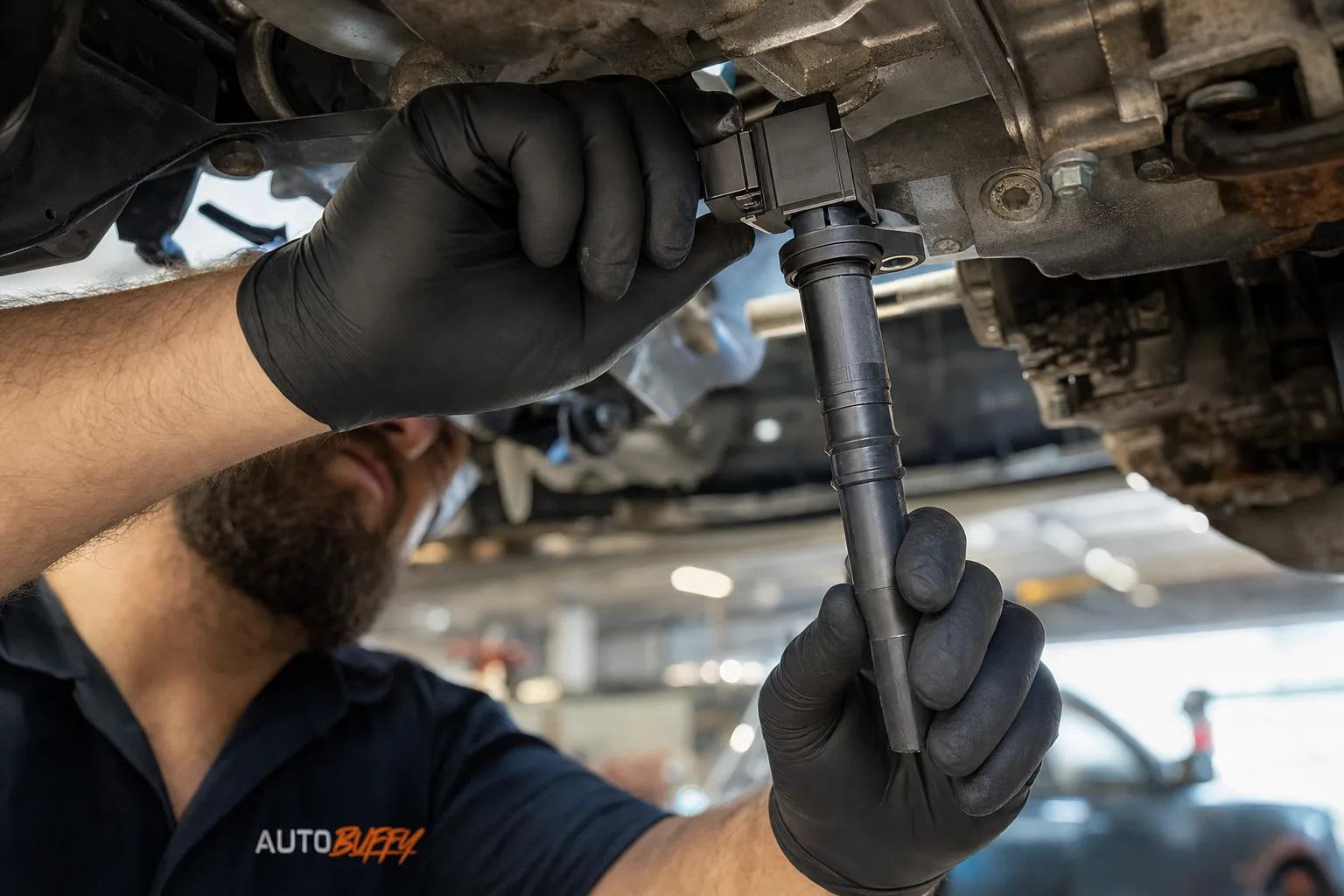
On coil-on-plug (COP) engines — which covers the vast majority of vehicles made in the last 20 years — a dead or weak coil on cylinder 1 is the single most frequent cause. The coil provides the high-voltage spark to fire the plug. When it starts breaking down internally, the spark becomes inconsistent or disappears entirely.
The smart diagnostic move here is the swap test: pull the coil off cylinder 1 and swap it with a coil from another cylinder (say, cylinder 3). Clear the code and drive. If the misfire code moves from P0301 to P0303, you've confirmed the coil is your culprit.
Worn or Fouled Spark Plug
Always check the plug at the same time as the coil. A spark plug that's worn past its gap spec, oil-fouled, or carbon-loaded can misfire even with a healthy coil providing full voltage. Pull it, inspect the electrode, and compare it to a new one. If it's not obviously destroyed, gap it and check against spec anyway — a gap that's even 0.010" too wide can cause intermittent misfires under load.
Faulty Fuel Injector
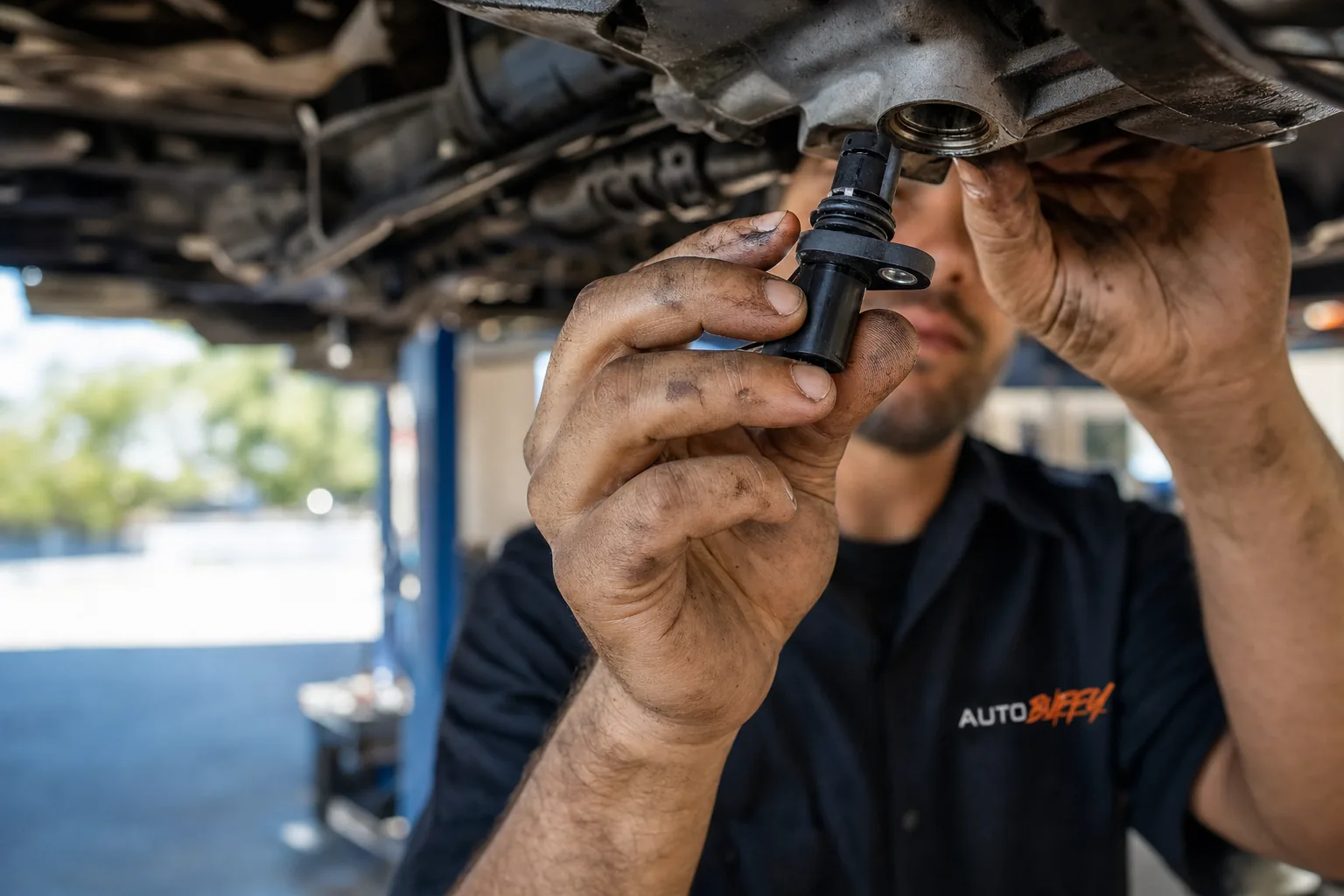
If swapping the coil and replacing the plug doesn't kill the misfire, the fuel injector for cylinder 1 is next on the list. An injector that's clogged, leaking, or stuck partially open will either starve the cylinder of fuel or flood it, both resulting in a misfire. You can listen for injector click with a mechanic's stethoscope, or have a shop perform a fuel injector balance test.
Low Compression in Cylinder 1
This is the scenario no one wants to find. Low compression points to mechanical wear — burned exhaust valves, worn piston rings, a damaged head gasket. A compression test is straightforward: you're looking for cylinder 1 to read within 10–15% of the others. If it's significantly lower, a leak-down test will tell you whether you're losing pressure past the rings, the valves, or through the head gasket.
Vacuum Leak Near Cylinder 1
A cracked intake manifold runner, a loose vacuum line, or a deteriorated injector o-ring near cylinder 1 can lean out the air/fuel mixture enough to trigger consistent misfires. Listen for hissing at idle, or use a smoke machine to pressurize the intake and watch for leaks. Propane enrichment testing also works in a pinch.
How to Diagnose P0301 Step by Step
- Scan and document the freeze frame data. Note the engine RPM, load, and coolant temp when the misfire occurred. A misfire only at cold idle points differently than one that shows up under heavy load.
- Confirm cylinder 1's physical location using the emissions label or factory service info.
- Perform the coil swap test. Move the cylinder 1 coil to another cylinder and see if the code follows.
- Inspect and replace the spark plug in cylinder 1. Compare it visually to plugs from other cylinders — uneven wear can tell a story.
- Check for vacuum leaks around the intake manifold and injector bore for cylinder 1.
- Listen to and test the fuel injector. If you have access to a noid light, check for pulse signal at the injector connector.
- Run a compression test if steps 1–6 come up clean. Follow with a leak-down test if compression is low.
- Check camshaft and crankshaft position sensors if the misfire is random or appears across multiple cylinders in addition to P0301.
Repair Cost Breakdown
Costs vary by vehicle, region, and who's doing the work. Here's an honest range:
- Spark plug replacement (cylinder 1 only): $20–$80 total for most vehicles. If you're already in there, replacing all plugs for $60–$150 in parts is worth it.
- Ignition coil replacement: Part alone typically runs $40–$150. A shop will add an hour of labor — expect $120–$300 all-in depending on access.
- Fuel injector replacement: $150–$400 per cylinder at a shop, more on direct-injection engines where access is difficult.
- Head gasket or valve job: $800–$2,500+ depending on the engine. This is where diagnosis quality really matters — you don't want to find this out after replacing three coils.
My honest take: in 10+ years of watching misfire diagnostics play out, roughly 70% of COP-engine P0301 codes on vehicles under 150,000 miles are solved by a coil and plug swap. Start there, spend $100–$200, and you'll fix it most of the time.
When to See a Shop vs. DIY
The coil swap test, plug inspection, and vacuum leak hunt are all solidly DIY territory if you're reasonably handy. Compression tests require a $30–$50 tool rental but are also doable at home. Where it gets shop-worthy fast: anything involving injector electrical diagnosis, leak-down testing, or — obviously — any kind of internal engine work.
If you're taking it in, chains vary. Independent shops often charge less per hour than dealerships and may diagnose faster on common codes like P0301. Whichever route you choose, make sure they perform the swap test before quoting you a coil pack — a competent shop does this automatically.
The Right Ignition Coil Matters
Not all replacement coils are equal. A coil that's slightly under-spec on output voltage can fire reliably at idle but break down under high-RPM load, giving you an intermittent misfire that's maddening to chase. Fit matters too — a coil with a loose boot-to-plug connection will arc internally and fail within months.
A coil engineered to the OE fit and output specs of your specific application means you're not gambling on whether the dielectric strength holds up under boost or high load. Use the part finder below to confirm the exact coil for your engine.
Find the right part for your vehicle
Guaranteed fit, ships free
FAQ / People Also Ask
P0301 is an SAE-standard OBD-II code that means the engine control module has detected a misfire in cylinder 1 — enough crankshaft speed irregularities to store the fault and trigger the check engine light.
Comments
Loading comments...
Comments are moderated by the AutoBuffy team.