

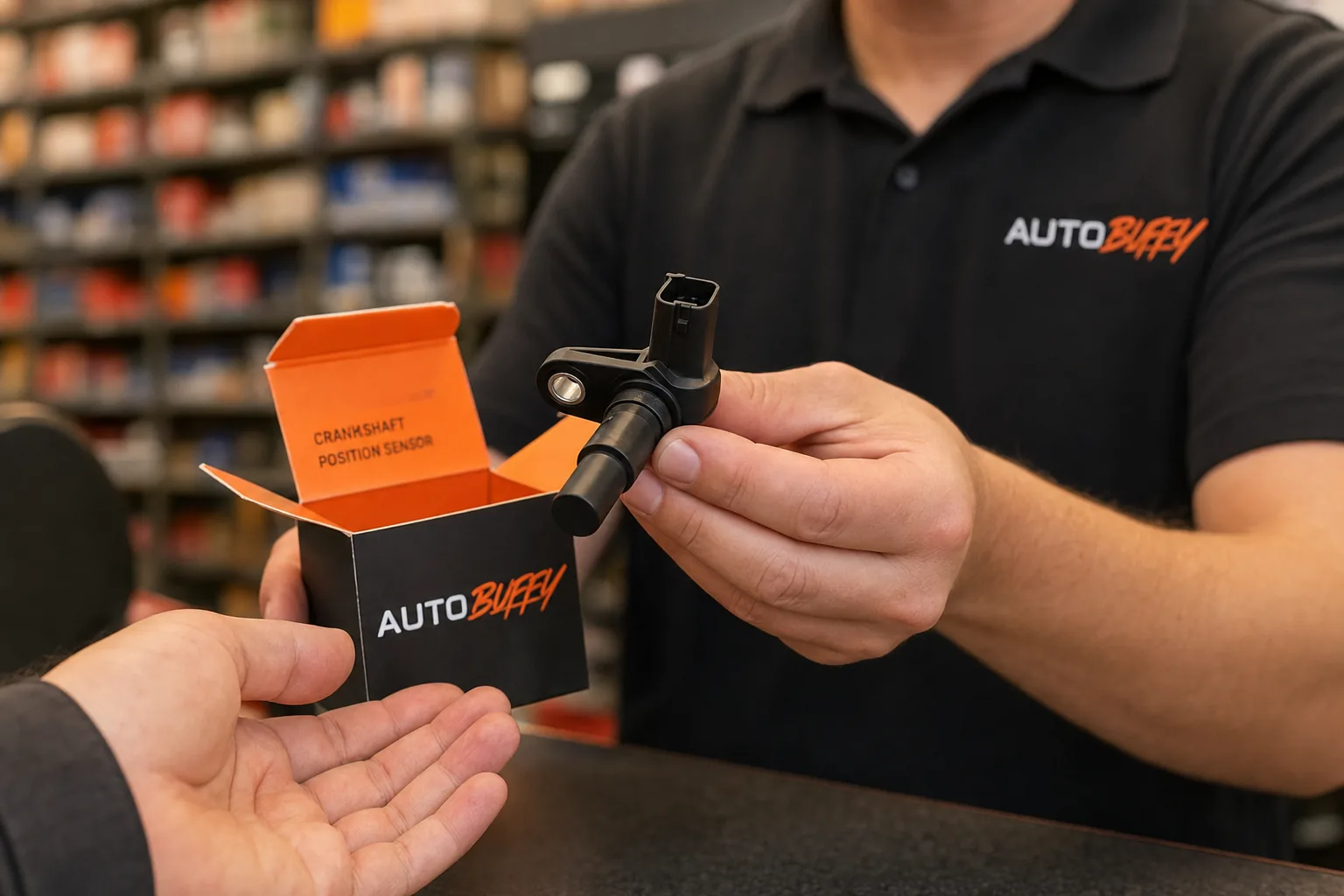
P0335: Crankshaft Position Sensor Circuit — Symptoms, Causes, Cost
P0335 means the PCM lost the crank sensor signal. Learn the real causes, symptoms, and repair costs before you guess your way to a misdiagnosis.
The Short Answer
P0335 — officially "Crankshaft Position Sensor 'A' Circuit Malfunction" — means your PCM has lost the signal it needs to track crankshaft position, and your engine will run poorly, stall, or refuse to start until you fix it.
| At a Glance | Details |
|---|---|
| Code | P0335 |
| Full Name | Crankshaft Position Sensor 'A' Circuit Malfunction |
| Code Type | Generic OBD-II Powertrain (applies to all OBD-II vehicles) |
| Severity | High — potential no-start, stalling |
| Common Fix | Crankshaft position sensor replacement |
| DIY Difficulty | Easy to Moderate (depends on location) |
| Typical Repair Cost | $150–$350 (sensor + labor); more if reluctor ring is damaged |
What Exactly Is P0335 Telling You?
The crankshaft position sensor is one of the most critical inputs your engine control system has. It tells the PCM exactly where the crankshaft is in its rotation — that data drives ignition timing and fuel injection timing simultaneously. Without it, the PCM is essentially flying blind.
When the PCM sees no signal, an erratic signal, or a signal that falls outside its expected parameters, it logs P0335 and often puts the engine into a limp or no-start condition. The code covers the entire circuit: the sensor itself, the wiring harness, the connector, the reluctor ring the sensor reads, and the PCM input.
That's important. P0335 is a circuit code, not just a sensor code. Plenty of people swap a sensor and still have the same code because the real fault was a pinched wire or corroded connector pin.
Symptoms of P0335
You'll usually know something's wrong before you even pull codes. Common symptoms include:
- Engine won't start — the PCM won't authorize injection or spark without crank position data
- Engine stalls at idle or under load, sometimes randomly
- Hard starting — cranks for a long time before catching, or catches then dies
- Rough idle — the timing is off because the signal is intermittent
- Hesitation or stumbling under acceleration
- Check engine light on, sometimes flashing if misfires are severe
- Other codes stored — P0300-series misfires often show up alongside P0335
An intermittent P0335 is actually harder to live with than a permanent one. The car starts fine cold, then stalls on the highway when the sensor heats up and the internal resistance drifts out of spec. That pattern is a classic failing-sensor signature.
What Causes P0335?
1. Faulty Crankshaft Position Sensor
This is the most common cause. Sensors fail from heat cycling, oil leaks soaking the body, and simple age. Internal coil failure or magnet degradation produces a weak or absent signal.
2. Wiring and Connector Problems
The harness runs close to hot exhaust components and rotating parts on many engines. Chafed insulation, pulled terminals, and corroded connector pins all interrupt the signal. Always inspect the harness before ordering a sensor.
3. Damaged Reluctor Ring
The reluctor ring — the toothed wheel on the crankshaft the sensor reads — can crack, lose a tooth, or build up enough metallic debris to cause signal dropout. This is less common but significantly more expensive to fix because you're getting into engine disassembly territory.
4. PCM Failure
Rare, but it happens. If the sensor and wiring both test good, the PCM input circuit itself may be the fault. Before replacing a PCM, get a second opinion — it's an expensive and sometimes frustrating fix if the real problem was a $4 connector pin.
5. Reluctor Ring Debris or Air Gap Issue
Some sensors are air-gap sensitive. If a sensor was recently replaced and installed with incorrect clearance, or if metallic debris is stuck to the sensor tip, you'll get erratic readings even with a brand-new part.
How to Diagnose P0335 Step by Step
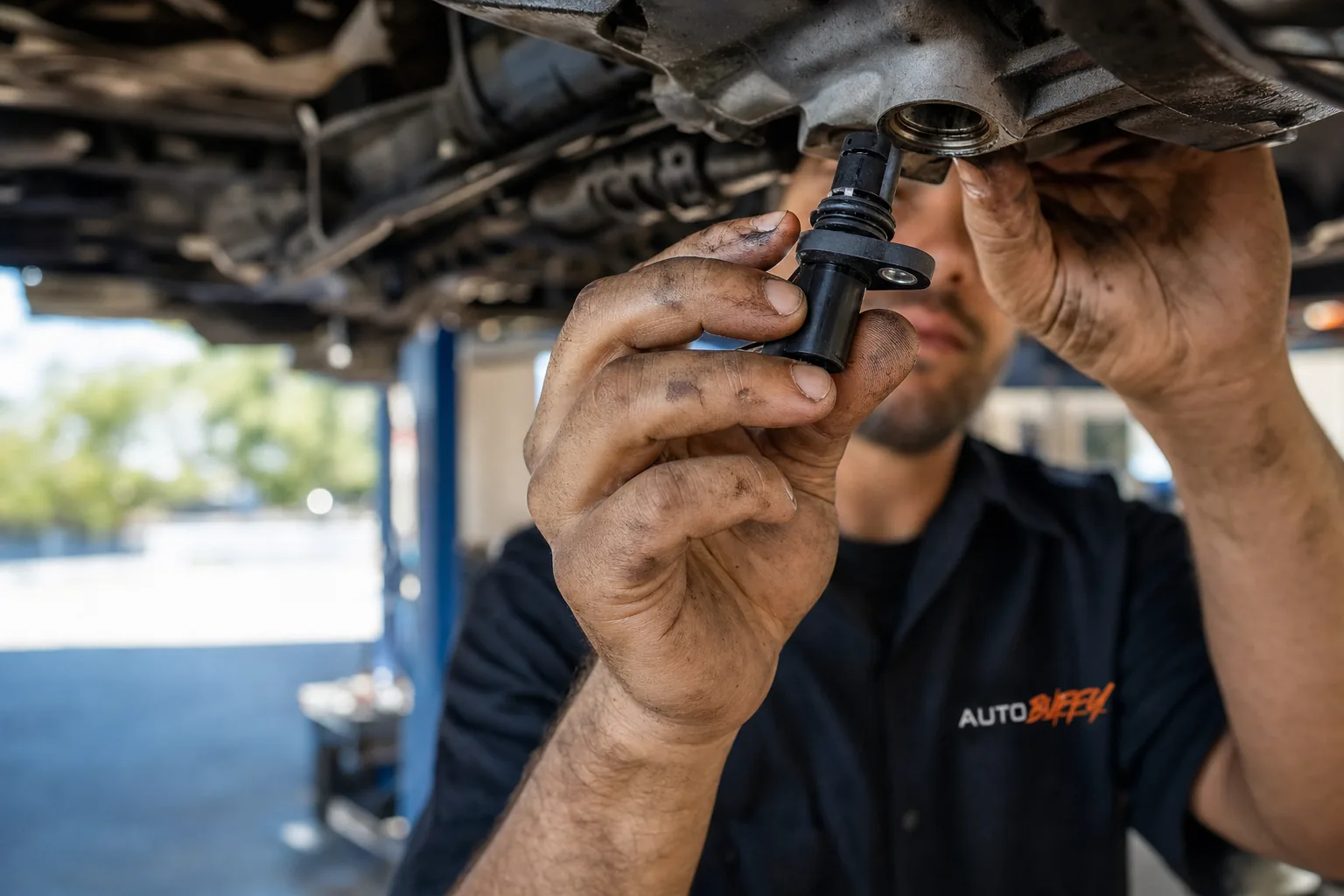
- Visual inspection first. Look at the sensor connector and the last 12 inches of harness. Pull the connector and look for green corrosion, bent pins, or oil intrusion.
- Check for oil leaks nearby. A rear main seal leak that's been ignored for 20,000 miles soaks the crank sensor. Fix the leak first.
- Measure sensor resistance. Most magnetic (passive) crank sensors spec between 200 and 1,000 ohms depending on application. Check your service manual. An open reading (OL) means the sensor is dead.
- Check reference voltage and ground. Hall effect sensors need a 5V reference and a solid ground. If those aren't there, the sensor can't work regardless of its condition.
- Inspect the reluctor ring. Use a borescope or pull the sensor and shine a light in. Look for cracked or missing teeth and heavy metallic buildup.
- Live data test. Connect a scan tool and watch crank sensor RPM data while cranking. You should see a reading. No reading, or a reading that drops out, confirms signal loss.
One honest opinion: In my experience, skipping straight to step 3 (resistance test) without doing the visual and oil-leak check first is how people end up buying three sensors and still having the same code. The connector and the environment it lives in matter more than people think.
Repair Cost Breakdown
| Repair Needed | Estimated Total Cost |
|---|---|
| Sensor only (DIY) | $25–$90 part cost |
| Sensor + labor (shop) | $150–$350 |
| Wiring harness repair | $100–$250 depending on damage |
| Reluctor ring replacement | $400–$900+ (labor intensive) |
| PCM replacement + programming | $500–$1,200+ |
Those are honest market ranges — what you actually pay will shift based on your vehicle, your region, and where you take it. Use the part finder below to check current pricing on a sensor for your specific year, make, and model.
Choosing the Right Crankshaft Position Sensor
Fit matters a lot here. Crankshaft position sensors are not universal — the connector shape, body style, and signal type (magnetic vs. Hall effect) vary by application. Installing the wrong sensor can produce the exact same symptoms as the faulty one you removed.
Because crank sensors aren't universal, choose one built to OE specifications for your exact application — the connector shape, body style, and signal type (magnetic vs. Hall effect) all have to match. Use the part finder below to confirm the right sensor for your year, make, model, and engine.
For your exact fit and current pricing, use the finder below.
Can You Prevent P0335 From Coming Back?
Not always, but you can reduce the odds. Fix any oil leaks near the sensor before they destroy the replacement. Secure the harness away from exhaust heat if it's running close. And if you're doing timing chain or rear seal work, inspect the reluctor ring while you're in there — it costs nothing extra at that point and rules out a future comeback.
Find the right part for your vehicle
Guaranteed fit, ships free
FAQ / People Also Ask
P0335 is officially called 'Crankshaft Position Sensor A Circuit Malfunction.' It means the PCM is not receiving a valid signal from the crankshaft position sensor circuit — which could be the sensor itself, the wiring, the reluctor ring, or in rare cases, the PCM.
Comments
Loading comments...
Comments are moderated by the AutoBuffy team.