

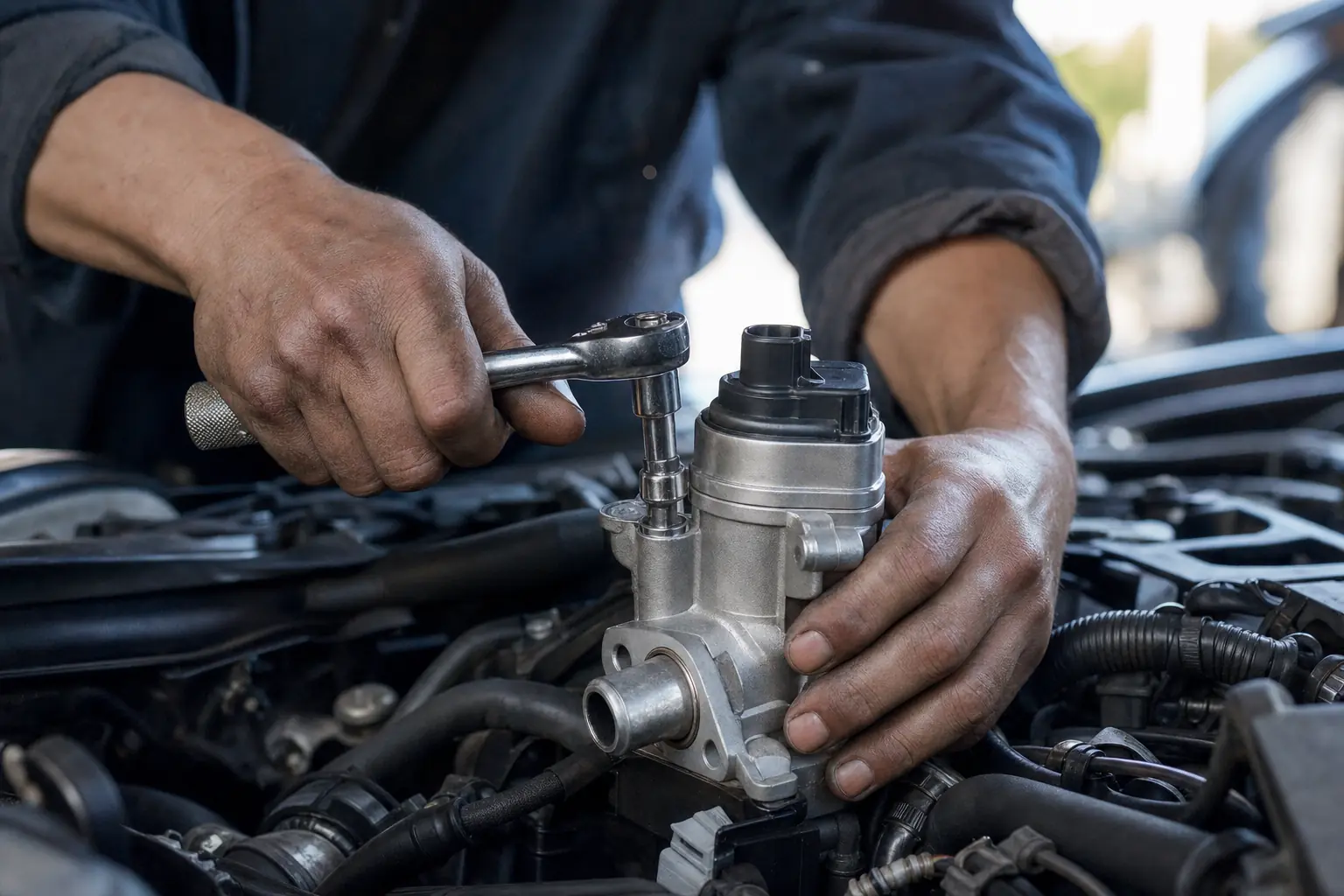
P0401: EGR Insufficient Flow — Causes, Cleaning vs Replacement & Cost
P0401 means your PCM detected insufficient EGR flow. Learn the real causes, whether to clean or replace, and what it costs to fix.
The Short Answer
P0401 — officially "Exhaust Gas Recirculation Flow Insufficient Detected" — means your PCM commanded the EGR system to recirculate exhaust gases but didn't measure the expected flow, and the most common culprits are carbon-clogged passages, a failed DPFE sensor (on Fords), or a worn-out EGR valve.
| Factor | Details |
|---|---|
| Official code name | Exhaust Gas Recirculation Flow Insufficient Detected |
| Trigger condition | PCM commands EGR on; flow feedback is too low |
| Trips to set CEL | Two consecutive failure trips |
| Most common cause | Carbon buildup in passages or EGR tube |
| Ford-specific cause | Failed DPFE sensor or cracked hoses |
| DIY cleaning cost | $10–$25 in supplies |
| EGR valve replacement (part) | $50–$250 depending on vehicle |
| Shop labor (typical) | $80–$200 |
| Emissions test result | Automatic failure with active code |
What the EGR System Actually Does
The exhaust gas recirculation system takes a controlled amount of spent exhaust gas and routes it back into the intake manifold. That dilutes the incoming air-fuel charge and lowers peak combustion temperatures — which directly reduces nitrogen oxide (NOx) emissions that contribute to smog and air pollution.
The system isn't just an emissions checkbox. High combustion temperatures also cause engine knock, so a properly working EGR protects the engine under load. When it stops working, your engine runs hotter and dirtier than it should.
What P0401 Actually Tells You (And What It Doesn't)
Here's the part most DIYers get wrong: P0401 does not confirm the EGR valve has failed. The code only tells you the PCM didn't detect sufficient EGR flow — it doesn't tell you why.
The PCM needs to see this problem on two consecutive drive trips before it locks in the code and lights the Check Engine Light. That two-trip rule means occasional sensor glitches usually won't trigger it, so when P0401 does stick, something genuine is wrong.
A word on the "EGR A" in the code name — it identifies the primary EGR flow path or control system. It should not automatically be read as Bank 1. The naming convention changes between manufacturers, so check your vehicle-specific service information before chasing the wrong circuit.
The Real Causes of P0401
Carbon Buildup in EGR Passages
This is the most common cause, full stop. Over time, soot and oil vapor coat the inside of the EGR tube, the valve itself, and the intake ports that receive the recirculated gas. Flow drops. The PCM sees insufficient recirculation. Code sets. The valve may be perfectly functional underneath all that carbon.
Vehicles with a lot of short-trip city driving accumulate deposits faster because the engine never gets hot enough to burn them off.
Failed or Clogged EGR Valve
If the valve's diaphragm has cracked, its solenoid has burned out, or its position sensor has drifted, it won't open when commanded. That's a genuine valve failure — cleaning won't fix an electrical or mechanical internal fault.
DPFE Sensor Issues (Ford Vehicles)
Ford's EGR system uses a Delta Pressure Feedback EGR (DPFE) sensor to confirm flow by measuring pressure differential across an orifice in the EGR tube. When the DPFE sensor fails or its small rubber hoses crack, the PCM gets a false low-flow reading — even if the valve and passages are perfectly fine. On Ford platforms, the DPFE sensor and its hoses should be tested first. It's often the cheaper fix.
Vacuum and Electrical Problems
Older vacuum-operated EGR valves depend on a steady, correctly timed vacuum signal. A cracked hose, failed solenoid, or stuck vacuum control valve can prevent the EGR from opening at all. On modern electronic EGR systems, corroded connectors or damaged wiring to the valve or its position sensor produce the same result.
Blocked EGR Cooler
Some diesel and newer gasoline engines route EGR gases through a cooler before they re-enter the intake. A clogged or leaking EGR cooler restricts flow and can set P0401 in addition to coolant-related codes.
How to Diagnose P0401 Step by Step
- Read all codes — P0401 rarely shows up alone. Related codes like P0402 (excessive flow), P0404 (valve range/performance), or P0405/P0406 (position sensor) point you toward the specific failed component.
- Inspect the EGR tube and passages visually — disconnect the tube and look for heavy carbon restriction. A pipe cleaner or bore light tells you a lot quickly.
- On Ford vehicles, check the DPFE sensor first — inspect its two small hoses for cracks, then test sensor voltage at idle and with EGR commanded open.
- Test valve operation — with the engine warm, command the valve open using a scan tool or apply vacuum (on vacuum-type valves). A healthy system causes the idle to stumble noticeably. No stumble = blocked passages or non-functioning valve.
- Check wiring and connectors — wiggle test the EGR valve connector and look for corrosion, especially if you're dealing with an older vehicle in a rust-belt state.
- Clear codes and drive two complete trips — if the code doesn't return after cleaning or a minor repair, you're likely done.
Cleaning vs. Replacement: Which One Do You Actually Need?
This is the real decision, and the answer depends on what you found during diagnosis.
Clean the valve and passages if:
- The valve operates correctly when tested (stumble test or scan tool data shows it opens)
- Deposits are visible and heavy
- There are no electrical fault codes related to the valve
- The vehicle has under 100,000 miles and hasn't been neglected
Use an EGR-safe carbon cleaner, let it soak, and work the valve open and closed manually during cleaning. On many vehicles you can do this without full removal — though pulling the valve gives you a much better result.
Replace the valve if:
- Testing confirms the valve doesn't open when commanded
- There's an internal position sensor code alongside P0401
- The valve is physically cracked, corroded, or the solenoid measures open/short circuit
- You've cleaned it twice already and the code keeps coming back
My honest opinion: if a vehicle has over 120,000 miles and the valve has never been touched, spending $15 on a can of cleaner first is reasonable — about 60% of the time on high-mileage cars it resolves the code without a new part. But don't skip testing. A cleaning on a mechanically dead valve is just wasted time.
What Does It Cost to Fix P0401?
| Repair | DIY Cost | Shop Cost (Parts + Labor) |
|---|---|---|
| EGR passage cleaning (in-place) | $10–$25 | $80–$150 |
| EGR valve cleaning (removed) | $15–$30 | $120–$200 |
| DPFE sensor replacement (Ford) | $20–$60 | $100–$180 |
| EGR valve replacement | $50–$250 | $150–$450 |
| EGR cooler replacement | $100–$400 | $300–$900+ |
These are real-world ranges. Your specific vehicle, region, and shop rates will move the number. Use the part finder below for today's pricing on your exact application.
Will P0401 Fail an Emissions Test?
Yes — automatically in virtually every state running OBD2-based emissions testing. An active code with the Check Engine Light on is an instant failure. Even if you clear the code, the EGR readiness monitor needs to complete a full drive cycle before the vehicle is legally ready to test. Don't clear the code the morning of your inspection and hope for the best.
Choosing an EGR Valve Replacement Part
Fitment matters more than brand loyalty here. EGR valves are vehicle-specific — the connector type, mounting configuration, and feedback sensor all vary. Well-established aftermarket suppliers like Dorman Products (NASDAQ: DORM, an independent public company) and Standard Motor Products (NYSE: SMP, also independent, founded in 1919) cover a wide range of applications. What matters is getting the right part for your exact year, make, model, and engine code.
Find the right part for your vehicle
Guaranteed fit, ships free
FAQ / People Also Ask
P0401 officially stands for 'Exhaust Gas Recirculation Flow Insufficient Detected.' It means the PCM commanded the EGR system to operate but didn't detect the expected amount of exhaust gas flowing back into the intake.
Comments
Loading comments...
Comments are moderated by the AutoBuffy team.