


P0500: Vehicle Speed Sensor Malfunction — Causes & Repair Cost
P0500 means your PCM lost the vehicle speed signal. Here's what triggers it, what breaks, and what it costs to fix.
The Short Answer
P0500 — officially "Vehicle Speed Sensor A Malfunction" — means your PCM has lost the vehicle speed signal it needs to control transmission shifting, cruise control, and ABS.
| Factor | Detail |
|---|---|
| Code type | Generic OBD-II (all makes and models) |
| Official SAE name | Vehicle Speed Sensor A Malfunction |
| Systems affected | ABS, cruise control, transmission shifting |
| Diagnosis cost | $80–$120 |
| Sensor/VSS replacement | $150–$300 |
| Instrument cluster repair | $300–$800 |
| Common companion codes | P0501, P0502, P0503 |
Once that speed signal drops out, the PCM essentially goes blind to how fast the vehicle is moving. That's a bigger deal than most people expect.
What Is P0500, Exactly?
P0500 is a generic OBD-II code, which means it applies across makes and models — Toyota, Nissan, Ford, GM, Honda, you name it. The SAE/ISO definition is precise: *Vehicle Speed Sensor A Malfunction*. The "A" designator is part of the official name and refers to the primary speed sensor circuit.
The PCM relies on a continuous speed signal to make real-time decisions. Without it:
- ABS disables — the module can't calculate wheel slip
- Cruise control shuts off — it can't hold a target speed it can't measure
- Transmission shift points go erratic — the PCM uses speed to decide when to upshift or downshift
- Speedometer may read zero or fluctuate wildly
In modern vehicles, ABS wheel speed sensors have effectively replaced the old transmission-mounted VSS as the primary speed input. So when someone says "vehicle speed sensor" and "wheel speed sensor" in a P0500 conversation, they're usually talking about the same thing.
Common Causes of P0500
There's no single culprit here. P0500 can come from several directions.
Failed Wheel Speed Sensor or Transmission VSS
This is the most straightforward cause. Sensors wear out, especially at the wheel where they're exposed to brake dust, moisture, and road debris. A dead sensor sends no signal — or a corrupted one — and the PCM flags P0500.
Damaged Wiring or Connector
The wiring harness running to a wheel speed sensor takes a beating. It flexes with every suspension movement. Over time, the insulation cracks, a wire chafes against a suspension component, or a connector pin corrodes. Any of those can interrupt the signal.
Always inspect the wiring before buying a sensor. A new sensor won't fix a broken wire.
Cracked Solder Joint in the Instrument Cluster
This one catches a lot of people off guard. On 2005–2011 Toyota Tacomas and 2000–2012 Nissans, a documented defect involves a cracked solder joint inside the instrument cluster that can trigger P0500 — even when the speedometer looks completely normal. If you own one of these and the code keeps coming back after sensor replacement, the cluster is worth investigating.
Faulty ABS Module
Less common, but if the ABS control module isn't correctly passing wheel speed data to the PCM, you can end up with P0500. This usually shows up alongside other ABS-specific codes.
Symptoms to Watch For
P0500 rarely shows up without other clues. Here's what drivers typically notice:
- Check engine light on
- Speedometer stuck at zero or jumping erratically
- ABS warning light illuminated
- Cruise control won't engage or cancels unexpectedly
- Harsh or delayed transmission shifts
- Odometer stops counting miles
Not every vehicle shows all of these. Some owners only notice the check engine light, especially in that Toyota/Nissan cluster scenario where the speedo still moves.
Related Codes That Often Appear Together
P0500 is rarely alone. Its siblings — P0501, P0502, and P0503 — cover range/performance issues and high/low signal faults within the same speed sensor circuit family. If you're pulling multiple codes from that group, you're almost certainly dealing with a wiring issue or a failed sensor rather than a one-off glitch.
A single P0500 with no related codes is more likely to be a connector or sensor issue. Multiple VSS-family codes together usually point to wiring damage or a module problem.
How to Diagnose P0500 Step by Step
Step 1: Confirm the Code
Use a scan tool to verify P0500 is current (not just historical) and note any freeze frame data. Check for companion codes.
Step 2: Visual Inspection
Go to each wheel speed sensor and follow the wiring back toward the chassis. Look for:
- Cracked or frayed insulation
- Corrosion at the connector
- Wires rubbing on brake lines or control arms
This step takes 20 minutes and can save you from buying parts you don't need.
Step 3: Test Sensor Resistance
With the connector unplugged, use a multimeter to check resistance across the sensor terminals. Compare to your vehicle's spec (typically in the 800–2,000 ohm range for most passive sensors, though active sensors work differently). Out-of-spec? The sensor's bad.
Step 4: Check Signal Output
With a scan tool that displays live data, watch the vehicle speed PID while someone slowly rolls the vehicle forward. No movement on that PID points to sensor, wiring, or module.
Step 5: Consider the Cluster
If you own a Tacoma or Nissan in the affected model year ranges and steps 1–4 come up clean, take the cluster to a reputable electronics repair shop and ask them to inspect for cold solder joints.
What Does P0500 Repair Cost?
Repair costs vary a lot depending on what's actually broken.
| Repair Type | Typical Cost Range |
|---|---|
| Professional diagnosis | $80–$120 |
| Wheel speed sensor (parts + labor) | $150–$300 |
| Transmission VSS replacement | $150–$300 |
| Instrument cluster repair | $300–$800 |
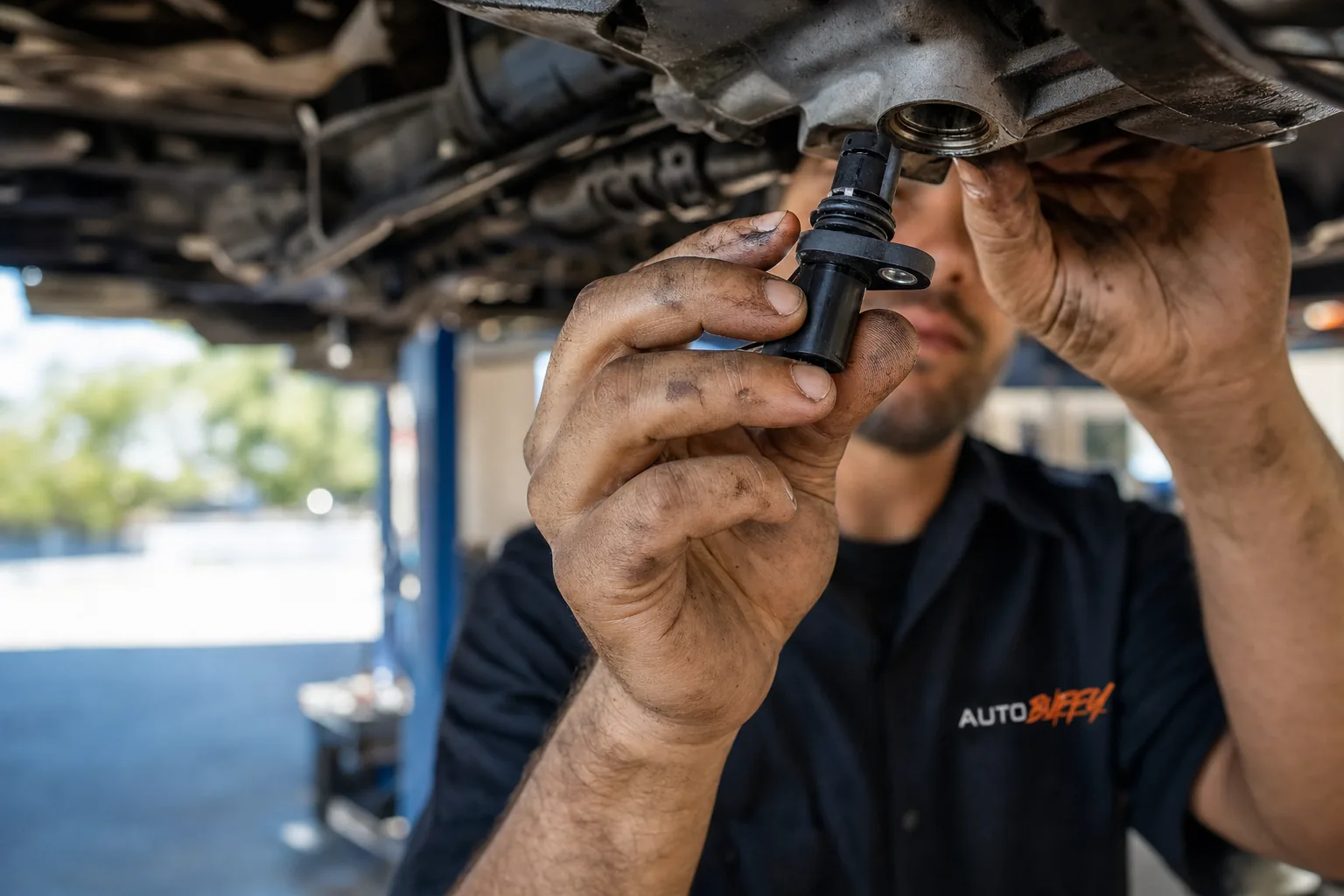
DIY sensor replacement is genuinely manageable on most vehicles. The sensor bolts on, the connector clips in, and the job can take under an hour with basic tools. The instrument cluster route is where costs climb, and it's almost always shop work unless you're comfortable with electronics.
Choosing a Replacement Vehicle Speed Sensor
Fit matters more than people think with speed sensors. The air gap between the sensor tip and the reluctor ring is precise — wrong sensor geometry means corrupted signal even if it physically bolts on.
Choose a vehicle speed sensor built to OE specifications for your exact application — the connector, drive type, and signal output vary by transmission and drivetrain. Use the part finder below to confirm the right sensor for your year, make, model, and engine.
Can You Drive With P0500?
Technically yes — the engine still runs. But you've lost ABS, cruise control, and clean transmission behavior. On a wet road with a hard stop, that's a real safety issue. Treat this as a near-term fix, not a "clear the code and forget it" situation.
It'll also flag a check engine light that will cause you to fail an OBD-II emissions readiness test until the fix is made and the monitors complete a drive cycle.
Find the right part for your vehicle
Guaranteed fit, ships free
FAQ / People Also Ask
P0500 is a generic OBD-II code officially defined as 'Vehicle Speed Sensor A Malfunction.' It means the PCM isn't receiving a valid speed signal from the vehicle speed sensor circuit.
Comments
Loading comments...
Comments are moderated by the AutoBuffy team.