

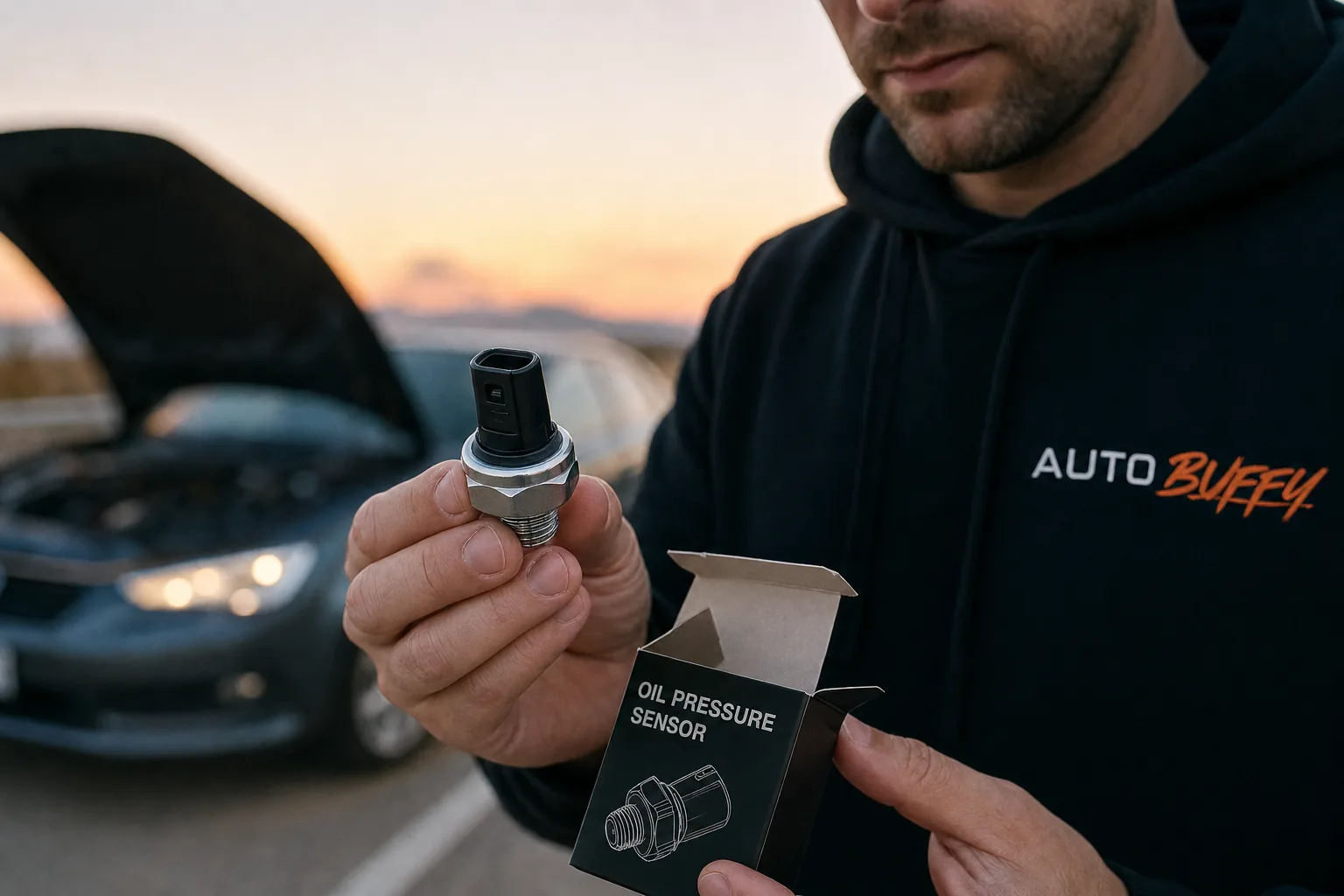
P0521: Engine Oil Pressure Sensor/Switch — Symptoms, Causes, Cost
P0521 means your ECU sees abnormal oil pressure readings. Learn the real symptoms, causes, and repair costs before damage happens.
The Short Answer
P0521 means your vehicle's ECU has detected that the engine oil pressure sensor or switch signal is outside its expected operating range — and until you rule out actual low oil pressure, you shouldn't keep driving.
| Factor | Details |
|---|---|
| Code Type | Generic OBD-II powertrain (all makes, 1996+) |
| System | Engine oil pressure monitoring |
| Severity | High — potential engine damage |
| Most-affected makes | Chevrolet, GMC, Dodge, Cadillac, Mercedes-Benz, Pontiac |
| Typical repair cost | $50–$900+ depending on root cause |
| DIY-friendly? | Sensor swap: yes. Oil pump or engine: no. |
| Safe to drive? | No |
What P0521 Actually Means (It's Not Always a Bad Sensor)
The ECU constantly monitors the signal coming from your oil pressure sensor. When that signal reads too high, too low, or bounces erratically beyond the manufacturer's calibrated limits, it sets P0521 and lights up your check engine light.
Here's the part most DIYers miss: the code doesn't tell you *why* the reading is off. The sensor could be lying — or the oil pressure in your engine could genuinely be wrong. Those two scenarios have very different consequences. A faulty sensor costs under $200 to fix. Ignored low oil pressure can destroy an engine worth several thousand dollars.
Always treat P0521 as a real oil pressure problem until you've proven otherwise.
Symptoms You'll Actually Notice
Some P0521 cases produce nothing beyond the check engine light. Others give you a full warning suite. Here's what to watch for:
- Check engine light — almost always present
- Oil pressure gauge reading abnormally — stuck high, dropping to zero, or swinging erratically
- Oil pressure warning light — separate from the CEL on many vehicles
- Engine noise at idle — ticking, knocking, or a general increase in valve train noise
- Reduced engine performance — some vehicles enter limp mode when this code is active
- No-crank or no-start — seen in more severe cases, including a 2026 Jeep Grand Cherokee technical bulletin (S2609000008) that links P0521 to oil pump failure and no-start conditions
If you're hearing engine noise *and* seeing this code, don't restart the engine. Have it towed.
The Real Causes of P0521 (Ranked by Frequency)
1. Faulty Oil Pressure Sensor or Switch
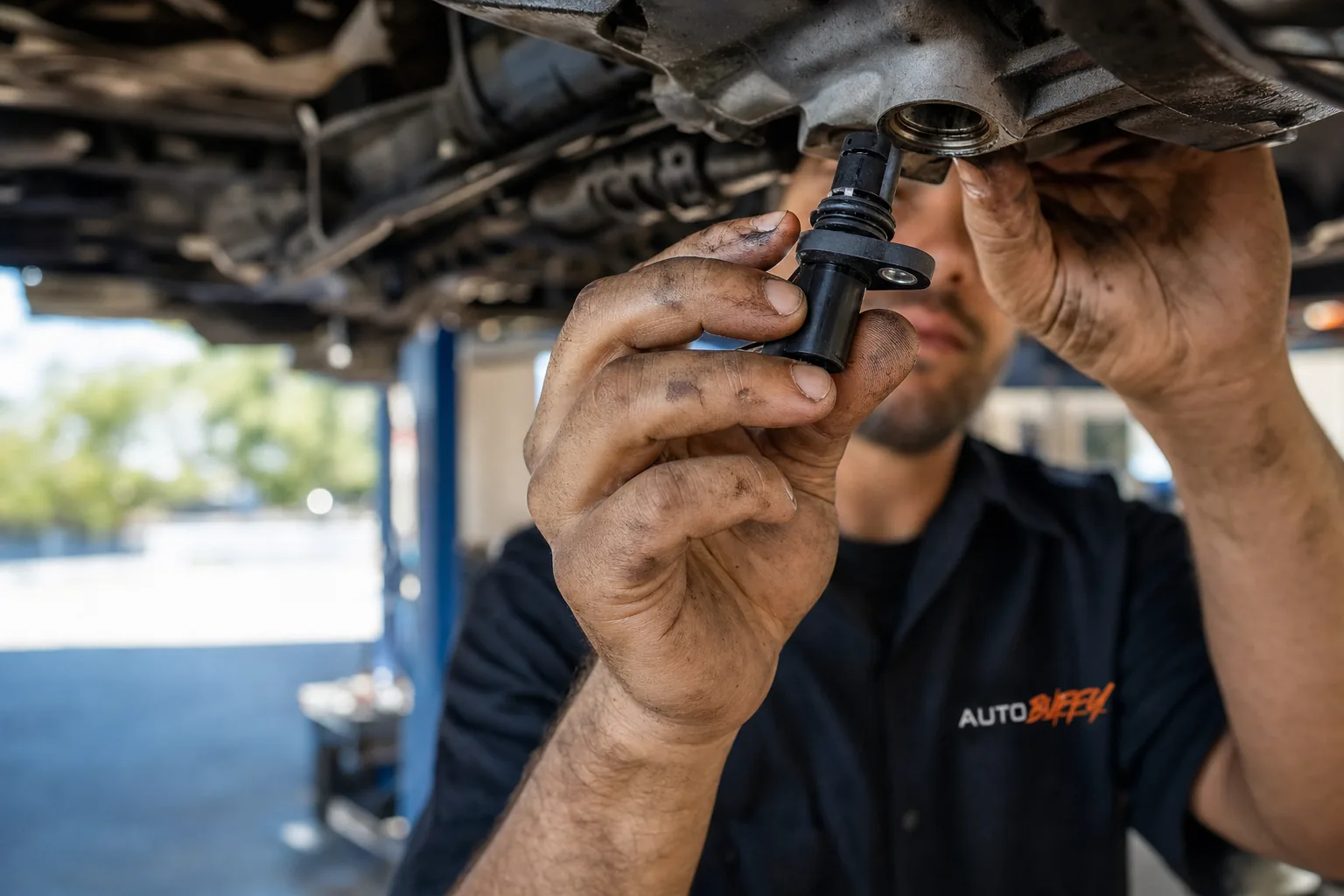
This is the most common culprit. Sensors fail from heat cycling, oil contamination, or simply age. They can read inaccurately while real-world pressure is fine — but you need a mechanical gauge to confirm that.
2. Low or Dirty Engine Oil
Before you touch a sensor, check your dipstick. Low oil level reduces actual pressure. Old, degraded oil thins out and loses its ability to maintain pressure, especially at idle and operating temperature. An oil change has solved more than a few P0521 codes.
3. Clogged Oil Filter
A severely restricted filter starves the engine of adequate oil flow. It's an easy thing to overlook if the vehicle hasn't had routine maintenance.
4. Stuck Oil Pressure Relief Valve
This one trips people up, especially on GM trucks and SUVs. A GM technical bulletin issued in January 2025 (bulletin 24-NA-173) specifically calls out a stuck oil pressure relief valve *inside the oil pump assembly* as a cause of P0521 — and it's been misdiagnosed as a sensor or ECM problem on prior visits to the shop. If you've already replaced the sensor once and the code came back, this is worth investigating.
5. Wiring or Connector Issues
Corrosion, a chafed wire, or a loose connector between the sensor and the ECU can produce a false signal. A visual inspection of the harness and a voltage check at the connector takes five minutes and rules this out quickly.
6. Failing Oil Pump
Less common but the most serious. If the pump itself is worn or failing, it can't generate adequate pressure at any engine speed. At this point you're looking at a significant repair.
7. Internal Engine Wear
Worn bearings increase clearances, which bleeds off oil pressure. P0521 showing up on a high-mileage engine with a history of neglected oil changes warrants a real mechanical pressure test before any parts get ordered.
How to Diagnose P0521 Without Guessing
- Check oil level and condition first. Takes 30 seconds. If it's low or looks like sludge, that's your starting point.
- Connect a mechanical oil pressure gauge to the engine's pressure port (usually where the sender screws in). This bypasses the electronic sensor entirely and gives you real-world pressure numbers.
- Compare to spec. Most gasoline engines want 25–65 PSI at operating temperature. Your service manual has the exact figures.
- If mechanical pressure is normal, the sensor, wiring, or connector is the problem — not actual oil pressure.
- If mechanical pressure is also low, the pump, relief valve, or internal engine condition is causing the issue. Don't keep running it.
In my experience, roughly 60–70% of P0521 codes on well-maintained vehicles turn out to be a bad sensor. But that other 30% is where engines get damaged because someone assumed it was just a sensor.
What It Costs to Fix P0521
| Repair | Typical Cost Range |
|---|---|
| Oil pressure sensor/switch | $50–$200 (parts + labor) |
| Oil and filter change | $40–$120 |
| Wiring/connector repair | $75–$250 |
| Oil pump replacement | $300–$900+ |
| Oil pressure relief valve (if serviceable separately) | $150–$400 |
| Engine bearing/internal repair | $1,000+ |
These are honest market ranges. Your actual cost depends on your vehicle, your region, and which root cause is actually in play. Use the part finder below for today's pricing on the sensor itself.
Choosing a Replacement Oil Pressure Sensor
Not all oil pressure sensors are equivalent. Fit matters more than people think — thread pitch and electrical connector orientation vary significantly between applications. A sensor designed and validated for your specific engine avoids the headache of rechecking a repair that shouldn't have needed rechecking.
Because thread pitch and electrical connector orientation vary between engines, choose an oil pressure sensor designed and validated for your specific application — that's what avoids rechecking a repair that shouldn't have needed it. Use the finder below to confirm the right part before ordering.
Can You Clear P0521 Yourself?
Yes — any OBD-II scan tool or code reader will clear it. But clearing it without fixing the underlying problem just means it comes back, and in the meantime you're driving without the warning you'd need if pressure actually drops. Fix first, clear second.
Find the right part for your vehicle
Guaranteed fit, ships free
FAQ / People Also Ask
P0521 is a generic OBD-II code that means the ECU detected an engine oil pressure sensor or switch reading that's outside the expected range — too high, too low, or erratically fluctuating. It does not automatically confirm actual low oil pressure; the sensor itself may be the problem.
Comments
Loading comments...
Comments are moderated by the AutoBuffy team.