

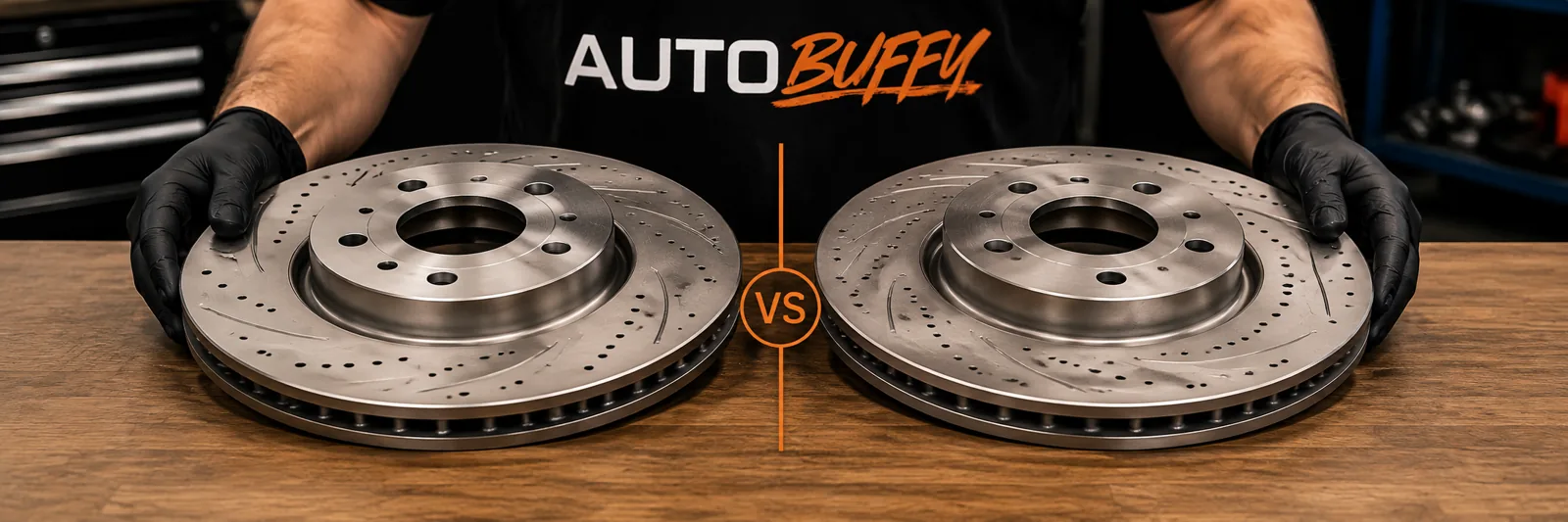
Replace in Pairs? Shocks, Struts, and Brakes — the Honest Answer
When pairs actually matter for shocks, struts, and brakes — and when replacing both is just spending money you don't need to.
The Short Answer
Replace shocks and struts in axle pairs — both fronts or both rears together. Replace brake pads in axle pairs too, and rotors with them if they're worn. You do NOT need to do all four corners at once just because one side failed. Match the part to the axle, not the whole car.
| Part | Replace in pairs? | The honest rule |
|---|---|---|
| Struts | Yes — per axle | Both fronts or both rears together |
| Shocks | Yes — per axle | Same as struts; matched damping per axle |
| Brake pads | Yes — per axle | Both wheels on an axle; they wear together |
| Brake rotors | With the pads if worn | Don't machine/replace one side only |
| All four at once | Usually no | Only if all four are actually worn |
There's real advice here and there's upsell. The line between them is simple: pairs matter per axle because the two sides work as a team. Doing all four corners when only the fronts are shot is where you're spending money you don't need to.
Why pairs matter for shocks and struts
A new strut damps differently than a worn one — the new one is firmer and controls the wheel better. Put a fresh strut on the left front and leave a tired one on the right front, and now your front axle is unbalanced side-to-side. Under hard braking or in a corner, the car can pull or feel twitchy because one wheel is controlled and the other is floppy.
That's why the standard guidance is to replace struts and shocks in axle pairs — both fronts together, or both rears together. It's not a scam; it's about keeping the two sides of an axle matched.
What you *don't* automatically need: all four. If your fronts are worn and the rears are fine, do the fronts. Plenty of cars wear fronts faster (they carry the engine and do most of the braking dive). A shop that insists on all four without showing you worn rears is reaching.
Why pairs matter for brakes
Same logic, different system. Brake pads on the same axle wear together and need to clamp evenly. Replace the pads on both wheels of an axle so braking force is balanced left-to-right — a fresh pad on one side and a worn one on the other can make the car pull under braking.
Rotors: if they're worn past spec, warped, or below minimum thickness, replace them with the pads, in pairs on that axle. If they're still in spec and smooth, you may be able to just do pads. But don't machine or replace one side only — keep the axle matched.
You do not have to do front and rear brakes at the same time. Fronts typically wear about twice as fast as rears because the front does most of the stopping. Doing fronts now and rears later is completely normal.
When replacing all four IS the right call
- All four are actually worn. Higher-mileage car that's never had suspension done — often everything's tired at once. Then yes, do it all.
- You want a full reset. Some folks refresh all four struts on an older car for a like-new ride and to not think about it again. That's a valid choice — just know it's preference, not a hard requirement.
- Mixed, mismatched parts already on the car. If a previous owner did one corner with something cheap, matching the set can be worth it.
The money-saving takeaways
- Buy and replace per axle, not per car, unless all four are worn.
- Match the pair — same brand and model on both sides of an axle for even behavior.
- Fronts and rears wear at different rates. It's fine to stagger them.
- Get your OE part number and check AWD/FWD fitment — rear parts especially can split by drivetrain.
Honest version: pairs per axle, yes. All four always, no. Spend where it changes how the car drives and stops, skip where it doesn't.
Getting the right pair the first time
Buying in pairs only helps if both parts actually fit your axle — and rears especially can split by AWD/FWD. Enter your exact vehicle on AutoBuffy and you'll see the matched pair that fits, drivetrain and qualifiers included. Spend on what's worn, match the pair, skip the guesswork.
Sources
- Consumer Reports: Car Maintenance — independent guidance on brakes and suspension service
- RepairPal — repair scope and cost reference
- Monroe: Ride Control — manufacturer guidance on shock and strut replacement
Find the right part for your vehicle
Guaranteed fit, ships free
FAQ / People Also Ask
Yes — in axle pairs. Replace both fronts together or both rears together so the two sides of an axle are matched. You don't have to do all four unless all four are worn.


Comments
Loading comments...
Comments are moderated by the AutoBuffy team.