

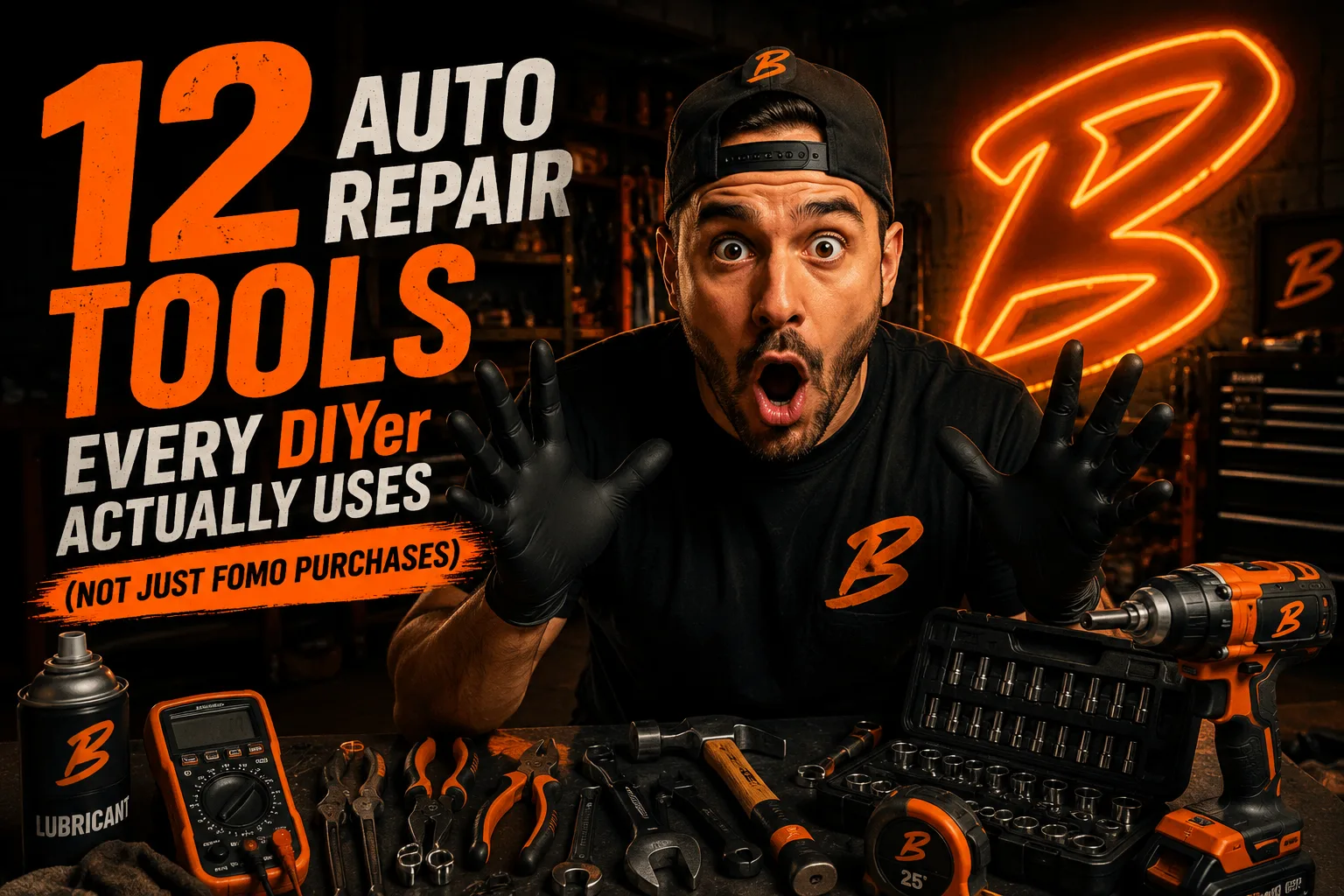
12 Auto Repair Tools Every DIYer Actually Uses (Not Just FOMO Purchases)
Tool lists are usually shopping lists in disguise. This one isn't. Here are the 12 tools that earn their garage space on real repair jobs, what each honestly costs, the overhyped stuff you can skip, and when a loaner program beats buying.
The Difference Between a Toolbox and a Museum
Every DIYer knows someone with a garage full of tools that never get touched. The ultrasonic cleaner used once. That specialty puller bought for a single job back in 2019. An enormous impact wrench that has never met a bolt it was actually needed for.
Tool content on the internet has a lot to answer for here. Most "essential tools" lists are affiliate shopping lists wearing a disguise, and the more you buy, the better the list did its job. So let's do the opposite. AutoBuffy sells auto parts, not tools, so we have no reason to talk you into anything. What we do have is a lot of customers doing their own brakes, struts, mounts, and sensors, plus a pretty clear picture of which tools those jobs actually require.
Here are the 12 tools that come out of the drawer over and over. What they honestly cost, and why each one earns its spot. Then the FOMO list: the stuff that mostly collects dust, and the smarter way to handle one-job tools.
The 12 Tools That Earn Their Spot
1. A 1/2" Breaker Bar
Rough price: $20–$50
The unglamorous hero of every suspension and brake job. A breaker bar is just a long, non-ratcheting handle. No mechanism to break, all leverage. Rusted caliper bracket bolts, axle nuts, crank bolts, anything an old ratchet would round off or snap on. The breaker bar cracks it loose, then the ratchet takes over.
Why it earns its spot: the first rusted bolt you meet will justify the entire purchase. Get an 18" to 24" bar in 1/2" drive. Longer bar, less effort, fewer bloody knuckles.
2. A Torque Wrench (Why Clicking Beats Guessing)
Rough price: $30–$100 for a solid click-style
"Good and tight" is not a spec. Wheel lug nuts, caliper bolts, strut top nuts, spark plugs. They all have a torque value the engineers chose for a reason. Under-torque a lug nut and the wheel can work loose. Over-torque it and you stretch the stud or warp the rotor hat. A click-type torque wrench takes the guesswork out. Set the value, pull until it clicks, done.
Why it earns its spot: it's what separates a repair from a liability. A 1/2" drive click wrench covering roughly 20–150 ft-lbs handles most of what a DIYer touches. You don't need a digital one to start. One habit worth keeping: dial it back to its lowest setting for storage so the spring stays accurate.
3. A 3-Ton Floor Jack + Jack Stands
Rough price: $100–$250 for the jack, $30–$60 for a pair of stands
Here is the one non-negotiable rule in DIY auto repair. The jack lifts the car; the stands hold the car. Never, ever put any part of your body under a vehicle supported only by a jack. Hydraulic jacks fail. Seals leak. Handles get bumped. Jack stands are cheap and mechanical, and they don't have a failure mode that involves you being underneath 4,000 pounds.
Why it earns its spot: almost every real repair starts with getting the car safely in the air, whether that's brakes, struts, oil changes, or wheel bearings. A 3-ton jack covers most cars, crossovers, and half-ton trucks with margin to spare. Buy stands rated above your vehicle's weight, set them on concrete (not asphalt on a hot day, not gravel), and give the car a firm shake before you crawl under. Every time.
4. A Ratchet + 6-Point Socket Set
Rough price: $60–$150 for a set that will last decades
The core of the toolbox. Get 3/8" and 1/2" drive ratchets, metric sockets (most of what's on the road is metric, even domestic), and here's the detail that matters: buy 6-point sockets, not 12-point. A 12-point socket grips the corners of a bolt head. A 6-point grips the flats. On a rusty, softened, or already-abused fastener, the 12-point rounds the corners off and now you have a much worse day. The 6-point bites the whole flat and turns it.
Why it earns its spot: you'll use this on literally every job. Include a few deep sockets and a set of extensions. Skip the 300-piece kit where 200 pieces are filler. A focused metric set covers 95% of real work.
5. An OBD2 Scanner (the $25 One Is Enough to Start)
Rough price: $20–$40 for a basic Bluetooth dongle or handheld
When the check engine light comes on, the single most valuable thing you can do is read the code before anyone starts guessing. A basic Bluetooth OBD2 dongle paired with a free phone app reads codes, clears them, and shows live data on any car built since 1996. That turns "the light is on" into "P0302, cylinder 2 misfire," which is a real starting point.
Why it earns its spot: it can pay for itself on the first diagnosis by pointing you at a $30 sensor instead of a $150 diagnostic fee. The $200-plus scanners add bidirectional controls and deeper module access, which is great later and unnecessary on day one. Start cheap. Upgrade only when the cheap one stops answering your questions.
6. Penetrating Oil
Rough price: $8–$15 a can
Not a glamour purchase, but it's the difference between a bolt that comes out and a bolt that snaps. Anything exposed to road spray (exhaust hardware, suspension bolts, brake bracket bolts) should get sprayed the night before if you can manage it, or at minimum 15 minutes before you pull on it. Patience plus penetrant beats muscle plus a broken stud.
Why it earns its spot: it's the cheapest insurance in this entire article. Genuine penetrating oil out-performs general-purpose spray lube for freeing seized fasteners, so buy the real thing and keep a can on the shelf permanently.
7. A Pry Bar Set
Rough price: $20–$40 for a set of three or four
Ball joints that won't drop, control arms that need persuading, tie rods that need a nudge, stuck rotors, engine mounts you need to load to inspect (more on that trick in our motor mount symptoms guide). All pry bar work. A set with a few lengths gives you options. The long one supplies leverage, the stubby one fits where the long one won't.
Why it earns its spot: suspension work is basically impossible without controlled leverage, and using a screwdriver as a pry bar is how screwdrivers die and knuckles bleed.
8. A Multimeter (Basics Only)
Rough price: $20–$50
You don't need to understand electrical engineering to get real value here. Three checks cover most DIY diagnosis. Is the battery around 12.6 volts at rest, is it charging around 13.5–14.5 volts with the engine running, and does this fuse or wire or ground have continuity. That's enough to sort "dead battery" from "dead alternator" from "broken wire," which is most car electrical problems right there.
Why it earns its spot: parts-cannon electrical repairs are the most expensive kind of guessing. A basic meter that reads DC volts and continuity ends the guessing. The $200 automotive meters are for people chasing problems you'll rarely meet.
9. Mechanic's Gloves + a Good Work Light
Rough price: $10–$20 for gloves, $20–$40 for a rechargeable light
Grouped together because they solve the same problem. Jobs go badly when you can't grip and can't see. Nitrile-dipped mechanic's gloves keep your hands functional through a whole brake job instead of shredded by the first sharp bracket. And a rechargeable LED work light, one that stands up or sticks magnetically to the frame, changes underhood and under-car work completely. Half of the "I can't find the bolt" problem is a lighting problem.
Why it earns its spot: these get used on every single job, which is the entire test this list is built on.
10. A Ball Joint Separator / Pickle Fork
Rough price: $15–$40
The first suspension-specific tool worth owning. Ball joints and tie rod ends live on tapered studs that wedge themselves in place over years of load and rust. They do not come apart by pulling. A pickle fork (destructive to the joint's boot, fine when you're replacing the joint anyway) or a screw-type separator (kinder, reusable on parts you're keeping) pops the taper in seconds.
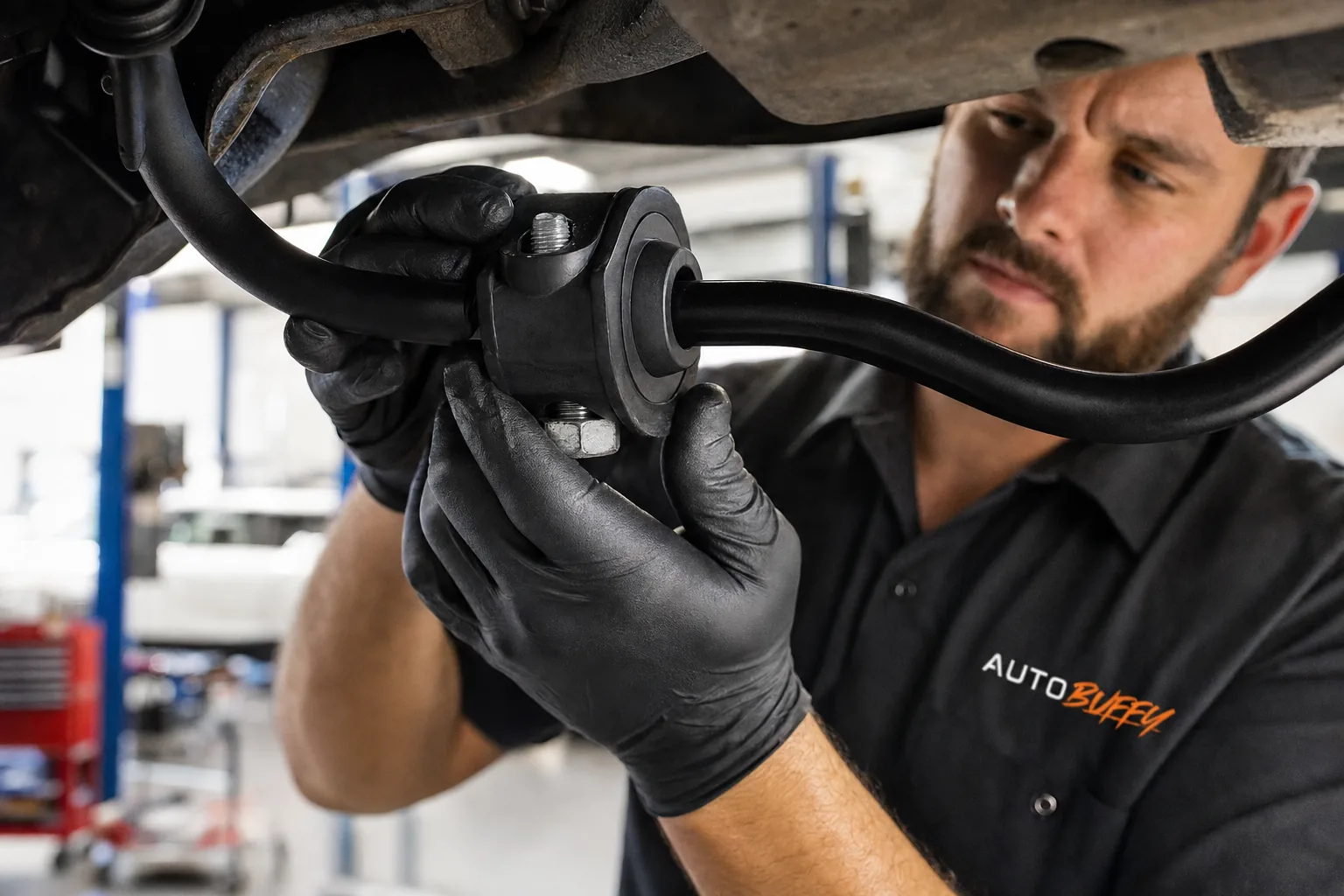
Why it earns its spot: if you're doing struts, control arms, tie rods, or sway bar links, the highest-payoff DIY jobs because shop labor on suspension is steep, you'll need this. It's the tool that makes suspension work possible rather than theoretical.
Got the Tools? Get the Parts
Find Parts for Your Vehicle
11. Trim Clip Pliers
Rough price: $10–$25
Modern cars are held together with plastic clips. Wheel well liners, engine covers, door panels, splash shields. Attack them with a flathead screwdriver and they snap, then you're ordering a bag of replacement clips and hoping they match. Trim clip pliers and removal wedges pop them cleanly and reusably.
Why it earns its spot: almost any job on a modern car starts with removing plastic. Cheap tool, and it prevents a constant, annoying category of collateral damage.
12. A Magnetic Tray + Telescoping Magnet
Rough price: $10–$20 for both
The least exciting entry, and possibly the best cost-per-use of the whole list. The magnetic tray holds every bolt you remove so reassembly isn't archaeology. The telescoping magnet retrieves the socket you dropped into the engine bay. And you will drop a socket into the engine bay. Everyone does.
Why it earns its spot: a dropped caliper bolt behind a splash shield can stall a job for an hour. Ten dollars ends that problem forever.
The FOMO List: Tools That Mostly Collect Dust
Honesty portion of the program. These are the purchases that feel great in the cart and then sit:
- Ultrasonic cleaner. Fantastic in a restoration shop cleaning carburetors weekly. In a DIY garage it typically runs twice and then stores itself. Brake cleaner and a brush cover the actual need.
- A 3/4" drive impact gun for a commuter car. Big impact wrenches are for truck fleets and rusted-solid farm equipment. On a Camry, a breaker bar plus a mid-size impact (if you even want one) does everything, at a fraction of the cost and weight.
- Specialty one-job tools. Harmonic balancer pullers, spring compressors, hub pullers, ball joint press kits. Real tools with real purposes, but many see exactly one use per car you own. This is what rental was invented for.
- The 500-piece "master set." You're paying for drawer filler. A focused set you'll actually use beats an enormous set you'll dig through.
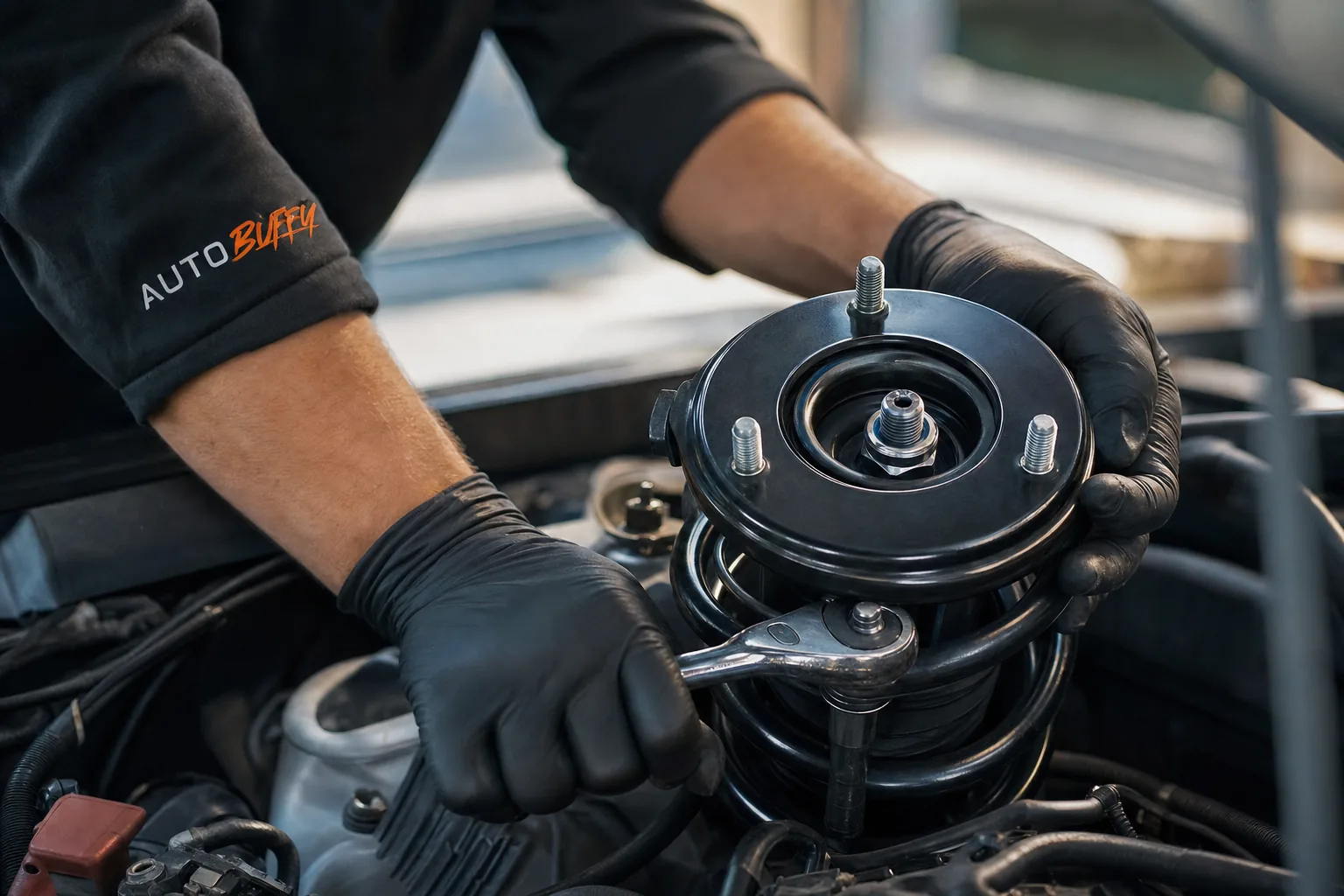
On loaner programs: most big parts chains (AutoZone-style loan-a-tool programs) will lend specialty tools free. You pay a deposit, return the tool, get the deposit back. This is the correct answer for the one-job tools above. The math is simple. If you'll use it once, borrow it. If you'll use it every year, buy it. One caveat on strut spring compressors: consider skipping the tool question entirely by buying complete loaded strut assemblies, which come pre-assembled with the spring already installed. No compressed-spring wrestling, no specialty tool, and it's often the smarter repair anyway.
Total Damage — and What It Buys You
Add up the honest end of every range above and the entire 12-tool kit lands around $350–$500. That's roughly the labor on a single two-axle brake job at a shop. And that's the real pitch for DIY: the toolkit pays for itself on the first or second repair, and every job after that, you're only paying for parts.
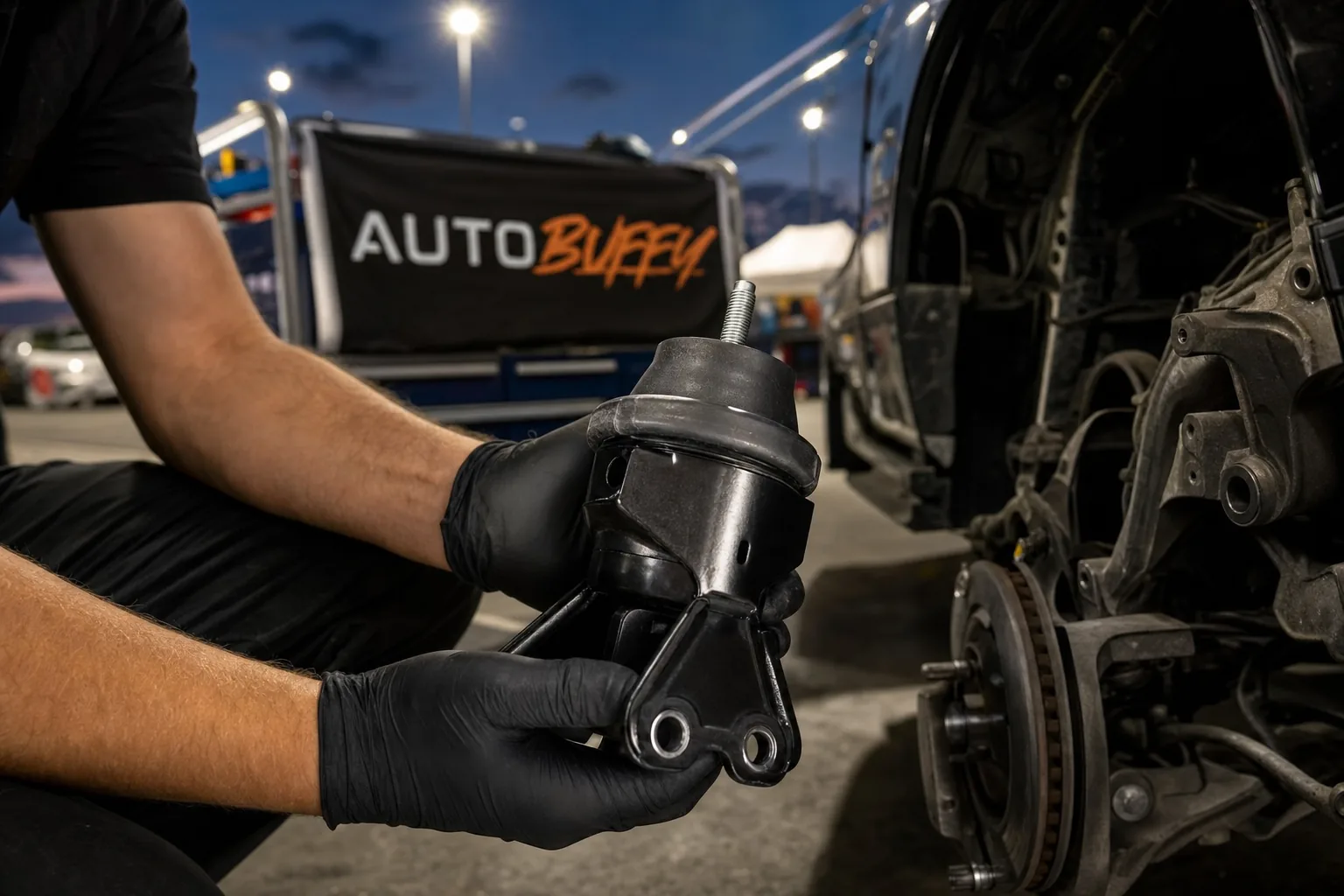
That's where we come in. AutoBuffy doesn't sell tools. We sell the parts those tools install: brakes, complete strut assemblies, control arms, wheel bearings, mounts, sensors, all with guaranteed fitment for your exact vehicle. When the tools are ready and you want to know what job to tackle first, our repair guides (like the bad motor mount symptoms guide) are a good place to size up whether a job is in your wheelhouse.
Your Next DIY Job
Parts That Fit, Guaranteed
Prefer to browse? Shop Brake Pads · Shop Strut Assemblies · Shop Motor Mounts
FAQ / People Also Ask
Start with five: a ratchet with 6-point metric sockets, a torque wrench, a 3-ton floor jack with jack stands, a breaker bar, and a basic OBD2 scanner. That covers brakes, basic suspension, and diagnosis — the highest-value DIY jobs. Expect roughly $250–$400 total, then add tools only as specific jobs demand them.
Comments
Loading comments...
Comments are moderated by the AutoBuffy team.